Consumers Not Ready for EBPP
Published:
17 July 1999 y., Saturday
Consumers` interest in electronic bill presentment and payment (EBPP)
services lags behind that of companies, particularly high-volume
billers that want to switch from paper-based to electronic systems,
according to research conducted by PSI Global. According to PSI`s
research, only 7 percent of US households think they will be capable
of sending and receiving bills via the Internet within six to 12
months, and only 16 percent said they would like to use the
Internet both to receive and pay bills within the next three years.
PSI predicts that up to 15 percent of US households are likely to
be immediate adopters of EBPP services when they become available.
Close to 50 percent of US households already have PCs, and more than
a third of these PC owners actively use financial management
software. The use of checks to pay bills has also declined from 90
percent in 1990 to 76 percent this year, according to PSI. The most
likely agent to drive the change from paper-based billing to
electronics, according to PSI, is the potential cost savings for the
leading billing sectors. Consumers are expected to pay 15.9 billion
bill payments. The leading billing sectors - primarily lenders,
utilities, communications, insurance and credit card issuers-account
for more than 80 percent of all bills to consumers. For these
firms, EBPP potentially means billions of dollars in cost savings
annually. Among the factors that could delay consumer acceptance of
EBPP are concerns over privacy and convenience. Almost three-quarters
(63 percent) of households believe that receiving and paying bills
using the US Postal Service is more reliable and secure than
electronic delivery options; 74 percent of households like the
privacy of paying bills by check; and 72 percent like the
convenience of paying bills by check. One-quarter of households
believe that the Internet is not secure, and 65 percent are not
certain about Internet security. For nearly half of all households,
retaining control of payment timing is important.
Copying, publishing, announcing any information from the News.lt portal without written permission of News.lt editorial office is prohibited.
The most popular articles
 European conference promotes regional solutions to global challenges.
more »
European conference promotes regional solutions to global challenges.
more »
 Iceland‘s low-fare airline Iceland Express will launch regular flights by the new-generation „Boeing 737-700“ planes to about 8 different destinations from Vinius International Airport.
more »
Iceland‘s low-fare airline Iceland Express will launch regular flights by the new-generation „Boeing 737-700“ planes to about 8 different destinations from Vinius International Airport.
more »
 Over 3 million people around the world have lost their jobs due to the financial crisis and, according to the UN, economic recovery is unlikely to reach those that have suffered most - poor women and children.
more »
Over 3 million people around the world have lost their jobs due to the financial crisis and, according to the UN, economic recovery is unlikely to reach those that have suffered most - poor women and children.
more »
 The European Commission has today decided not to raise any objections to the public financing of infrastructure developments at three Lithuanian airports – Vilnius, Kaunas and Palanga International Airports.
more »
The European Commission has today decided not to raise any objections to the public financing of infrastructure developments at three Lithuanian airports – Vilnius, Kaunas and Palanga International Airports.
more »
 The European Commission has published the results of a public consultation launched in June 2009 on whether and how deadlines should be set for the migration of existing national credit transfers and direct debits to the new Single Euro Payments Area (SEPA) payment instruments.
more »
The European Commission has published the results of a public consultation launched in June 2009 on whether and how deadlines should be set for the migration of existing national credit transfers and direct debits to the new Single Euro Payments Area (SEPA) payment instruments.
more »
 A favourable climate for innovation in the EU can speed up the transition to an eco-efficient economy and increase Europe’s global competitiveness.
more »
A favourable climate for innovation in the EU can speed up the transition to an eco-efficient economy and increase Europe’s global competitiveness.
more »
 The International Monetary Fund (IMF) and the Deutsche Bundesbank have signed an agreement to provide the Fund with up to the equivalent of €15 billion (about US$22 billion).
more »
The International Monetary Fund (IMF) and the Deutsche Bundesbank have signed an agreement to provide the Fund with up to the equivalent of €15 billion (about US$22 billion).
more »
 Today the European Central Bank is publishing a report entitled “Euro Money Market Survey 2009”, which illustrates the main developments in the euro money market in the second quarter of 2009, in comparison with the second quarter of 2008.
more »
Today the European Central Bank is publishing a report entitled “Euro Money Market Survey 2009”, which illustrates the main developments in the euro money market in the second quarter of 2009, in comparison with the second quarter of 2008.
more »
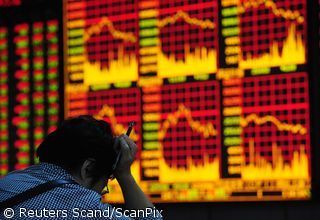 New EU laws proposed for closer oversight of financial services industry, sending a strong signal to this week's G20 summit.
more »
New EU laws proposed for closer oversight of financial services industry, sending a strong signal to this week's G20 summit.
more »
 The European Commission has repeatedly underlined that the restructuring plan of new Opel Europe must guarantee that the company will be viable in the future.
more »
The European Commission has repeatedly underlined that the restructuring plan of new Opel Europe must guarantee that the company will be viable in the future.
more »