Consumers Not Ready for EBPP
Published:
17 July 1999 y., Saturday
Consumers` interest in electronic bill presentment and payment (EBPP)
services lags behind that of companies, particularly high-volume
billers that want to switch from paper-based to electronic systems,
according to research conducted by PSI Global. According to PSI`s
research, only 7 percent of US households think they will be capable
of sending and receiving bills via the Internet within six to 12
months, and only 16 percent said they would like to use the
Internet both to receive and pay bills within the next three years.
PSI predicts that up to 15 percent of US households are likely to
be immediate adopters of EBPP services when they become available.
Close to 50 percent of US households already have PCs, and more than
a third of these PC owners actively use financial management
software. The use of checks to pay bills has also declined from 90
percent in 1990 to 76 percent this year, according to PSI. The most
likely agent to drive the change from paper-based billing to
electronics, according to PSI, is the potential cost savings for the
leading billing sectors. Consumers are expected to pay 15.9 billion
bill payments. The leading billing sectors - primarily lenders,
utilities, communications, insurance and credit card issuers-account
for more than 80 percent of all bills to consumers. For these
firms, EBPP potentially means billions of dollars in cost savings
annually. Among the factors that could delay consumer acceptance of
EBPP are concerns over privacy and convenience. Almost three-quarters
(63 percent) of households believe that receiving and paying bills
using the US Postal Service is more reliable and secure than
electronic delivery options; 74 percent of households like the
privacy of paying bills by check; and 72 percent like the
convenience of paying bills by check. One-quarter of households
believe that the Internet is not secure, and 65 percent are not
certain about Internet security. For nearly half of all households,
retaining control of payment timing is important.
Copying, publishing, announcing any information from the News.lt portal without written permission of News.lt editorial office is prohibited.
The most popular articles
 The EBRD is supporting the modernisation of transport infrastructure in Serbia with a €150 million sovereign loan to finalise the construction of a new motorway section along the strategic Corridor X.
more »
The EBRD is supporting the modernisation of transport infrastructure in Serbia with a €150 million sovereign loan to finalise the construction of a new motorway section along the strategic Corridor X.
more »
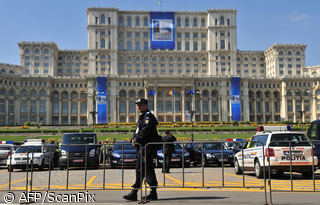 The Executive Board of the International Monetary Fund (IMF) today completed the first review of Romania’s economic performance under a program supported by a 24-month Stand-By Arrangement (SBA).
more »
The Executive Board of the International Monetary Fund (IMF) today completed the first review of Romania’s economic performance under a program supported by a 24-month Stand-By Arrangement (SBA).
more »
 The Executive Board of the International Monetary Fund (IMF) today approved a three-year, SDR 13.57 million (about US$21.5 million) arrangement under the Poverty Reduction and Growth Facility (PRGF) for the Union of the Comoros.
more »
The Executive Board of the International Monetary Fund (IMF) today approved a three-year, SDR 13.57 million (about US$21.5 million) arrangement under the Poverty Reduction and Growth Facility (PRGF) for the Union of the Comoros.
more »
 The Executive Board of the International Monetary Fund (IMF) today completed the second review of Mongolia's economic performance under a program supported by an 18-month Stand-By Arrangement (SBA).
more »
The Executive Board of the International Monetary Fund (IMF) today completed the second review of Mongolia's economic performance under a program supported by an 18-month Stand-By Arrangement (SBA).
more »
 Parex banka has established a subsidiary, SIA NIF (“Nekustamo īpašumu fonds”, or “Real Estate Fund”), which will professionally manage assets that are not related to the Bank’s core business.
more »
Parex banka has established a subsidiary, SIA NIF (“Nekustamo īpašumu fonds”, or “Real Estate Fund”), which will professionally manage assets that are not related to the Bank’s core business.
more »
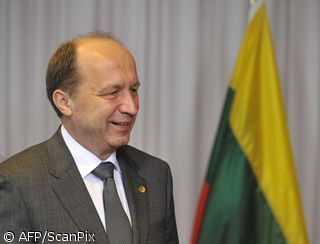 In his address at the Lithuanian-Belarusian Business Forum “Belarus and Baltic States: new prospects for cooperation”, Prime Minister Andrius Kubilius has pointed out that Lithuania sees Belarus as creating its future in Europe...
more »
In his address at the Lithuanian-Belarusian Business Forum “Belarus and Baltic States: new prospects for cooperation”, Prime Minister Andrius Kubilius has pointed out that Lithuania sees Belarus as creating its future in Europe...
more »
 JDRF Employs VoIP and Web-Based Video Collaboration Enabled by Cisco for More Effective Teamwork Among Employees and Constituents.
more »
JDRF Employs VoIP and Web-Based Video Collaboration Enabled by Cisco for More Effective Teamwork Among Employees and Constituents.
more »
 On 16 September 2009, AB Bank SNORAS group finished the transaction during which it purchased from AB “Invalda” with its own funds 100 per cent of the shares of AB “Finasta įmonių finansai”, managing AB Bank “Finasta”.
more »
On 16 September 2009, AB Bank SNORAS group finished the transaction during which it purchased from AB “Invalda” with its own funds 100 per cent of the shares of AB “Finasta įmonių finansai”, managing AB Bank “Finasta”.
more »
 Federal Reserve Chairman Ben Bernanke that the worst U.S. recession since the Great Depression was probably over, but the recovery will take time.
more »
Federal Reserve Chairman Ben Bernanke that the worst U.S. recession since the Great Depression was probably over, but the recovery will take time.
more »
 Growth expected to return in the second half of 2009. Forecasts are still uncertain but fears of a severe, prolonged recession are fading.
more »
Growth expected to return in the second half of 2009. Forecasts are still uncertain but fears of a severe, prolonged recession are fading.
more »