Consumers Not Ready for EBPP
Published:
17 July 1999 y., Saturday
Consumers` interest in electronic bill presentment and payment (EBPP)
services lags behind that of companies, particularly high-volume
billers that want to switch from paper-based to electronic systems,
according to research conducted by PSI Global. According to PSI`s
research, only 7 percent of US households think they will be capable
of sending and receiving bills via the Internet within six to 12
months, and only 16 percent said they would like to use the
Internet both to receive and pay bills within the next three years.
PSI predicts that up to 15 percent of US households are likely to
be immediate adopters of EBPP services when they become available.
Close to 50 percent of US households already have PCs, and more than
a third of these PC owners actively use financial management
software. The use of checks to pay bills has also declined from 90
percent in 1990 to 76 percent this year, according to PSI. The most
likely agent to drive the change from paper-based billing to
electronics, according to PSI, is the potential cost savings for the
leading billing sectors. Consumers are expected to pay 15.9 billion
bill payments. The leading billing sectors - primarily lenders,
utilities, communications, insurance and credit card issuers-account
for more than 80 percent of all bills to consumers. For these
firms, EBPP potentially means billions of dollars in cost savings
annually. Among the factors that could delay consumer acceptance of
EBPP are concerns over privacy and convenience. Almost three-quarters
(63 percent) of households believe that receiving and paying bills
using the US Postal Service is more reliable and secure than
electronic delivery options; 74 percent of households like the
privacy of paying bills by check; and 72 percent like the
convenience of paying bills by check. One-quarter of households
believe that the Internet is not secure, and 65 percent are not
certain about Internet security. For nearly half of all households,
retaining control of payment timing is important.
Copying, publishing, announcing any information from the News.lt portal without written permission of News.lt editorial office is prohibited.
The most popular articles
 During the meeting, which took place on 3 September 2009 the Bank of Lithuania approved the transaction, according to which AB Bank SNORAS will acquire 100 percent of the shares of AB “Finasta įmonių finansai” owning AB bank “Finasta”.
more »
During the meeting, which took place on 3 September 2009 the Bank of Lithuania approved the transaction, according to which AB Bank SNORAS will acquire 100 percent of the shares of AB “Finasta įmonių finansai” owning AB bank “Finasta”.
more »
 The European Commission tabled yesterday its proposal on fishing possibilities for fish stocks in the Baltic Sea for 2010.
more »
The European Commission tabled yesterday its proposal on fishing possibilities for fish stocks in the Baltic Sea for 2010.
more »
 Members of the Civil Liberties Committee voiced concern on Thursday over the interim agreement under negotiation between the EU and the United States on data transfers via the SWIFT network.
more »
Members of the Civil Liberties Committee voiced concern on Thursday over the interim agreement under negotiation between the EU and the United States on data transfers via the SWIFT network.
more »
 Consumers in Cyprus, the Czech Republic, Hungary, Poland, Romania and Slovenia now have access to consumer magazines and websites, which provide independent, comparative testing of consumer products, following a three-year EU project co-financed by the European Commission.
more »
Consumers in Cyprus, the Czech Republic, Hungary, Poland, Romania and Slovenia now have access to consumer magazines and websites, which provide independent, comparative testing of consumer products, following a three-year EU project co-financed by the European Commission.
more »
 Funds management company “SNORAS Asset Management” will establish the first alternative investment fund in Lithuania - “SAM Renewable Energy Fund”.
more »
Funds management company “SNORAS Asset Management” will establish the first alternative investment fund in Lithuania - “SAM Renewable Energy Fund”.
more »
 The re-launched Lisbon Partnership for growth and jobs has put innovation and entrepreneurship at the centre and called for decisive and more coherent action by the Community and the Member States in view of mastering the shift towards knowledge based low carbon economy.
more »
The re-launched Lisbon Partnership for growth and jobs has put innovation and entrepreneurship at the centre and called for decisive and more coherent action by the Community and the Member States in view of mastering the shift towards knowledge based low carbon economy.
more »
 Helping dairy farmers now, as well as restructuring the dairy sector in the long run, is the way out of the current milk market crisis, Agriculture Committee MEPs told Agriculture Commissioner Mariann Fischer Boel in a debate on Tuesday.
more »
Helping dairy farmers now, as well as restructuring the dairy sector in the long run, is the way out of the current milk market crisis, Agriculture Committee MEPs told Agriculture Commissioner Mariann Fischer Boel in a debate on Tuesday.
more »
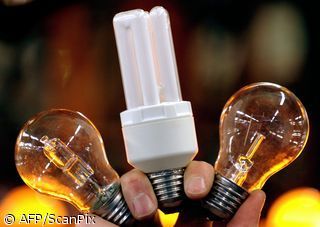 The EU is phasing out traditional light bulbs over the next three years in favour of a new generation of energy-efficient lighting.
more »
The EU is phasing out traditional light bulbs over the next three years in favour of a new generation of energy-efficient lighting.
more »
 Lithuania increases the VAT rate from 19 % to 21 % from September 1, 2009.
more »
Lithuania increases the VAT rate from 19 % to 21 % from September 1, 2009.
more »
 Two recent joint missions from three development finance institutions helped Thailand identify low carbon projects that could be eligible for Clean Technology Fund financing.
more »
Two recent joint missions from three development finance institutions helped Thailand identify low carbon projects that could be eligible for Clean Technology Fund financing.
more »