Consumers Not Ready for EBPP
Published:
17 July 1999 y., Saturday
Consumers` interest in electronic bill presentment and payment (EBPP)
services lags behind that of companies, particularly high-volume
billers that want to switch from paper-based to electronic systems,
according to research conducted by PSI Global. According to PSI`s
research, only 7 percent of US households think they will be capable
of sending and receiving bills via the Internet within six to 12
months, and only 16 percent said they would like to use the
Internet both to receive and pay bills within the next three years.
PSI predicts that up to 15 percent of US households are likely to
be immediate adopters of EBPP services when they become available.
Close to 50 percent of US households already have PCs, and more than
a third of these PC owners actively use financial management
software. The use of checks to pay bills has also declined from 90
percent in 1990 to 76 percent this year, according to PSI. The most
likely agent to drive the change from paper-based billing to
electronics, according to PSI, is the potential cost savings for the
leading billing sectors. Consumers are expected to pay 15.9 billion
bill payments. The leading billing sectors - primarily lenders,
utilities, communications, insurance and credit card issuers-account
for more than 80 percent of all bills to consumers. For these
firms, EBPP potentially means billions of dollars in cost savings
annually. Among the factors that could delay consumer acceptance of
EBPP are concerns over privacy and convenience. Almost three-quarters
(63 percent) of households believe that receiving and paying bills
using the US Postal Service is more reliable and secure than
electronic delivery options; 74 percent of households like the
privacy of paying bills by check; and 72 percent like the
convenience of paying bills by check. One-quarter of households
believe that the Internet is not secure, and 65 percent are not
certain about Internet security. For nearly half of all households,
retaining control of payment timing is important.
Copying, publishing, announcing any information from the News.lt portal without written permission of News.lt editorial office is prohibited.
The most popular articles
 Standard & Poor's (S&P) affirmed Lithuania's long-term investment grade sovereign foreign currency BBB credit rating and removed it from a CreditWatch negative position, citing government commitments to address deteriorating public finances.
more »
Standard & Poor's (S&P) affirmed Lithuania's long-term investment grade sovereign foreign currency BBB credit rating and removed it from a CreditWatch negative position, citing government commitments to address deteriorating public finances.
more »
 The EBRD-EIB Multilateral Carbon Credit Fund (MCCF) and Azerenerji Joint Stock Company are collaborating in order to promote energy-efficient power generation in Azerbaijan.
more »
The EBRD-EIB Multilateral Carbon Credit Fund (MCCF) and Azerenerji Joint Stock Company are collaborating in order to promote energy-efficient power generation in Azerbaijan.
more »
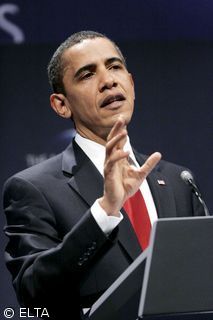 U.S. President Barack Obama, meeting with the leaders of Mexico and Canada, called on all three nations hit by the global recession to avoid resorting to protectionism.
more »
U.S. President Barack Obama, meeting with the leaders of Mexico and Canada, called on all three nations hit by the global recession to avoid resorting to protectionism.
more »
 A 10-year $75 million EBRD loan will finance the construction of a combined heat and power plant in the east Siberian city of Krasnoyarsk which is expected to improve energy efficiency and cut pollution by 14 percent thanks to the use of more environmentally-friendly technologies.
more »
A 10-year $75 million EBRD loan will finance the construction of a combined heat and power plant in the east Siberian city of Krasnoyarsk which is expected to improve energy efficiency and cut pollution by 14 percent thanks to the use of more environmentally-friendly technologies.
more »
 The Directorate-General for Competition has issued a review of the aid schemes introduced by Member States and approved by the Commission during the financial crisis.
more »
The Directorate-General for Competition has issued a review of the aid schemes introduced by Member States and approved by the Commission during the financial crisis.
more »
 Rescue planes from New Zealand have been taking part in a massive search for passengers after a ferry sank off the coast of Tonga. At least 27 people are missing.
more »
Rescue planes from New Zealand have been taking part in a massive search for passengers after a ferry sank off the coast of Tonga. At least 27 people are missing.
more »
 Courtney Adams has always loved cooking. As a kid she baked brownies for her friends and in college her apartment was the place to go to for a home-cooked meal. But she never thought she'd cook for a living.
more »
Courtney Adams has always loved cooking. As a kid she baked brownies for her friends and in college her apartment was the place to go to for a home-cooked meal. But she never thought she'd cook for a living.
more »
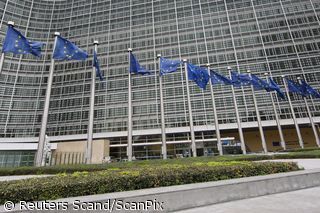 The European Commission has authorised, under EC Treaty state aid rules, a scheme offering reduced-interest loans to businesses investing in the production of environmentally friendly products, as part of the German package to tackle the current economic crisis.
more »
The European Commission has authorised, under EC Treaty state aid rules, a scheme offering reduced-interest loans to businesses investing in the production of environmentally friendly products, as part of the German package to tackle the current economic crisis.
more »
 Ramūnas Bičiulaitis, former board member and financial director of AB LEO LT, starts working as head of the Finance Department of Danske Bankas.
more »
Ramūnas Bičiulaitis, former board member and financial director of AB LEO LT, starts working as head of the Finance Department of Danske Bankas.
more »
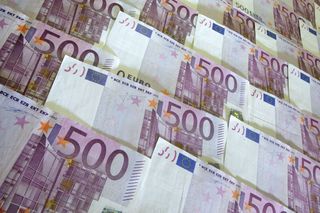 The EBRD has kept up a rapid pace in the syndicated loans market, defying difficult market conditions and pulling together nine deals so far this year, worth a total €1.2 billion.
more »
The EBRD has kept up a rapid pace in the syndicated loans market, defying difficult market conditions and pulling together nine deals so far this year, worth a total €1.2 billion.
more »