Consumers Not Ready for EBPP
Published:
17 July 1999 y., Saturday
Consumers` interest in electronic bill presentment and payment (EBPP)
services lags behind that of companies, particularly high-volume
billers that want to switch from paper-based to electronic systems,
according to research conducted by PSI Global. According to PSI`s
research, only 7 percent of US households think they will be capable
of sending and receiving bills via the Internet within six to 12
months, and only 16 percent said they would like to use the
Internet both to receive and pay bills within the next three years.
PSI predicts that up to 15 percent of US households are likely to
be immediate adopters of EBPP services when they become available.
Close to 50 percent of US households already have PCs, and more than
a third of these PC owners actively use financial management
software. The use of checks to pay bills has also declined from 90
percent in 1990 to 76 percent this year, according to PSI. The most
likely agent to drive the change from paper-based billing to
electronics, according to PSI, is the potential cost savings for the
leading billing sectors. Consumers are expected to pay 15.9 billion
bill payments. The leading billing sectors - primarily lenders,
utilities, communications, insurance and credit card issuers-account
for more than 80 percent of all bills to consumers. For these
firms, EBPP potentially means billions of dollars in cost savings
annually. Among the factors that could delay consumer acceptance of
EBPP are concerns over privacy and convenience. Almost three-quarters
(63 percent) of households believe that receiving and paying bills
using the US Postal Service is more reliable and secure than
electronic delivery options; 74 percent of households like the
privacy of paying bills by check; and 72 percent like the
convenience of paying bills by check. One-quarter of households
believe that the Internet is not secure, and 65 percent are not
certain about Internet security. For nearly half of all households,
retaining control of payment timing is important.
Copying, publishing, announcing any information from the News.lt portal without written permission of News.lt editorial office is prohibited.
The most popular articles
 The financial crisis is having a serious impact on low-income countries.
more »
The financial crisis is having a serious impact on low-income countries.
more »
 The agreement was welcomed by the EU, which has led efforts to crack down on loose banking practices that caused the financial crisis.
more »
The agreement was welcomed by the EU, which has led efforts to crack down on loose banking practices that caused the financial crisis.
more »
 On 31 March this year, the boards of AB Bank SNORAS and AB “Invalda” approved of the purchase and sales transaction of AB “Invalda” financial group's companies.
more »
On 31 March this year, the boards of AB Bank SNORAS and AB “Invalda” approved of the purchase and sales transaction of AB “Invalda” financial group's companies.
more »
 MEPs will vote on Thursday 2 April on a first reading agreement on the voluntary EU Ecolabel (“EU flower”) system for environment-friendly products to become less costly and bureaucratic to use.
more »
MEPs will vote on Thursday 2 April on a first reading agreement on the voluntary EU Ecolabel (“EU flower”) system for environment-friendly products to become less costly and bureaucratic to use.
more »
 The fourth quarter of 2008 was not so good for the banking industry, and the financial conditions of commercial banks and savings and loans is expected to further deteriorate for the rest of 2009 and the first part of 2010, according to LACE Financial Corp.
more »
The fourth quarter of 2008 was not so good for the banking industry, and the financial conditions of commercial banks and savings and loans is expected to further deteriorate for the rest of 2009 and the first part of 2010, according to LACE Financial Corp.
more »
 MEPs recently gave the green light to a new trade deal between Europe and Caribbean countries.
more »
MEPs recently gave the green light to a new trade deal between Europe and Caribbean countries.
more »
 New VoIP Features Boost Flexibility, Mobility, Cost Savings for Organizations Seeking to Untether Workers.
more »
New VoIP Features Boost Flexibility, Mobility, Cost Savings for Organizations Seeking to Untether Workers.
more »
 According to the revised data, in IV quarter 2008, GDP at current prices made LTL 28578.8 million and against IV quarter 2007 decreased by 2.2 per cent.
more »
According to the revised data, in IV quarter 2008, GDP at current prices made LTL 28578.8 million and against IV quarter 2007 decreased by 2.2 per cent.
more »
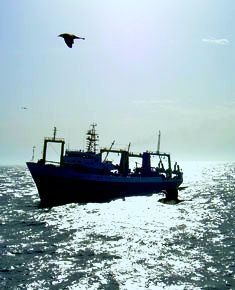 The EP Fisheries Committee rewrote the rules on recreational fishing in its consultative report, adopted Tuesday, on a proposed “control regulation” to ensure compliance with common fisheries policy (CFP) rules.
more »
The EP Fisheries Committee rewrote the rules on recreational fishing in its consultative report, adopted Tuesday, on a proposed “control regulation” to ensure compliance with common fisheries policy (CFP) rules.
more »
 In a measure of the Union’s strong growth prior to the financial crisis, the demand for EU trademark rights has shot up in recent years, creating an unexpected budget surplus.
more »
In a measure of the Union’s strong growth prior to the financial crisis, the demand for EU trademark rights has shot up in recent years, creating an unexpected budget surplus.
more »