Putin-brand vodka hit liquor stores in Lithuania on September 15
Published:
18 September 2000 y., Monday
Putin-brand vodka hit liquor stores in Lithuania on September 15, raising eyebrows but also inspiring admiration for what many said was a clever marketing ploy to profit from Russian President Vladimir Putin's name.
Putin Vodka, produced by Lithuania's large Alita distillery, features a label in white, blue and red, the colors of Russia's national flag. "Putin" is written in large white letters across the bottle.
Because of its name, Putin Vodka has received widespread coverage in the local press, prompting envy from other companies that normally have to spend lavishly on advertising to publicize their new product lines.
Alita spokesmen have insisted that the brand wasn't meant to refer to the Russian president. They said it derived from putinas, or snowball tree in English, a red-berried tree found in Lithuania.
But most observers said they didn't believe the denials, saying the association with the Russian president couldn't have been accidental. The more the company denied the link, marketing experts pointed out, the more publicity Alita received.
The bottles of Putin almost certainly aren't meant to pay homage to the Russian president. Most Lithuanians have expressed deep suspicion about Putin's past working for the Soviet secret police, saying he can't be trusted.
The new vodka is currently sold only in Lithuania, though the distillery said it could later decide to export it, even to Russia.
There's no word on how the Russian president, who is said to be a teetotaler, feels about the namesake vodka.
Šaltinis:
balticsww.com
Copying, publishing, announcing any information from the News.lt portal without written permission of News.lt editorial office is prohibited.
The most popular articles
 The EU needs a strategy by 2011 to encourage the creation of green jobs, says a draft resolution by the Employment and Social Affairs Committee that was adopted on Wednesday.
more »
The EU needs a strategy by 2011 to encourage the creation of green jobs, says a draft resolution by the Employment and Social Affairs Committee that was adopted on Wednesday.
more »
 Householders should not have to go without gas due to a gas-supply crisis, and such crises should be better managed, thanks to EU-wide co-ordination procedures and interconnection requirements laid down in draft legislation agreed informally with the Council at the end of June and approved by the Industry Committee on Tuesday.
more »
Householders should not have to go without gas due to a gas-supply crisis, and such crises should be better managed, thanks to EU-wide co-ordination procedures and interconnection requirements laid down in draft legislation agreed informally with the Council at the end of June and approved by the Industry Committee on Tuesday.
more »
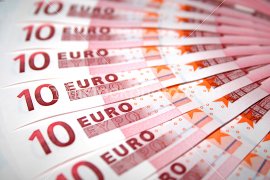 Today the Council has taken the formal decision which will pave the way for the introduction of the euro in Estonia as of 1 January 2011 and will become the 17th European Union country to share the euro currency.
more »
Today the Council has taken the formal decision which will pave the way for the introduction of the euro in Estonia as of 1 January 2011 and will become the 17th European Union country to share the euro currency.
more »
 Proposals to improve protection for bank account holders and retail investors, and set up similar schemes for insurance policies.
more »
Proposals to improve protection for bank account holders and retail investors, and set up similar schemes for insurance policies.
more »
 How should the EU's farm policy be reshaped and how should it be funded after 2013?
more »
How should the EU's farm policy be reshaped and how should it be funded after 2013?
more »
 MEPs on Wednesday approved some of the strictest rules in the world on bankers' bonuses.
more »
MEPs on Wednesday approved some of the strictest rules in the world on bankers' bonuses.
more »
 Long before the financial crisis the European Parliament regularly pointed out the significant failures in the EU’s supervision of ever more integrated financial markets.
more »
Long before the financial crisis the European Parliament regularly pointed out the significant failures in the EU’s supervision of ever more integrated financial markets.
more »
 New strategy for stimulating tourism in Europe – to realise the full potential of an industry that already plays an important role in the economy.
more »
New strategy for stimulating tourism in Europe – to realise the full potential of an industry that already plays an important role in the economy.
more »
 The European Commission has disclosed who in 2009 received EU funds in policy areas like research, education and culture, energy and transport or external aid.
more »
The European Commission has disclosed who in 2009 received EU funds in policy areas like research, education and culture, energy and transport or external aid.
more »
The European Commission has approved 19 programmes in 14 Member States (Austria, Belgium, Czech Republic, Denmark, Germany, France, Greece, Italy, Ireland, the Netherlands, Poland, Slovenia, Spain and the United Kingdom) to provide information on and to promote agricultural products in the European Union.
more »