The economies of Russia and the other 11 members of the Commonwealth of Independent States are contracting sharply but continue to recover from the 1998 Russian crisis
Published:
29 September 2001 y., Saturday
The economies of Russia and the other 11 members of the Commonwealth of Independent States are contracting sharply but continue to recover from the 1998 Russian crisis, the IMF said in its World Economic Outlook report published Wednesday.
In Russia, the region’s biggest economy, gross domestic productgrowth this year is expected to halve to 4.0 percent, from 8.3 percent in 2000, and to hold steady at 4.0 percent in 2002.
The combined economic growth of the 12-state CIS is projected to shrink to 4.4 percent this year from 7.9 percent in 2000, and to contract further to 4.0 percent in 2002.
But the CIS countries, which had lagged in introducing structural reforms when growth was strongest, had to press ahead with change, the report insisted.
The IMF explained that most of the 2001 regional slowdown was due to a partial reversal of the factors that had boosted growth earlier, including lower energy prices, real exchange rate appreciation and weaker-than-expected activity in Western Europe.
Russia, despite some weakening in oil prices from their late 2000 peaks and continued high capital outflows, was expected to maintain a strong surplus in its current account and overall balance of payments, the IMF said.
Šaltinis:
globe.kz
Copying, publishing, announcing any information from the News.lt portal without written permission of News.lt editorial office is prohibited.
The most popular articles
 In another move to strengthen the financial system, the Commission is proposing controls on credit rating agencies - private companies that evaluate financial risks for investors.
more »
In another move to strengthen the financial system, the Commission is proposing controls on credit rating agencies - private companies that evaluate financial risks for investors.
more »
 Monday 10 November saw a large report land on the desk of MEPs in the Budgetary Control Committee.
more »
Monday 10 November saw a large report land on the desk of MEPs in the Budgetary Control Committee.
more »
 EU wants G20 meeting to pave the way for reform of the international financial system.
more »
EU wants G20 meeting to pave the way for reform of the international financial system.
more »
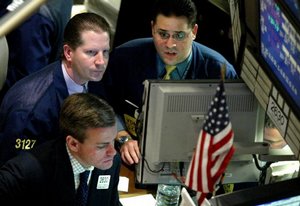 New Yorkers reflect on the election of Barack Obama as the 44th President of the United States.
more »
New Yorkers reflect on the election of Barack Obama as the 44th President of the United States.
more »
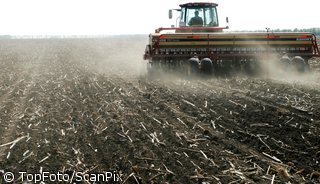 The ability of the EU's common agriculture policy (CAP) to cope with the challenges of affordable food and climate change was discussed in Brussels 3-4 November.
more »
The ability of the EU's common agriculture policy (CAP) to cope with the challenges of affordable food and climate change was discussed in Brussels 3-4 November.
more »
 European Union economic growth should be 1.4% in 2008, half what it was in 2007, and drop even more sharply in 2009 to 0.2% before recovering gradually to 1.1% in 2010 (1.2%, 0.1% and 0.9%, respectively, for the euro area).
more »
European Union economic growth should be 1.4% in 2008, half what it was in 2007, and drop even more sharply in 2009 to 0.2% before recovering gradually to 1.1% in 2010 (1.2%, 0.1% and 0.9%, respectively, for the euro area).
more »
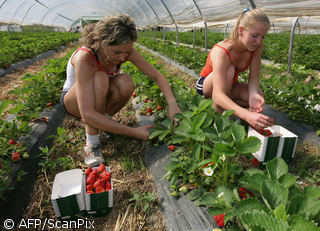 There are an estimated 4-8 million immigrants working illegally in the European Union.
more »
There are an estimated 4-8 million immigrants working illegally in the European Union.
more »
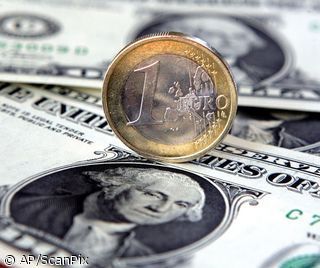 Hit by economic turmoil and the sharp global downturn, growth in the EU slows almost to a halt.
more »
Hit by economic turmoil and the sharp global downturn, growth in the EU slows almost to a halt.
more »
 The top priority is to cushion the impact of the financial crisis on jobs, purchasing power and prosperity of EU citizens.
more »
The top priority is to cushion the impact of the financial crisis on jobs, purchasing power and prosperity of EU citizens.
more »
 The International Monetary Fund has approved short-term financing to help emerging market economies weather the global financial storm.
more »
The International Monetary Fund has approved short-term financing to help emerging market economies weather the global financial storm.
more »