China's economy has entered into a new stage of fast growth from its adjustment-recovery period since the outbreak of the Asian Financial Crisis in 1997
Published:
13 November 2003 y., Thursday
China's economy has entered into a new stage of fast growth from its adjustment-recovery period since the outbreak of the Asian Financial Crisis in 1997, and six major changes have taken place in the conditions bolstering up China's economic growth, said Qiu Xiaohua, Deputy Director of the National Bureau of Statistics (NBS), on November 10.
He also said at the 2003 China Economic Growth Forum held in Suzhou, coastal Jiangsu Province, that what worried him last year was how to keep a sustained growth of the economy, but now some people are worried about whether the economy is overheating, China's economy has got across a turning point. The first three quarters of this year saw an 8.5 percent increase. And power shortage, price hike for steel products, and the substantial rise in housing and automobile consumption have all convinced people that China's economy is marching forward toward a new higher stage.
Qiu pointed out that in the discussions on the supporting factors boosting this round of growth, many critics linked up the growth with the rapid expansion of the credit scale as well as the economic behavior of local governments. However, a question that must not be neglected is that fundamental changes have taken place in the force supporting economic growth. In terms of investment, the fast economic growth is attributed to the rapid increase in private investment and overseas direct investment. It is also worth noticing that residents' upgraded consumption must not be underestimated.
According to Qiu's analysis, China's WTO membership has ushered in a new stage for China's opening to the outside world. The initial establishment of a new framework for the socialist market economic system has added fresh vigor to China's economy. A well-off society has been established as a whole, and new space has been opened for economic restructuring. In a word, China's new economic growth is the natural result of the interaction between marketization and internationalization and the increasing reinforcement of the inherent power of the economy.
Šaltinis:
People's Daily Online
Copying, publishing, announcing any information from the News.lt portal without written permission of News.lt editorial office is prohibited.
The most popular articles
 Bank DnB NORD A/S increasing its holdings in its Lithuanian subsidiary to 99.84 percent through acquisition of shares from minority shareholders.
more »
Bank DnB NORD A/S increasing its holdings in its Lithuanian subsidiary to 99.84 percent through acquisition of shares from minority shareholders.
more »
 AB Bank SNORAS will grant LTL 35 million for financing the small and medium businesses on the exclusive conditions.
more »
AB Bank SNORAS will grant LTL 35 million for financing the small and medium businesses on the exclusive conditions.
more »
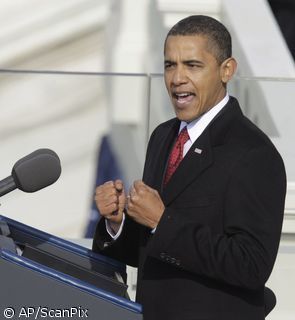 Rejecting survival plans from both General Motors and Chrysler, President Barack Obama warned the ailing US automakers they could be forced into bankruptcy if they don't find a way to slash their debt.
more »
Rejecting survival plans from both General Motors and Chrysler, President Barack Obama warned the ailing US automakers they could be forced into bankruptcy if they don't find a way to slash their debt.
more »
 Prevailing wisdom says when the going gets tough the weary go drinking. The demand for beer exceeds the demand for all other alcoholic beverages in USA.
more »
Prevailing wisdom says when the going gets tough the weary go drinking. The demand for beer exceeds the demand for all other alcoholic beverages in USA.
more »
 Things have been moving slowly for Swiss watchmakers in recent months. The global economic downturn has hit the country's third most important industry hard.
more »
Things have been moving slowly for Swiss watchmakers in recent months. The global economic downturn has hit the country's third most important industry hard.
more »
 The move came a day before the U.S. government was due to outline new steps to help GM and Chrysler as part of the federal bailout.
more »
The move came a day before the U.S. government was due to outline new steps to help GM and Chrysler as part of the federal bailout.
more »
 With the European year of creativity and innovation in full swing, leading figures warn against cutting back on research and development in times of crisis.
more »
With the European year of creativity and innovation in full swing, leading figures warn against cutting back on research and development in times of crisis.
more »
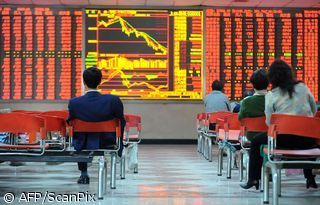 Wall Street has been looking for signs of a bullish comeback, and today's surprise news on the economic front revived a buying spree... started by Monday's 7% rally.
more »
Wall Street has been looking for signs of a bullish comeback, and today's surprise news on the economic front revived a buying spree... started by Monday's 7% rally.
more »
 With the economic crisis eating away at public finances, budget deficits in five countries are expected to exceed the 3% of gross domestic product allowed by the EU.
more »
With the economic crisis eating away at public finances, budget deficits in five countries are expected to exceed the 3% of gross domestic product allowed by the EU.
more »
 China is calling for a new global currency to replace the dominant dollar, showing a growing assertiveness on revamping the world economy ahead of next week's London summit on the financial crisis.
more »
China is calling for a new global currency to replace the dominant dollar, showing a growing assertiveness on revamping the world economy ahead of next week's London summit on the financial crisis.
more »