China's economy has entered into a new stage of fast growth from its adjustment-recovery period since the outbreak of the Asian Financial Crisis in 1997
Published:
13 November 2003 y., Thursday
China's economy has entered into a new stage of fast growth from its adjustment-recovery period since the outbreak of the Asian Financial Crisis in 1997, and six major changes have taken place in the conditions bolstering up China's economic growth, said Qiu Xiaohua, Deputy Director of the National Bureau of Statistics (NBS), on November 10.
He also said at the 2003 China Economic Growth Forum held in Suzhou, coastal Jiangsu Province, that what worried him last year was how to keep a sustained growth of the economy, but now some people are worried about whether the economy is overheating, China's economy has got across a turning point. The first three quarters of this year saw an 8.5 percent increase. And power shortage, price hike for steel products, and the substantial rise in housing and automobile consumption have all convinced people that China's economy is marching forward toward a new higher stage.
Qiu pointed out that in the discussions on the supporting factors boosting this round of growth, many critics linked up the growth with the rapid expansion of the credit scale as well as the economic behavior of local governments. However, a question that must not be neglected is that fundamental changes have taken place in the force supporting economic growth. In terms of investment, the fast economic growth is attributed to the rapid increase in private investment and overseas direct investment. It is also worth noticing that residents' upgraded consumption must not be underestimated.
According to Qiu's analysis, China's WTO membership has ushered in a new stage for China's opening to the outside world. The initial establishment of a new framework for the socialist market economic system has added fresh vigor to China's economy. A well-off society has been established as a whole, and new space has been opened for economic restructuring. In a word, China's new economic growth is the natural result of the interaction between marketization and internationalization and the increasing reinforcement of the inherent power of the economy.
Šaltinis:
People's Daily Online
Copying, publishing, announcing any information from the News.lt portal without written permission of News.lt editorial office is prohibited.
The most popular articles
 In another move to strengthen the financial system, the Commission is proposing controls on credit rating agencies - private companies that evaluate financial risks for investors.
more »
In another move to strengthen the financial system, the Commission is proposing controls on credit rating agencies - private companies that evaluate financial risks for investors.
more »
 Monday 10 November saw a large report land on the desk of MEPs in the Budgetary Control Committee.
more »
Monday 10 November saw a large report land on the desk of MEPs in the Budgetary Control Committee.
more »
 EU wants G20 meeting to pave the way for reform of the international financial system.
more »
EU wants G20 meeting to pave the way for reform of the international financial system.
more »
 New Yorkers reflect on the election of Barack Obama as the 44th President of the United States.
more »
New Yorkers reflect on the election of Barack Obama as the 44th President of the United States.
more »
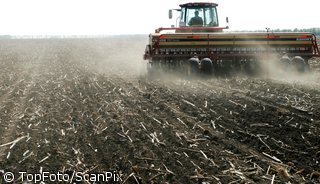 The ability of the EU's common agriculture policy (CAP) to cope with the challenges of affordable food and climate change was discussed in Brussels 3-4 November.
more »
The ability of the EU's common agriculture policy (CAP) to cope with the challenges of affordable food and climate change was discussed in Brussels 3-4 November.
more »
 European Union economic growth should be 1.4% in 2008, half what it was in 2007, and drop even more sharply in 2009 to 0.2% before recovering gradually to 1.1% in 2010 (1.2%, 0.1% and 0.9%, respectively, for the euro area).
more »
European Union economic growth should be 1.4% in 2008, half what it was in 2007, and drop even more sharply in 2009 to 0.2% before recovering gradually to 1.1% in 2010 (1.2%, 0.1% and 0.9%, respectively, for the euro area).
more »
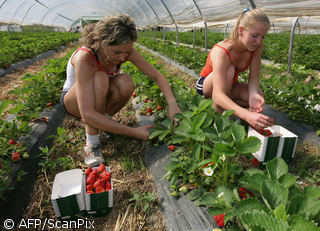 There are an estimated 4-8 million immigrants working illegally in the European Union.
more »
There are an estimated 4-8 million immigrants working illegally in the European Union.
more »
 Hit by economic turmoil and the sharp global downturn, growth in the EU slows almost to a halt.
more »
Hit by economic turmoil and the sharp global downturn, growth in the EU slows almost to a halt.
more »
 The top priority is to cushion the impact of the financial crisis on jobs, purchasing power and prosperity of EU citizens.
more »
The top priority is to cushion the impact of the financial crisis on jobs, purchasing power and prosperity of EU citizens.
more »
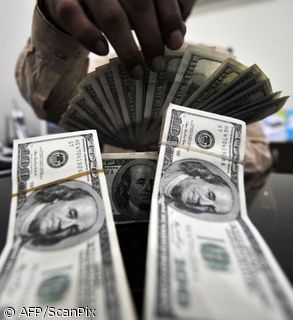 The International Monetary Fund has approved short-term financing to help emerging market economies weather the global financial storm.
more »
The International Monetary Fund has approved short-term financing to help emerging market economies weather the global financial storm.
more »