Telecommunications equipment suppliers have been forced to expand their product lines.
Published:
6 March 1999 y., Saturday
Desperate to beef up their Internet technology, European telecoms are waving dollars in front of US equipment makers. In the latest deal, France_s Alcatel said Thursday that it had agreed to buy California-based Internet firm Assured Access Technology for $350 million. That news comes hard on the heels of the company_s announcement earlier this week that it plans to buy Internet equipment maker Xylan Corp. for $2 billion. Meanwhile, The New York Times reported that Siemens was about to expand into the data networking business by creating a new American unit, buying two private US firms, investing in another, and hiring a senior executive from IBM. Analysts said that should the report prove true, Siemens was making a vital strategic move into the Internet technology to compete with rivals that have already bought into the business. Telecommunications equipment suppliers have been forced to expand their product lines amid the explosion of the Internet and as the appetite for data grows. In January, Lucent Technologies agreed to acquire Ascend Communications to boost its Internet position, and Northern Telecom bought Bay Networks last year. Now the Europeans are getting into the act. Assured Access, founded in September 1996, will keep its name when the Alcatel deal is complete. Assured Access provides "public data networking solutions for carriers and service providers, including scalable, highly reliable multi-service access products for data and voice over IP," the Alcatel statement said. As for Siemens, The Times said it is expected to announce agreements to buy data networking firms Castle Networks and Argon Networks, and take a $30 million interest in Accelerated Networks Inc.
Šaltinis:
Wired News
Copying, publishing, announcing any information from the News.lt portal without written permission of News.lt editorial office is prohibited.
The most popular articles
 According to the data presented by the Ministry of Finance, in end-January central government debt made up LTL26, 310.8 million or 28% of projected GDP for 2010 (LTL 93, 819 million).
more »
According to the data presented by the Ministry of Finance, in end-January central government debt made up LTL26, 310.8 million or 28% of projected GDP for 2010 (LTL 93, 819 million).
more »
 As far as countries affected by the economic crisis, China fared extremely well.
more »
As far as countries affected by the economic crisis, China fared extremely well.
more »
 The European Commission has authorised today a Slovak scheme with a budget of approximately €3.32 million which aims at supporting farmers in Slovakia who encounter difficulties as a result of the current economic crisis.
more »
The European Commission has authorised today a Slovak scheme with a budget of approximately €3.32 million which aims at supporting farmers in Slovakia who encounter difficulties as a result of the current economic crisis.
more »
 Commission sets out a 10-year strategy for reviving the European economy, casting a vision of ‘smart, sustainable, inclusive' growth rooted in greater coordination of national and European policy.
more »
Commission sets out a 10-year strategy for reviving the European economy, casting a vision of ‘smart, sustainable, inclusive' growth rooted in greater coordination of national and European policy.
more »
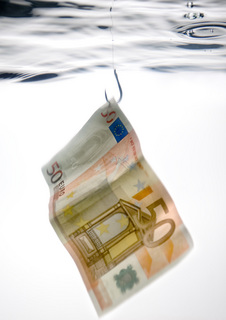 The European Commission has launched today the Europe 2020 Strategy to go out of the crisis and prepare EU economy for the next decade. The Commission identifies three key drivers for growth, to be implemented through concrete actions at EU and national levels.
more »
The European Commission has launched today the Europe 2020 Strategy to go out of the crisis and prepare EU economy for the next decade. The Commission identifies three key drivers for growth, to be implemented through concrete actions at EU and national levels.
more »
 Launching of the “SCHOOLS’ initiative for innovation and changes” Grant scheme.
more »
Launching of the “SCHOOLS’ initiative for innovation and changes” Grant scheme.
more »
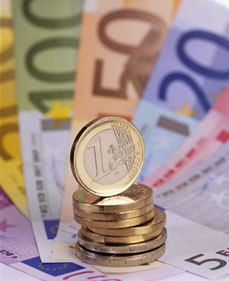 EU Member States must not only deliver on their international aid pledges, but also bring in a financial transactions tax and a temporary debt moratorium, to help developing countries to cope with the effects of the global financial and economic crisis, said the Development Committee on Monday.
more »
EU Member States must not only deliver on their international aid pledges, but also bring in a financial transactions tax and a temporary debt moratorium, to help developing countries to cope with the effects of the global financial and economic crisis, said the Development Committee on Monday.
more »
 The EBRD is increasing its commitments to promote sustainable energy projects in Slovakia with a new €90 million funding under the existing Slovakia Sustainable Energy Finance Facility (SLOVSEFF) to ensure continuous implementation of energy efficiency and small renewable energy projects.
more »
The EBRD is increasing its commitments to promote sustainable energy projects in Slovakia with a new €90 million funding under the existing Slovakia Sustainable Energy Finance Facility (SLOVSEFF) to ensure continuous implementation of energy efficiency and small renewable energy projects.
more »
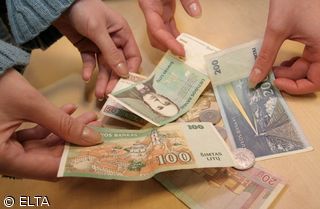 According to the unaudited data, in 2009 AB Bank SNORAS earned LTL 8.7 million profit. The bank’s assets grew by 11 per cent up to LTL 6.342 billion during 2009 and were by LTL 647.8 million larger than at the beginning of 2009.
more »
According to the unaudited data, in 2009 AB Bank SNORAS earned LTL 8.7 million profit. The bank’s assets grew by 11 per cent up to LTL 6.342 billion during 2009 and were by LTL 647.8 million larger than at the beginning of 2009.
more »
 Aviation security measures that go beyond common EU requirements should be paid for by Member States, not by passengers, said Transport Committee MEPs in a vote on Monday that could put Parliament on a collision course with the Council of Ministers.
more »
Aviation security measures that go beyond common EU requirements should be paid for by Member States, not by passengers, said Transport Committee MEPs in a vote on Monday that could put Parliament on a collision course with the Council of Ministers.
more »