Lithuania's Adamkus Expects 7% Economic Growth, Euro in 2007
Published:
11 December 2004 y., Saturday
Lithuania, the fastest-growing economy in Europe last year, will expand 7 percent a year through 2007, helped by 2.5 billion euros ($3.3 billion) of European Union aid and foreign investments, President Valdas Adamkus said.
``There are still huge untapped opportunities'' in the Lithuanian economy, Adamkus, a 78-year-old former U.S. citizen, said in an interview in London. ``For the next three years, we'll continue growing at 7 percent without doubt.''
The former Soviet Baltic state of 3.5 million people is one of 10 nations that joined the European Union in May. Its $18 billion economy expanded 9.7 percent last year. The rapid pace of growth and EU financial aid is helping Lithuania keep its budget deficit down, meeting a key requirement for euro adoption.
Adamkus said there were no obstacles to switching to the euro within three years together with Estonia and Slovenia. The three EU entrants on June 27 started a two-year test of currency stability and could get the currency as soon as 2006.
``We are ready to introduce euros in an orderly and safe way,'' said Adamkus. ``Lithuanians will have euros in 2007.''
Lithuania already meets terms to limit the budget deficit, state debt and interest rates, and is close to the current 2.5 percent inflation target. Annual inflation slowed to 3 percent in October from 3.3 percent a month earlier.
Šaltinis:
Bloomberg
Copying, publishing, announcing any information from the News.lt portal without written permission of News.lt editorial office is prohibited.
The most popular articles
 On 11 February, heads of state or government of European Union member states will meet in Brussels to seek a commitment towards implementing a revitalised economic strategy to boost employment and growth in the EU.
more »
On 11 February, heads of state or government of European Union member states will meet in Brussels to seek a commitment towards implementing a revitalised economic strategy to boost employment and growth in the EU.
more »
 International Monetary Fund forecasts that Lithuania’s economy will grow 1.6 % this year, making it “the only one of the three Baltic economies expected to be in the positive territory in 2010”.
more »
International Monetary Fund forecasts that Lithuania’s economy will grow 1.6 % this year, making it “the only one of the three Baltic economies expected to be in the positive territory in 2010”.
more »
 Raynair announced it would open its 40th and 1st Central European base at Kaunas, Lithuania’s second largest city, in May with 2 based aircraft and 18 routes.
more »
Raynair announced it would open its 40th and 1st Central European base at Kaunas, Lithuania’s second largest city, in May with 2 based aircraft and 18 routes.
more »
 A new Partnership Strategy for Morocco has been approved by the Board of Executive Directors of the World Bank.
more »
A new Partnership Strategy for Morocco has been approved by the Board of Executive Directors of the World Bank.
more »
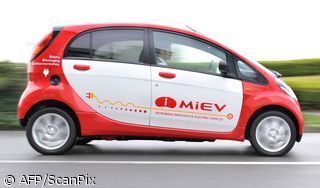 The electric car is an opportunity for European industry.
more »
The electric car is an opportunity for European industry.
more »
 The EBRD’s Board of Directors has adopted a new strategy for Kazakhstan, which reinforces the Bank’s commitment to further support the Kazakh economy and sets out the priorities for its activities in the country over the next three years.
more »
The EBRD’s Board of Directors has adopted a new strategy for Kazakhstan, which reinforces the Bank’s commitment to further support the Kazakh economy and sets out the priorities for its activities in the country over the next three years.
more »
 The European Commission has authorised, under EU state aid rules, plans notified by Sweden to provide a guarantee that would enable Saab Automobile AB to access a loan from the European Investment Bank (EIB).
more »
The European Commission has authorised, under EU state aid rules, plans notified by Sweden to provide a guarantee that would enable Saab Automobile AB to access a loan from the European Investment Bank (EIB).
more »
 At the informal meeting of the Ministers of Competitiveness (Science and Industry), to be held between 7 and 9 February in San Sebastian, the issues on the table will include placing science at the top of the EU agenda and showcasing its role in economic recovery, as well taking the debate on the electric vehicle to EU level.
more »
At the informal meeting of the Ministers of Competitiveness (Science and Industry), to be held between 7 and 9 February in San Sebastian, the issues on the table will include placing science at the top of the EU agenda and showcasing its role in economic recovery, as well taking the debate on the electric vehicle to EU level.
more »
 The Executive Board of the International Monetary Fund (IMF) today approved a 27-month Stand-By Arrangement with Jamaica in the amount of SDR 820.5 million (about US$1.27 billion) to support the country’s economic reforms and help it cope with the consequences of the global downturn.
more »
The Executive Board of the International Monetary Fund (IMF) today approved a 27-month Stand-By Arrangement with Jamaica in the amount of SDR 820.5 million (about US$1.27 billion) to support the country’s economic reforms and help it cope with the consequences of the global downturn.
more »
 Mr. Nadeem Ilahi, chief of an International Monetary Fund (IMF) staff mission to the Kyrgyz Republic, issued the following statement today in Bishkek.
more »
Mr. Nadeem Ilahi, chief of an International Monetary Fund (IMF) staff mission to the Kyrgyz Republic, issued the following statement today in Bishkek.
more »