VAT rules to change May 1
Published:
17 March 2004 y., Wednesday
An easing of the cash flow burden posed by VAT on intra-community trade and imports from outside the EU; a hike in administrative tasks for local companies; the introduction of a new VAT grouping scheme; positive changes in VAT regulations concerning call-off stock; these are among a slew of changes to the law on value-added tax passed by Parliament last Monday.
Lawmakers also reversed a regulation obliging foreign consignment stock companies to establish branch offices or subsidiaries when serving clients from Hungary.
The amendments will mostly take effect upon EU accession on May 1.
“The new VAT law brought in several unexpected positive changes,” Rуbert Heinczinger, tax partner at Ernst & Young Advisory Kft, said last week.
“Despite its shortcomings, the new law reflects the lawmakers’ efforts to improve Hungary’s competitiveness in the EU,” commented Regina Simon, tax manager at rival KPMG, speaking at the company’s press briefing last Friday.
Amongst the positive changes, Simon noted that importers no longer have to finance the VAT on all imports from their cash flow. From May 1, local companies involved in intra-community trading – trading within the EU – do not have to pay VAT in advance on products brought in from within the community.
The VAT content of such transactions will have to be declared at the end of the regular VAT declaration period, and VAT paid in that period can be deducted from VAT gains.
“This is good news for local companies,” Simon said.
According to Simon, however, companies trading in the EU will have to pay attention to administrative tasks like obtaining and regularly updating the EU tax registry number of all their trading partners.
This is because the EU’s VAT directive essentially states that companies sell their goods to buyers from another EU country without charging sales tax, and the foreign entity declares and pays the sales tax in its own country.
“If the tax number is missing or wrong, it will be impossible to track whether the due VAT was footed by the foreign partner. In such cases, the local tax office will make the local company pay the missing VAT amount,” she explained.
Šaltinis:
bbj.hu
Copying, publishing, announcing any information from the News.lt portal without written permission of News.lt editorial office is prohibited.
The most popular articles
 An International Monetary Fund mission led by Mr. Paulo Drummond visited Bissau during January 12-27, 2010, to discuss the government’s medium-term economic program that could be supported by the IMF under the Extended Credit Facility.
more »
An International Monetary Fund mission led by Mr. Paulo Drummond visited Bissau during January 12-27, 2010, to discuss the government’s medium-term economic program that could be supported by the IMF under the Extended Credit Facility.
more »
 The International Monetary Fund (IMF) and the World Bank's International Development Association (IDA) have agreed to support US$1.9 billion in debt relief for the Republic of Congo, which includes US$255.2 million of debt relief from the two institutions.
more »
The International Monetary Fund (IMF) and the World Bank's International Development Association (IDA) have agreed to support US$1.9 billion in debt relief for the Republic of Congo, which includes US$255.2 million of debt relief from the two institutions.
more »
 In 2009, net external assets of Monetary Financial Institutions remained negative but increased by LTL 9.3 billion.
more »
In 2009, net external assets of Monetary Financial Institutions remained negative but increased by LTL 9.3 billion.
more »
 Spain's Minister for Science and Innovation, Cristina Garmendia, supports making R&D+i at the heart of Europe as a key to economic recovery.
more »
Spain's Minister for Science and Innovation, Cristina Garmendia, supports making R&D+i at the heart of Europe as a key to economic recovery.
more »
 Lithuania and Malta granted reprieve on budget deficits; Hungary and Latvia on track to meet deadlines.
more »
Lithuania and Malta granted reprieve on budget deficits; Hungary and Latvia on track to meet deadlines.
more »
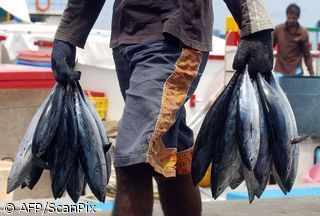 More responsibility for fishermen, rules favouring good fishing practice and adjusting fisheries management models to complement and improve the traditional quota system should be among the key aims of common fisheries policy reform, say MEPs in an own-initiative report approved by the Fisheries Committee on Wednesday.
more »
More responsibility for fishermen, rules favouring good fishing practice and adjusting fisheries management models to complement and improve the traditional quota system should be among the key aims of common fisheries policy reform, say MEPs in an own-initiative report approved by the Fisheries Committee on Wednesday.
more »
 On January 8, 2010, the Executive Board of the International Monetary Fund (IMF) concluded the Article IV consultation with Yemen.
more »
On January 8, 2010, the Executive Board of the International Monetary Fund (IMF) concluded the Article IV consultation with Yemen.
more »
 On January 22, 2010, the Executive Board of the International Monetary Fund (IMF) concluded the Article IV consultation with Norway.
more »
On January 22, 2010, the Executive Board of the International Monetary Fund (IMF) concluded the Article IV consultation with Norway.
more »
 Agriculture can help to slow climate change, but should be ready to adapt to the impact of global warming, said Agriculture Committee MEPs and scientists at a public hearing on Wednesday.
more »
Agriculture can help to slow climate change, but should be ready to adapt to the impact of global warming, said Agriculture Committee MEPs and scientists at a public hearing on Wednesday.
more »
 The Ministers for Employment of the European Union are holding an informal council on Thursday 28 and Friday 29 January which will lay the foundations for drawing up the common policies in the area of employment which the European Union will adopt over the next ten years as part of the “2020 Strategy”.
more »
The Ministers for Employment of the European Union are holding an informal council on Thursday 28 and Friday 29 January which will lay the foundations for drawing up the common policies in the area of employment which the European Union will adopt over the next ten years as part of the “2020 Strategy”.
more »