Finance ministers from the Nordic and Baltic Sea nations met in Tallinn on June 2 to discuss financial reforms.
Published:
7 June 2000 y., Wednesday
Finance ministers from the Nordic and Baltic Sea nations met in Tallinn on June 2 to discuss financial reforms, with some Baltic officials saying countries in the region shouldn't be too hasty about harmonizing tax polices.
Germany has generally advocated faster-paced coordination of tax polices within the 15-member European Union—an organization to which most participants of the Tallinn meeting belong or are striving to join.
But Latvia, Estonia and Lithuania sounded a note of caution about any mandated tax changes. Estonia, in particular, has closely cherished its simplified flat tax system and has lower excise taxes than most EU nations. Estonian Finance Minister Siim Kallas said harmonization should not lead to more complicated tax structures or higher taxes.
But Germany's representative, State Secretary Cajo Koch-Weser, said EU tax reform seemed to be lagging and better coordination among countries was crucial.
The Finance Ministers from Norway, Sweden, Finland, Denmark, Iceland, Estonia, Latvia, Lithuania, Poland and Germany have held annual meetings each year since 1996 to discuss economic and financial reforms in the region. A final communique said talks also touched on how to clamp down on tax evasion and on how some countries were using tax policy to favor domestic industries.
Šaltinis:
balticsww.com
Copying, publishing, announcing any information from the News.lt portal without written permission of News.lt editorial office is prohibited.
The most popular articles
 In another move to strengthen the financial system, the Commission is proposing controls on credit rating agencies - private companies that evaluate financial risks for investors.
more »
In another move to strengthen the financial system, the Commission is proposing controls on credit rating agencies - private companies that evaluate financial risks for investors.
more »
 Monday 10 November saw a large report land on the desk of MEPs in the Budgetary Control Committee.
more »
Monday 10 November saw a large report land on the desk of MEPs in the Budgetary Control Committee.
more »
 EU wants G20 meeting to pave the way for reform of the international financial system.
more »
EU wants G20 meeting to pave the way for reform of the international financial system.
more »
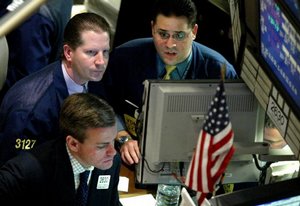 New Yorkers reflect on the election of Barack Obama as the 44th President of the United States.
more »
New Yorkers reflect on the election of Barack Obama as the 44th President of the United States.
more »
 The ability of the EU's common agriculture policy (CAP) to cope with the challenges of affordable food and climate change was discussed in Brussels 3-4 November.
more »
The ability of the EU's common agriculture policy (CAP) to cope with the challenges of affordable food and climate change was discussed in Brussels 3-4 November.
more »
 European Union economic growth should be 1.4% in 2008, half what it was in 2007, and drop even more sharply in 2009 to 0.2% before recovering gradually to 1.1% in 2010 (1.2%, 0.1% and 0.9%, respectively, for the euro area).
more »
European Union economic growth should be 1.4% in 2008, half what it was in 2007, and drop even more sharply in 2009 to 0.2% before recovering gradually to 1.1% in 2010 (1.2%, 0.1% and 0.9%, respectively, for the euro area).
more »
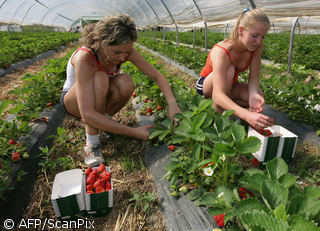 There are an estimated 4-8 million immigrants working illegally in the European Union.
more »
There are an estimated 4-8 million immigrants working illegally in the European Union.
more »
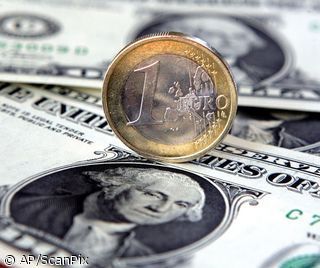 Hit by economic turmoil and the sharp global downturn, growth in the EU slows almost to a halt.
more »
Hit by economic turmoil and the sharp global downturn, growth in the EU slows almost to a halt.
more »
 The top priority is to cushion the impact of the financial crisis on jobs, purchasing power and prosperity of EU citizens.
more »
The top priority is to cushion the impact of the financial crisis on jobs, purchasing power and prosperity of EU citizens.
more »
 The International Monetary Fund has approved short-term financing to help emerging market economies weather the global financial storm.
more »
The International Monetary Fund has approved short-term financing to help emerging market economies weather the global financial storm.
more »