Poland's "Grey" Economy Still Thriving
Published:
22 June 2000 y., Thursday
For every Zl100 worth of goods produced by lawful, tax-paying companies in Poland, another Zl15 worth is produced for the "grey" economy to avoid taxes, the Central Statistical Office (GUS) said.
GUS said in a recent study that most illicit activity takes place in officially registered companies which lower their tax burden by paying dues on only part of their output.
The report stressed such activity would have increased GDP by 15.3 percent in nominal terms in 1998, down from a high of 17.2 percent in 1994 - the first year that GUS tried to estimate the extent of tax evasion.
Poland's economy has blossomed since communism collapsed in 1989 with much of the initial entrepreneurial drive created by street vendors and other small businesses, which often took advantage of inefficient communist-era tax regulations. Over the past years successive cabinets have worked to limit the "grey" economy by introducing value added taxes.
Copying, publishing, announcing any information from the News.lt portal without written permission of News.lt editorial office is prohibited.
The most popular articles
 European Commission Vice-President Siim Kallas, responsible for transport, today presented to the College a preliminary assessment of the economic consequences for the air transport industry of the volcanic ash crisis.
more »
European Commission Vice-President Siim Kallas, responsible for transport, today presented to the College a preliminary assessment of the economic consequences for the air transport industry of the volcanic ash crisis.
more »
 Boosting economic recovery, investing in Europe's youth and in tomorrow's infrastructures are the priorities of the 2011 draft budget adopted by the Commission on 27 April 2010.
more »
Boosting economic recovery, investing in Europe's youth and in tomorrow's infrastructures are the priorities of the 2011 draft budget adopted by the Commission on 27 April 2010.
more »
 European Competition Commissioner Joaquín Almunia welcomes proposed commitments by Visa Europe to significantly cut its multilateral interchange fees (MIFs) for debit card payments.
more »
European Competition Commissioner Joaquín Almunia welcomes proposed commitments by Visa Europe to significantly cut its multilateral interchange fees (MIFs) for debit card payments.
more »
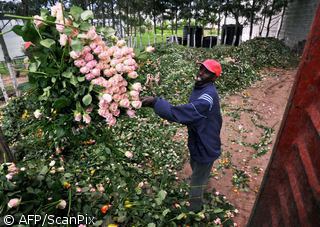 Because of the Icelandic volcano, flower growers in Colombia couldn't get their stems to markets in Europe.
more »
Because of the Icelandic volcano, flower growers in Colombia couldn't get their stems to markets in Europe.
more »
 The Second Vice President of the Spanish government and Minister of Economy and Finance, Elena Salgado, on Sunday played down the importance of apparent fissures within the EU concerning the Greek financial crisis, expressing her confidence that all countries would support the aid package for this country, which will be accompanied by a tough budget-tightening plan.
more »
The Second Vice President of the Spanish government and Minister of Economy and Finance, Elena Salgado, on Sunday played down the importance of apparent fissures within the EU concerning the Greek financial crisis, expressing her confidence that all countries would support the aid package for this country, which will be accompanied by a tough budget-tightening plan.
more »
 Commission launches an information campaign on the CE conformity mark - designed to ease the free movement of goods around Europe and protect consumers.
more »
Commission launches an information campaign on the CE conformity mark - designed to ease the free movement of goods around Europe and protect consumers.
more »
 If Europe's airports ever open again the introduction of new security measures like body scanners will be expensive.
more »
If Europe's airports ever open again the introduction of new security measures like body scanners will be expensive.
more »
After Eurozone Finance Ministers agreed measures to address Greece’s financial woes last Sunday, MEPs quizzed leading economic figures, including the chairman of Goldman Sachs - former financial advisors to the Greek government - on how to strengthen EU economic governance and improve reporting of national statistics.
more »
 The European Tourism Stakeholders Conference, being held in Madrid today and tomorrow, will explore ways and means to strengthen the visibility of tourism at a European level and to verify how the actions to promote a competitive EU tourism industry.
more »
The European Tourism Stakeholders Conference, being held in Madrid today and tomorrow, will explore ways and means to strengthen the visibility of tourism at a European level and to verify how the actions to promote a competitive EU tourism industry.
more »
 The European Bank for Reconstruction and Development (EBRD), World Bank Group member IFC, and The Netherlands Development Finance Company (FMO) have joined up with the Asia Debt Management Hong Kong (ADM Capital) to establish a regional fund to invest in midsize companies facing financing difficulties as a result of the financial crisis.
more »
The European Bank for Reconstruction and Development (EBRD), World Bank Group member IFC, and The Netherlands Development Finance Company (FMO) have joined up with the Asia Debt Management Hong Kong (ADM Capital) to establish a regional fund to invest in midsize companies facing financing difficulties as a result of the financial crisis.
more »