Poland's "Grey" Economy Still Thriving
Published:
22 June 2000 y., Thursday
For every Zl100 worth of goods produced by lawful, tax-paying companies in Poland, another Zl15 worth is produced for the "grey" economy to avoid taxes, the Central Statistical Office (GUS) said.
GUS said in a recent study that most illicit activity takes place in officially registered companies which lower their tax burden by paying dues on only part of their output.
The report stressed such activity would have increased GDP by 15.3 percent in nominal terms in 1998, down from a high of 17.2 percent in 1994 - the first year that GUS tried to estimate the extent of tax evasion.
Poland's economy has blossomed since communism collapsed in 1989 with much of the initial entrepreneurial drive created by street vendors and other small businesses, which often took advantage of inefficient communist-era tax regulations. Over the past years successive cabinets have worked to limit the "grey" economy by introducing value added taxes.
Copying, publishing, announcing any information from the News.lt portal without written permission of News.lt editorial office is prohibited.
The most popular articles
 Statistics Lithuania has calculated that, based on provisional data, FDI in Lithuania in 2009 amounted by 5.3 % more than in 2008. Also, direct investment of Lithuanian enterprises abroad grew by 13.9 % in 2009.
more »
Statistics Lithuania has calculated that, based on provisional data, FDI in Lithuania in 2009 amounted by 5.3 % more than in 2008. Also, direct investment of Lithuanian enterprises abroad grew by 13.9 % in 2009.
more »
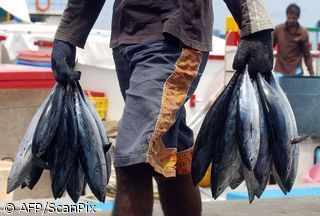 Concerns about foreign fish being sold in Europe and what to do about the future of Europe's fisheries industry were aired in a hearing held by the Fisheries Committee on 8 April.
more »
Concerns about foreign fish being sold in Europe and what to do about the future of Europe's fisheries industry were aired in a hearing held by the Fisheries Committee on 8 April.
more »
 EU opens public debate on its agricultural policy, the prelude to a major reform in 2013.
more »
EU opens public debate on its agricultural policy, the prelude to a major reform in 2013.
more »
 The European Commission today launched a €35 million call for eco-innovation projects to be funded under the Competitiveness and Innovation Programme.
more »
The European Commission today launched a €35 million call for eco-innovation projects to be funded under the Competitiveness and Innovation Programme.
more »
 Bank SNORAS group company Finasta Holding recruits all funds management and investment companies of the group in the Baltic States.
more »
Bank SNORAS group company Finasta Holding recruits all funds management and investment companies of the group in the Baltic States.
more »
 The European Central Bank (ECB) and the European Commission are jointly holding a high-level conference on financial integration and stability at the ECB’s premises in Frankfurt am Main.
more »
The European Central Bank (ECB) and the European Commission are jointly holding a high-level conference on financial integration and stability at the ECB’s premises in Frankfurt am Main.
more »
 Today, the European Central Bank (ECB) is publishing its fourth Report on Financial Integration in Europe, which notes the return towards integration in the European financial markets.
more »
Today, the European Central Bank (ECB) is publishing its fourth Report on Financial Integration in Europe, which notes the return towards integration in the European financial markets.
more »
 World Bank Group financial commitments since July 2008, just before the full fury of the financial crisis hit, reached US$ 100 billion today as the institution helped countries respond to and recover from the global downturn.
more »
World Bank Group financial commitments since July 2008, just before the full fury of the financial crisis hit, reached US$ 100 billion today as the institution helped countries respond to and recover from the global downturn.
more »
 On March 31, 2010, the Executive Board of the International Monetary Fund concluded the Article IV consultation with Serbia.
more »
On March 31, 2010, the Executive Board of the International Monetary Fund concluded the Article IV consultation with Serbia.
more »
 The International Monetary Fund and the United Kingdom’s Department for International Development have launched a new project to improve macroeconomic statistics in 23 African countries. DFID will provide US$7.5 million over the next five years to support the project.
more »
The International Monetary Fund and the United Kingdom’s Department for International Development have launched a new project to improve macroeconomic statistics in 23 African countries. DFID will provide US$7.5 million over the next five years to support the project.
more »