STMicroelectronics Announces Mass Roll-out in Poland and Czech Republic Of VISA cards based on Proton Prisma Smart Card Platform
Published:
19 July 2003 y., Saturday
STMicroelectronics today announced that CSOB Bank in the Czech Republic and Kredyt Bank Poland have received VISA certification for the personalization of their Proton Prisma cards and will begin a mass roll-out of these cards in the next few weeks. Both banks are part of the KBC Bank &Insurance Group, one of Europe's important financial groups and leading financial institutions in Central and Eastern Europe, which signed a license agreement with Proton World International in 2002 allowing a number of KBC's associated banks in Central and Eastern Europe to start implementing the Proton Prisma multi-application smart card technology.
In 2002, Kredyt Bank began working with Proton World International, which was acquired by STMicroelectronics in April 2003, to implement the infrastructure required to allow issuance of Proton Prisma EMV cards. Kredyt Bank installed MATRIX, which is the Proton Prisma card management and personalization system, and integrated it successfully into its own host system.
Following the certification from VISA of the personalized Proton Prisma card, Kredyt Bank started in June 2003 to issue chip-based VISA Classic and VISA Gold credit cards. In a later phase, Kredyt Bank also plans to replace its present VISA Electron and Maestro debit cards by Proton Prisma-based EMV cards. The bank is also exploring opportunities to optimize the multi-application functionality of the Proton Prisma platform by working with partners in loyalty applications.
In the Czech Republic, CSOB Bank has also successfully installed Proton Prisma's Matrix card lifecycle management and personalization system and is starting the migration of its Visa Electron debit card base to chip technology in June 2003, for which it received Visa certification. Other CSOB card products will be gradually converted to the same Proton Prisma EMV multi-application platform: e.g. CSOB's Post Savings Bank will later this year start converting all its debit cards to Proton Prisma.
Following the successful implementations of the Proton Prisma platform in the Czech Republic and Poland, a third KBC-affiliated bank, K&H, has also decided to implement the platform in Hungary.
Šaltinis:
stockhouse.com
Copying, publishing, announcing any information from the News.lt portal without written permission of News.lt editorial office is prohibited.
The most popular articles
 In European sustainable energy week 2010, new EU energy commissioner presents strategy to reduce Europe’s dependence on fossil fuel.
more »
In European sustainable energy week 2010, new EU energy commissioner presents strategy to reduce Europe’s dependence on fossil fuel.
more »
 The EBRD is launching a Project Complaint Mechanism, which is expected to enhance the accountability and transparency of the Bank’s operations.
more »
The EBRD is launching a Project Complaint Mechanism, which is expected to enhance the accountability and transparency of the Bank’s operations.
more »
 The EBRD is boosting the availability of local currency financing in Armenia with a synthetic loan in Armenian Drams (AMD) worth $4 million to FINCA UCO CJSC for on-lending to local micro and small enterprises (MSEs).
more »
The EBRD is boosting the availability of local currency financing in Armenia with a synthetic loan in Armenian Drams (AMD) worth $4 million to FINCA UCO CJSC for on-lending to local micro and small enterprises (MSEs).
more »
 This year is the UN year of biodiversity and it brings endangered species into the spotlight.
more »
This year is the UN year of biodiversity and it brings endangered species into the spotlight.
more »
 The World Bank Board of Directors today approved a US$65 million project to support the recovery of Haiti’s critical infrastructure as well as the reestablishment of basic State functions following the devastating 7.0 magnitude earthquake on January 12, 2010.
more »
The World Bank Board of Directors today approved a US$65 million project to support the recovery of Haiti’s critical infrastructure as well as the reestablishment of basic State functions following the devastating 7.0 magnitude earthquake on January 12, 2010.
more »
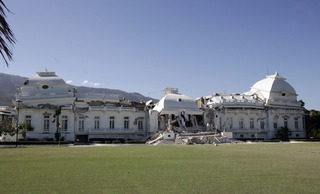 Haiti’s arduous reconstruction and recovery process jolted forward today following fresh commitments to help the Caribbean nation rebuild in the wake of its devastating January 12 earthquake.
more »
Haiti’s arduous reconstruction and recovery process jolted forward today following fresh commitments to help the Caribbean nation rebuild in the wake of its devastating January 12 earthquake.
more »
 A mission from the African Department of the International Monetary Fund (IMF) visited Uganda during March 4-17, 2010, to conduct the seventh and final review under Uganda’s Policy Support Instrument (PSI) and reach understandings on a policy framework for a new three-year PSI to cover the period 2010 to 2013.
more »
A mission from the African Department of the International Monetary Fund (IMF) visited Uganda during March 4-17, 2010, to conduct the seventh and final review under Uganda’s Policy Support Instrument (PSI) and reach understandings on a policy framework for a new three-year PSI to cover the period 2010 to 2013.
more »
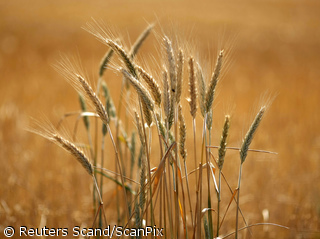 The European Economic and Social Committee (EESC), as the first EU institution, rose to the challenge of providing a comprehensive vision for the future of the Common Agriculture Policy (CAP), in advance of the European Commission's papers on the matter, due to be issued later this year and in 2011.
more »
The European Economic and Social Committee (EESC), as the first EU institution, rose to the challenge of providing a comprehensive vision for the future of the Common Agriculture Policy (CAP), in advance of the European Commission's papers on the matter, due to be issued later this year and in 2011.
more »
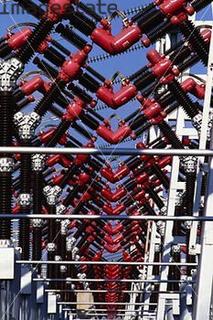 The outlook for primary energy supplies, heat, and electricity is questionable for the Eastern Europe and Central Asia region, despite Russia and Central Asia’s current role as a major energy supplier to both Eastern and Western Europe.
more »
The outlook for primary energy supplies, heat, and electricity is questionable for the Eastern Europe and Central Asia region, despite Russia and Central Asia’s current role as a major energy supplier to both Eastern and Western Europe.
more »
 The Executive Board of the International Monetary Fund (IMF) today approved a 36-month, SDR 513.9 million (about US$790 million) Stand-By Arrangement (SBA) for El Salvador to help the country mitigate the adverse effects of the global crisis.
more »
The Executive Board of the International Monetary Fund (IMF) today approved a 36-month, SDR 513.9 million (about US$790 million) Stand-By Arrangement (SBA) for El Salvador to help the country mitigate the adverse effects of the global crisis.
more »