Ukrayina Bank in the epicenter of political earthquake
Published:
4 August 2001 y., Saturday
Perhaps the most painful problem of recent days in Verkhovna Rada has been the debate on the bill providing for a special emission of state bonds to pay off Ukrayina Bank’s liabilities to creditors. On July 9, the bill was voted down. A legislative little brother revised by the Interministerial Task Force under Finance Minister Ihor Mitiukov’s patronage suffered the same lot on July 12 (152 nays out of 197 votes cast).
That same day, Deputy Finance Minister Pavlo Hermanchuk declared in parliament that Ukrayina Bank depositors could get all of their money back only by issuing internal government bonds.
Viktor Suslov, deputy chairman of the interim parliamentary committee of inquiry, holds an entirely different view. He believes that repaying Ukrayina Bank debts at the expense of the national budget (i.e., with taxpayers’ money) is just another way to subdue the bank scandal, leaving those involved in the shadows. Meanwhile, returning some one billion hryvnias by the bank’s debtors would make it possible to solve the problem.
However, parliament was unable to hear the inquiry committee’s report as scheduled on July 12 (Ukrayina Bank ranks with the nation’s largest banks). Mr. Suslov noted that “we have stumbled into a number of problems in our work.”
It is hard to predict what course events will take in the Ukrayina bankruptcy scandal.
Šaltinis:
day.kiev.ua
Copying, publishing, announcing any information from the News.lt portal without written permission of News.lt editorial office is prohibited.
The most popular articles
 Women in the EU earn on average 18% less than men - a gap that has scarcely narrowed over the last 15 years and in some countries has even grown.
more »
Women in the EU earn on average 18% less than men - a gap that has scarcely narrowed over the last 15 years and in some countries has even grown.
more »
 43 gas and electricity projects to split €2.3bn, the most the EU has ever spent on energy infrastructure in a single package.
more »
43 gas and electricity projects to split €2.3bn, the most the EU has ever spent on energy infrastructure in a single package.
more »
 Georgia and the European Union have initialled a comprehensive air services agreement at a meeting in Tbilisi, Georgia, today which will open up and integrate the respective markets, strengthen cooperation and offer new opportunities for consumers and operators.
more »
Georgia and the European Union have initialled a comprehensive air services agreement at a meeting in Tbilisi, Georgia, today which will open up and integrate the respective markets, strengthen cooperation and offer new opportunities for consumers and operators.
more »
 In order to vitalize and strengthen cooperation of business stakeholders in the region, the Nordic and Baltic countries continue running joint mobility programme.
more »
In order to vitalize and strengthen cooperation of business stakeholders in the region, the Nordic and Baltic countries continue running joint mobility programme.
more »
 The EBRD is boosting the availability of financing to the real economy sector in Serbia, with a €20 million credit line to Société Générale Serbia for on-lending to small and medium enterprises.
more »
The EBRD is boosting the availability of financing to the real economy sector in Serbia, with a €20 million credit line to Société Générale Serbia for on-lending to small and medium enterprises.
more »
 The EBRD is supporting the development of the private sector in Armenia and increases further the availability of financing in the real economy sector with a $10 million loan to Ameriabank for on lending to local companies under its Medium Sized Co-financing Facility (MCFF).
more »
The EBRD is supporting the development of the private sector in Armenia and increases further the availability of financing in the real economy sector with a $10 million loan to Ameriabank for on lending to local companies under its Medium Sized Co-financing Facility (MCFF).
more »
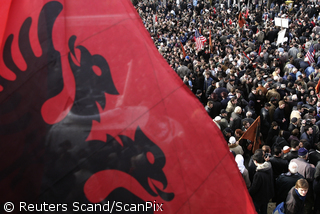 The EBRD is supporting the modernisation and improvement of transport infrastructure in Albania with a €50 million sovereign loan to finance the rehabilitation of regional and local roads in the country.
more »
The EBRD is supporting the modernisation and improvement of transport infrastructure in Albania with a €50 million sovereign loan to finance the rehabilitation of regional and local roads in the country.
more »
 Given the deep impact Latvia has suffered in the wake of the global crisis, and due to the emergency nature of this program, the first operation will focus mainly on the first and second objectives.
more »
Given the deep impact Latvia has suffered in the wake of the global crisis, and due to the emergency nature of this program, the first operation will focus mainly on the first and second objectives.
more »
 Mr. Dominique Strauss-Kahn, Managing Director of the International Monetary Fund (IMF), will visit Africa March 7-11, to discuss opportunities and challenges facing African economies in the wake of the global crisis.
more »
Mr. Dominique Strauss-Kahn, Managing Director of the International Monetary Fund (IMF), will visit Africa March 7-11, to discuss opportunities and challenges facing African economies in the wake of the global crisis.
more »
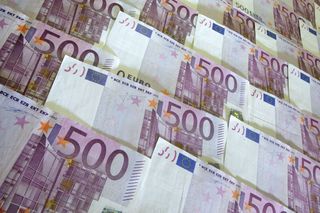 Without enough money, the EU 2020 strategy risks turning into "another vague scoreboard for the Member States", the EP Budgets Committee warned on Thursday when adopting its priorities for the 2011 budget.
more »
Without enough money, the EU 2020 strategy risks turning into "another vague scoreboard for the Member States", the EP Budgets Committee warned on Thursday when adopting its priorities for the 2011 budget.
more »