Ukrayina Bank in the epicenter of political earthquake
Published:
4 August 2001 y., Saturday
Perhaps the most painful problem of recent days in Verkhovna Rada has been the debate on the bill providing for a special emission of state bonds to pay off Ukrayina Bank’s liabilities to creditors. On July 9, the bill was voted down. A legislative little brother revised by the Interministerial Task Force under Finance Minister Ihor Mitiukov’s patronage suffered the same lot on July 12 (152 nays out of 197 votes cast).
That same day, Deputy Finance Minister Pavlo Hermanchuk declared in parliament that Ukrayina Bank depositors could get all of their money back only by issuing internal government bonds.
Viktor Suslov, deputy chairman of the interim parliamentary committee of inquiry, holds an entirely different view. He believes that repaying Ukrayina Bank debts at the expense of the national budget (i.e., with taxpayers’ money) is just another way to subdue the bank scandal, leaving those involved in the shadows. Meanwhile, returning some one billion hryvnias by the bank’s debtors would make it possible to solve the problem.
However, parliament was unable to hear the inquiry committee’s report as scheduled on July 12 (Ukrayina Bank ranks with the nation’s largest banks). Mr. Suslov noted that “we have stumbled into a number of problems in our work.”
It is hard to predict what course events will take in the Ukrayina bankruptcy scandal.
Šaltinis:
day.kiev.ua
Copying, publishing, announcing any information from the News.lt portal without written permission of News.lt editorial office is prohibited.
The most popular articles
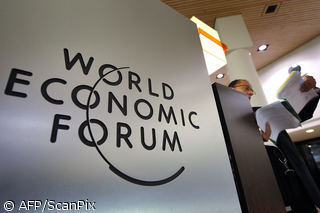 Reform of the banking system was one of the key themes at this year's World Economic Forum in Davos, with bankers coming in for a lot of criticism.
more »
Reform of the banking system was one of the key themes at this year's World Economic Forum in Davos, with bankers coming in for a lot of criticism.
more »
 Small firms have been hard hit by the economic crisis, and so must be given incentives and support, including easier access to credit, help with innovation, tax breaks and less red tape, MEPs on Parliament's Special Committee on the Financial, Economic and Social Crisis (CRIS), and experts agreed at a workshop on Monday.
more »
Small firms have been hard hit by the economic crisis, and so must be given incentives and support, including easier access to credit, help with innovation, tax breaks and less red tape, MEPs on Parliament's Special Committee on the Financial, Economic and Social Crisis (CRIS), and experts agreed at a workshop on Monday.
more »
 The elections and investiture of Porfirio Lobo as President of Honduras have cleared the way for the EU to restore normal relations with the Central American country and negotiations for signing a bi-regional Association Agreement may soon resume.
more »
The elections and investiture of Porfirio Lobo as President of Honduras have cleared the way for the EU to restore normal relations with the Central American country and negotiations for signing a bi-regional Association Agreement may soon resume.
more »
The European Commission has approved applications from Lithuania for assistance under the European Globalisation Adjustment Fund (EGF).
more »
 The European Commission has decided to refer Italy to the European Court of Justice (ECJ) on the basis of Article 108(2) of the Treaty on the Functioning of the European Union (TFEU) for failing to comply with a Commission decision of July 2008.
more »
The European Commission has decided to refer Italy to the European Court of Justice (ECJ) on the basis of Article 108(2) of the Treaty on the Functioning of the European Union (TFEU) for failing to comply with a Commission decision of July 2008.
more »
 The EBRD is helping to strengthen the financial sector in Bosnia-Herzegovina (BiH) with a €50 million credit line to the Deposit Insurance Agency of Bosnia and Herzegovina (DIA), the Bank’s first investment in a deposit insurance entity.
more »
The EBRD is helping to strengthen the financial sector in Bosnia-Herzegovina (BiH) with a €50 million credit line to the Deposit Insurance Agency of Bosnia and Herzegovina (DIA), the Bank’s first investment in a deposit insurance entity.
more »
 In its first investment in the natural resources sector in Bosnia and Herzegovina, the EBRD is providing a €17 million sovereign loan to finance the gasification of the Central Bosnia Canton.
more »
In its first investment in the natural resources sector in Bosnia and Herzegovina, the EBRD is providing a €17 million sovereign loan to finance the gasification of the Central Bosnia Canton.
more »
 The EBRD is increasing the availability of financing to private businesses in Armenia with a $5 million credit line and a $3 million trade finance facility to ArmSwissBank for small and medium companies (SMEs).
more »
The EBRD is increasing the availability of financing to private businesses in Armenia with a $5 million credit line and a $3 million trade finance facility to ArmSwissBank for small and medium companies (SMEs).
more »
 On January 27 the European Commission assessed the action taken by Lithuania, Malta, Latvia and Hungary in response to recommendations proposed by the Commission and endorsed by the Council in July 2009 in respect to the correction of their respective budget deficits.
more »
On January 27 the European Commission assessed the action taken by Lithuania, Malta, Latvia and Hungary in response to recommendations proposed by the Commission and endorsed by the Council in July 2009 in respect to the correction of their respective budget deficits.
more »
 EUROSTAT announced that Lithuania’s GDP rose by 6.1 % in the 3rd quarter of 2009 versus the previous quarter.
more »
EUROSTAT announced that Lithuania’s GDP rose by 6.1 % in the 3rd quarter of 2009 versus the previous quarter.
more »