Ukrayina Bank in the epicenter of political earthquake
Published:
4 August 2001 y., Saturday
Perhaps the most painful problem of recent days in Verkhovna Rada has been the debate on the bill providing for a special emission of state bonds to pay off Ukrayina Bank’s liabilities to creditors. On July 9, the bill was voted down. A legislative little brother revised by the Interministerial Task Force under Finance Minister Ihor Mitiukov’s patronage suffered the same lot on July 12 (152 nays out of 197 votes cast).
That same day, Deputy Finance Minister Pavlo Hermanchuk declared in parliament that Ukrayina Bank depositors could get all of their money back only by issuing internal government bonds.
Viktor Suslov, deputy chairman of the interim parliamentary committee of inquiry, holds an entirely different view. He believes that repaying Ukrayina Bank debts at the expense of the national budget (i.e., with taxpayers’ money) is just another way to subdue the bank scandal, leaving those involved in the shadows. Meanwhile, returning some one billion hryvnias by the bank’s debtors would make it possible to solve the problem.
However, parliament was unable to hear the inquiry committee’s report as scheduled on July 12 (Ukrayina Bank ranks with the nation’s largest banks). Mr. Suslov noted that “we have stumbled into a number of problems in our work.”
It is hard to predict what course events will take in the Ukrayina bankruptcy scandal.
Šaltinis:
day.kiev.ua
Copying, publishing, announcing any information from the News.lt portal without written permission of News.lt editorial office is prohibited.
The most popular articles
 In another move to strengthen the financial system, the Commission is proposing controls on credit rating agencies - private companies that evaluate financial risks for investors.
more »
In another move to strengthen the financial system, the Commission is proposing controls on credit rating agencies - private companies that evaluate financial risks for investors.
more »
 Monday 10 November saw a large report land on the desk of MEPs in the Budgetary Control Committee.
more »
Monday 10 November saw a large report land on the desk of MEPs in the Budgetary Control Committee.
more »
 EU wants G20 meeting to pave the way for reform of the international financial system.
more »
EU wants G20 meeting to pave the way for reform of the international financial system.
more »
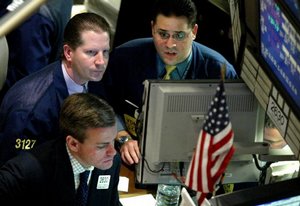 New Yorkers reflect on the election of Barack Obama as the 44th President of the United States.
more »
New Yorkers reflect on the election of Barack Obama as the 44th President of the United States.
more »
 The ability of the EU's common agriculture policy (CAP) to cope with the challenges of affordable food and climate change was discussed in Brussels 3-4 November.
more »
The ability of the EU's common agriculture policy (CAP) to cope with the challenges of affordable food and climate change was discussed in Brussels 3-4 November.
more »
 European Union economic growth should be 1.4% in 2008, half what it was in 2007, and drop even more sharply in 2009 to 0.2% before recovering gradually to 1.1% in 2010 (1.2%, 0.1% and 0.9%, respectively, for the euro area).
more »
European Union economic growth should be 1.4% in 2008, half what it was in 2007, and drop even more sharply in 2009 to 0.2% before recovering gradually to 1.1% in 2010 (1.2%, 0.1% and 0.9%, respectively, for the euro area).
more »
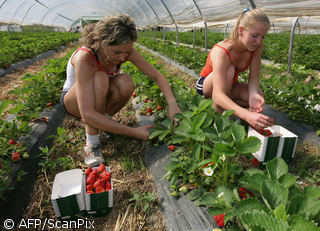 There are an estimated 4-8 million immigrants working illegally in the European Union.
more »
There are an estimated 4-8 million immigrants working illegally in the European Union.
more »
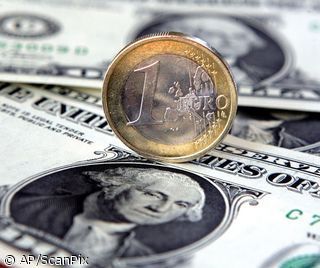 Hit by economic turmoil and the sharp global downturn, growth in the EU slows almost to a halt.
more »
Hit by economic turmoil and the sharp global downturn, growth in the EU slows almost to a halt.
more »
 The top priority is to cushion the impact of the financial crisis on jobs, purchasing power and prosperity of EU citizens.
more »
The top priority is to cushion the impact of the financial crisis on jobs, purchasing power and prosperity of EU citizens.
more »
 The International Monetary Fund has approved short-term financing to help emerging market economies weather the global financial storm.
more »
The International Monetary Fund has approved short-term financing to help emerging market economies weather the global financial storm.
more »