Residual anger directed toward Microsoft might be driving the European investigation
Published:
21 February 2003 y., Friday
The software giant lost friends in many nations when it instituted Licensing 6, an expensive upgrade program that savaged some IT budgets.
The complaints are essentially the same, but the venue is different. Microsoft is under attack again for leveraging its monopoly and bundling its products, but this time its lines of defense are concentrated on the European front.
The European Union Antitrust Authority has been pursuing an investigation into the software giant's business practices for three years. The case, which had been drawing to a close, gained additional steam recently when a new complaint was fired into the fray by the Computer and Communications Industry Association, a U.S.-based trade group that was disappointed with the outcome of the U.S. antitrust settlement.
In fact, it seems that so far, Europe's antitrust investigation has been more tenacious than the one in the United States. Why is that -- and how much muscle does Europe have to bring down one of the world's most powerful companies? Does Europe hate Microsoft?
That might be too broad an assessment. But Ted Schadler, principal analyst with Forrester Research, told that Microsoft's succeed-at-all-costs mentality might engender more hostility across the Atlantic than it does in the United States. "Microsoft is not as naturally respected in Europe as it is here."
Šaltinis:
ecommercetimes.com
Copying, publishing, announcing any information from the News.lt portal without written permission of News.lt editorial office is prohibited.
The most popular articles
 An International Monetary Fund mission led by Mr. Paulo Drummond visited Bissau during January 12-27, 2010, to discuss the government’s medium-term economic program that could be supported by the IMF under the Extended Credit Facility.
more »
An International Monetary Fund mission led by Mr. Paulo Drummond visited Bissau during January 12-27, 2010, to discuss the government’s medium-term economic program that could be supported by the IMF under the Extended Credit Facility.
more »
 The International Monetary Fund (IMF) and the World Bank's International Development Association (IDA) have agreed to support US$1.9 billion in debt relief for the Republic of Congo, which includes US$255.2 million of debt relief from the two institutions.
more »
The International Monetary Fund (IMF) and the World Bank's International Development Association (IDA) have agreed to support US$1.9 billion in debt relief for the Republic of Congo, which includes US$255.2 million of debt relief from the two institutions.
more »
 In 2009, net external assets of Monetary Financial Institutions remained negative but increased by LTL 9.3 billion.
more »
In 2009, net external assets of Monetary Financial Institutions remained negative but increased by LTL 9.3 billion.
more »
 Spain's Minister for Science and Innovation, Cristina Garmendia, supports making R&D+i at the heart of Europe as a key to economic recovery.
more »
Spain's Minister for Science and Innovation, Cristina Garmendia, supports making R&D+i at the heart of Europe as a key to economic recovery.
more »
 Lithuania and Malta granted reprieve on budget deficits; Hungary and Latvia on track to meet deadlines.
more »
Lithuania and Malta granted reprieve on budget deficits; Hungary and Latvia on track to meet deadlines.
more »
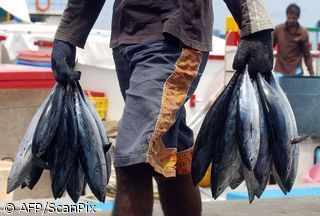 More responsibility for fishermen, rules favouring good fishing practice and adjusting fisheries management models to complement and improve the traditional quota system should be among the key aims of common fisheries policy reform, say MEPs in an own-initiative report approved by the Fisheries Committee on Wednesday.
more »
More responsibility for fishermen, rules favouring good fishing practice and adjusting fisheries management models to complement and improve the traditional quota system should be among the key aims of common fisheries policy reform, say MEPs in an own-initiative report approved by the Fisheries Committee on Wednesday.
more »
 On January 8, 2010, the Executive Board of the International Monetary Fund (IMF) concluded the Article IV consultation with Yemen.
more »
On January 8, 2010, the Executive Board of the International Monetary Fund (IMF) concluded the Article IV consultation with Yemen.
more »
 On January 22, 2010, the Executive Board of the International Monetary Fund (IMF) concluded the Article IV consultation with Norway.
more »
On January 22, 2010, the Executive Board of the International Monetary Fund (IMF) concluded the Article IV consultation with Norway.
more »
 Agriculture can help to slow climate change, but should be ready to adapt to the impact of global warming, said Agriculture Committee MEPs and scientists at a public hearing on Wednesday.
more »
Agriculture can help to slow climate change, but should be ready to adapt to the impact of global warming, said Agriculture Committee MEPs and scientists at a public hearing on Wednesday.
more »
 The Ministers for Employment of the European Union are holding an informal council on Thursday 28 and Friday 29 January which will lay the foundations for drawing up the common policies in the area of employment which the European Union will adopt over the next ten years as part of the “2020 Strategy”.
more »
The Ministers for Employment of the European Union are holding an informal council on Thursday 28 and Friday 29 January which will lay the foundations for drawing up the common policies in the area of employment which the European Union will adopt over the next ten years as part of the “2020 Strategy”.
more »