Pentagon took an hour out on Tuesday to recall one of its largely forgotten low-tech triumphs -- code talking.
Published:
7 December 1999 y., Tuesday
As four American Indians beat a drum and chanted, Charles Chibitty, a 78-year-old Comanche elder, received a medal for his work in a war that ended half a century ago. It_s a medal he believes was long overdue.
Chibitty was honoured as the last living member among 17 Comanches recruited in Oklahoma during World War II to use their language to fool the Germans. As with the Choctaws in World War I and the Navajos in the Pacific Theater during World War II, the US Army took advantage of the obscure native language to provide a simple code for relaying battlefield messages that confounded the enemy.
Chibitty recalled one of his first messages, when he and some of his fellow Comanches were dispatched with forward units while others manned radios at headquarters to relay information that would have endangered other troops had it been overheard.
"The regiment is five miles to the right of it_s designated area. There is furious fighting. Needs help," was his message in English. As it was relayed over the radio, it was in his native language, with a series of intricate codes that they had spent months mastering back in the United States.
Comanche is not a written language and bears no resemblance to European or Asian languages. While the British employed thousands of mathematicians, crossword puzzle experts, and other cryptanalysts to crack the highly sophisticated German Enigma code -- a major breakthrough in the war -- the American code talkers were never knowingly cracked.
Many of the words of 20th century warfare were not in the Comanche vocabulary. For tank, they used the word for turtle. A machine gun was a "sewing machine gun." A bomber was "a pregnant machine that flies."
Copying, publishing, announcing any information from the News.lt portal without written permission of News.lt editorial office is prohibited.
The most popular articles
 "The King's Speech" takes four Oscars, including best picture. Natalie Portman wins best actress for "Black Swan." A teary-eyed Christian Bale snags best supporting actor.
more »
"The King's Speech" takes four Oscars, including best picture. Natalie Portman wins best actress for "Black Swan." A teary-eyed Christian Bale snags best supporting actor.
more »
 A conference in Brussels on cultural and artistic exchange presented examples of EU-funded projects that bring art to a wider audience.
more »
A conference in Brussels on cultural and artistic exchange presented examples of EU-funded projects that bring art to a wider audience.
more »
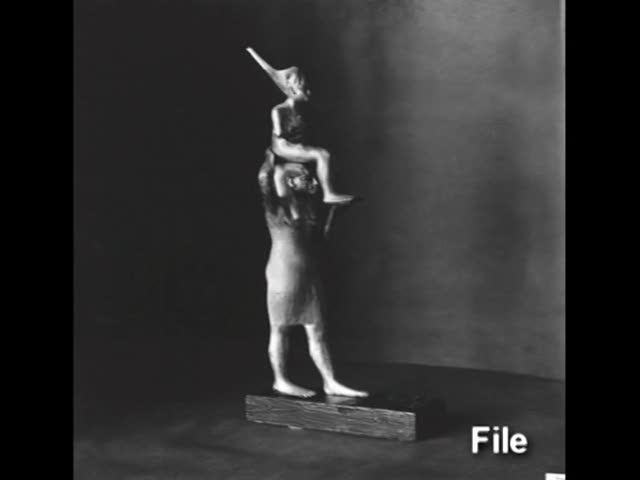 Prized artifacts are missing from the Egyptian Museum in Egypt's capital Cairo after looters broke in during recent unrest.
more »
Prized artifacts are missing from the Egyptian Museum in Egypt's capital Cairo after looters broke in during recent unrest.
more »
 22 films co-financed by the EU will be shown at this year's Berlinale, Berlin's International Film Festival, from 10-20 February.
more »
22 films co-financed by the EU will be shown at this year's Berlinale, Berlin's International Film Festival, from 10-20 February.
more »
 Russia’s legendary Bolshoi Theater is undergoing a complete restoration to return it to its classical splendor.
more »
Russia’s legendary Bolshoi Theater is undergoing a complete restoration to return it to its classical splendor.
more »
 A group of Argentine dancers create a rhythmic concoction of tap dancing and Buenos Aires' beloved tango music.
more »
A group of Argentine dancers create a rhythmic concoction of tap dancing and Buenos Aires' beloved tango music.
more »
 Thick layers of ash from the Mount Merapi volcano are damaging the tourist trade in some areas of Java Province
more »
Thick layers of ash from the Mount Merapi volcano are damaging the tourist trade in some areas of Java Province
more »
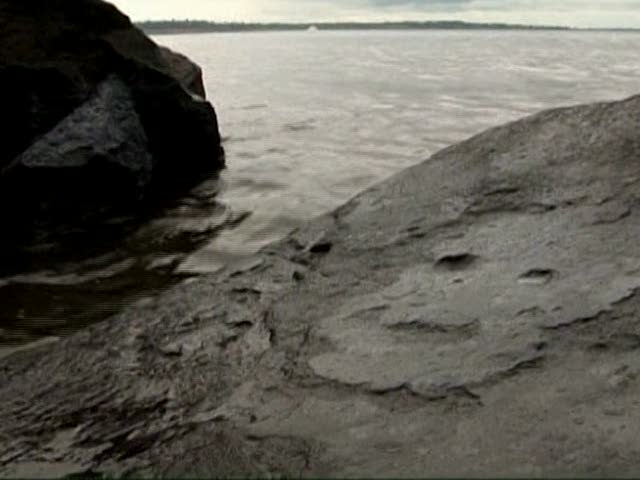 Archaeologists in Brazil study 7000-year-old rock carvings revealed during the Amazon region's current drought.
more »
Archaeologists in Brazil study 7000-year-old rock carvings revealed during the Amazon region's current drought.
more »
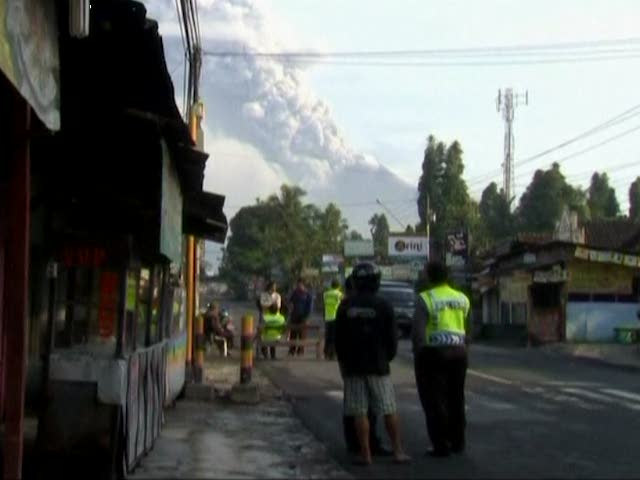 Mount Merapi's eruption now threatens the biggest Buddhist temple in Indonesia.
more »
Mount Merapi's eruption now threatens the biggest Buddhist temple in Indonesia.
more »
 At a public hearing on Wednesday, the legendary German film director Wim Wenders and other key figures from the European cinema landscape addressed the Committee on Culture and Education on the future of European cinema.
more »
At a public hearing on Wednesday, the legendary German film director Wim Wenders and other key figures from the European cinema landscape addressed the Committee on Culture and Education on the future of European cinema.
more »