Pentagon took an hour out on Tuesday to recall one of its largely forgotten low-tech triumphs -- code talking.
Published:
7 December 1999 y., Tuesday
As four American Indians beat a drum and chanted, Charles Chibitty, a 78-year-old Comanche elder, received a medal for his work in a war that ended half a century ago. It_s a medal he believes was long overdue.
Chibitty was honoured as the last living member among 17 Comanches recruited in Oklahoma during World War II to use their language to fool the Germans. As with the Choctaws in World War I and the Navajos in the Pacific Theater during World War II, the US Army took advantage of the obscure native language to provide a simple code for relaying battlefield messages that confounded the enemy.
Chibitty recalled one of his first messages, when he and some of his fellow Comanches were dispatched with forward units while others manned radios at headquarters to relay information that would have endangered other troops had it been overheard.
"The regiment is five miles to the right of it_s designated area. There is furious fighting. Needs help," was his message in English. As it was relayed over the radio, it was in his native language, with a series of intricate codes that they had spent months mastering back in the United States.
Comanche is not a written language and bears no resemblance to European or Asian languages. While the British employed thousands of mathematicians, crossword puzzle experts, and other cryptanalysts to crack the highly sophisticated German Enigma code -- a major breakthrough in the war -- the American code talkers were never knowingly cracked.
Many of the words of 20th century warfare were not in the Comanche vocabulary. For tank, they used the word for turtle. A machine gun was a "sewing machine gun." A bomber was "a pregnant machine that flies."
Copying, publishing, announcing any information from the News.lt portal without written permission of News.lt editorial office is prohibited.
The most popular articles
 Twenty years after it fell, Volker Pawlowski still has fond memories of the Berlin Wall. That's because he continues to make make money from it, by selling chunks to tourists
more »
Twenty years after it fell, Volker Pawlowski still has fond memories of the Berlin Wall. That's because he continues to make make money from it, by selling chunks to tourists
more »
 Thanks to a daring combination of Croat Martina Majerle's disco vocals and classical strings of Slovenia's Quatrissimo, the band is hoping to hit a new note with judges.
more »
Thanks to a daring combination of Croat Martina Majerle's disco vocals and classical strings of Slovenia's Quatrissimo, the band is hoping to hit a new note with judges.
more »
 Most of his "patients" are over 1,000 years old and cannot speak.
Sixty-year-old Chinese Du Weisheng can only communicate with them by reading their symptoms.
more »
Most of his "patients" are over 1,000 years old and cannot speak.
Sixty-year-old Chinese Du Weisheng can only communicate with them by reading their symptoms.
more »
 The bizarre festival in Tokyo is the response of the electronics sector of the city trying to drum up some business as the economic down turn keeps shoppers away.
more »
The bizarre festival in Tokyo is the response of the electronics sector of the city trying to drum up some business as the economic down turn keeps shoppers away.
more »
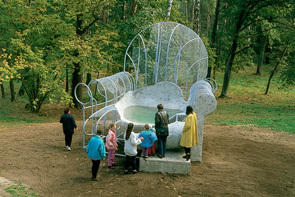 On 29 April 2009, at 4 p.m., the opening of a new sculpture Conjuror created by one of the most prominent contemporary artists Magdalena Abakanowicz will take place in Europos Parkas.
more »
On 29 April 2009, at 4 p.m., the opening of a new sculpture Conjuror created by one of the most prominent contemporary artists Magdalena Abakanowicz will take place in Europos Parkas.
more »
 Twenty films will compete for the coveted Palme d'Or at this year's Cannes film festival.
more »
Twenty films will compete for the coveted Palme d'Or at this year's Cannes film festival.
more »
 A Polish music duo plays their classical tunes on a fragile instrument. A set of fine wine glasses make up the harp on which Anna and Arkadiusz Szafraniec from the city of Gdansk run their fingertips.
more »
A Polish music duo plays their classical tunes on a fragile instrument. A set of fine wine glasses make up the harp on which Anna and Arkadiusz Szafraniec from the city of Gdansk run their fingertips.
more »
 In Europe people have grown used to exhibitions like this where the human body is preserved and laid open in all its complexity. Many are fascinated but now human rights group have become enraged.
more »
In Europe people have grown used to exhibitions like this where the human body is preserved and laid open in all its complexity. Many are fascinated but now human rights group have become enraged.
more »
 Indian police in Mumbai are probing accusations that the father of "Slumdog Millionaire" star Rubina Ali tried to sell her.
more »
Indian police in Mumbai are probing accusations that the father of "Slumdog Millionaire" star Rubina Ali tried to sell her.
more »
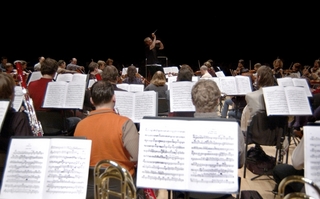 Thousands of people competed in an online competition to join the YouTube Symphony orchestra, but only 96 will get to perform at New York's Carnegie Hall.
more »
Thousands of people competed in an online competition to join the YouTube Symphony orchestra, but only 96 will get to perform at New York's Carnegie Hall.
more »