Pentagon took an hour out on Tuesday to recall one of its largely forgotten low-tech triumphs -- code talking.
Published:
7 December 1999 y., Tuesday
As four American Indians beat a drum and chanted, Charles Chibitty, a 78-year-old Comanche elder, received a medal for his work in a war that ended half a century ago. It_s a medal he believes was long overdue.
Chibitty was honoured as the last living member among 17 Comanches recruited in Oklahoma during World War II to use their language to fool the Germans. As with the Choctaws in World War I and the Navajos in the Pacific Theater during World War II, the US Army took advantage of the obscure native language to provide a simple code for relaying battlefield messages that confounded the enemy.
Chibitty recalled one of his first messages, when he and some of his fellow Comanches were dispatched with forward units while others manned radios at headquarters to relay information that would have endangered other troops had it been overheard.
"The regiment is five miles to the right of it_s designated area. There is furious fighting. Needs help," was his message in English. As it was relayed over the radio, it was in his native language, with a series of intricate codes that they had spent months mastering back in the United States.
Comanche is not a written language and bears no resemblance to European or Asian languages. While the British employed thousands of mathematicians, crossword puzzle experts, and other cryptanalysts to crack the highly sophisticated German Enigma code -- a major breakthrough in the war -- the American code talkers were never knowingly cracked.
Many of the words of 20th century warfare were not in the Comanche vocabulary. For tank, they used the word for turtle. A machine gun was a "sewing machine gun." A bomber was "a pregnant machine that flies."
Copying, publishing, announcing any information from the News.lt portal without written permission of News.lt editorial office is prohibited.
The most popular articles
 In 2009, the Air of Architects team is coming back to Vilnius!
more »
In 2009, the Air of Architects team is coming back to Vilnius!
more »
 Almost twenty years after it fell - this chunk of the Berlin Wall still stands in the centre of the German capital.
more »
Almost twenty years after it fell - this chunk of the Berlin Wall still stands in the centre of the German capital.
more »
 Jose Fuster -- a proud product of the Castro era -- works out of a studio in the Jaimanitas section of Havana -- where mosaics and sculptures have created an island of brightness among the city's humble suburbs.
more »
Jose Fuster -- a proud product of the Castro era -- works out of a studio in the Jaimanitas section of Havana -- where mosaics and sculptures have created an island of brightness among the city's humble suburbs.
more »
 The presentation of Austria within the “ARTscape“ programme is special for Austrian city Linz like Lithuania’s Vilnius is awarded the title of the European Capital of Culture this year.
more »
The presentation of Austria within the “ARTscape“ programme is special for Austrian city Linz like Lithuania’s Vilnius is awarded the title of the European Capital of Culture this year.
more »
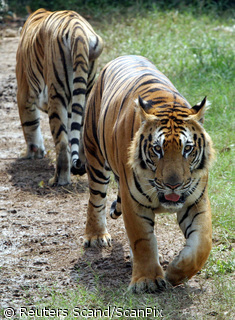 The 15 foot long tiger is the design of world reknown sand artist Sudarsan Pattnaik. He wanted to thank Indian cricketer Sachin Tendulkar for dedicating his 42nd Test century to tiger conservation.
more »
The 15 foot long tiger is the design of world reknown sand artist Sudarsan Pattnaik. He wanted to thank Indian cricketer Sachin Tendulkar for dedicating his 42nd Test century to tiger conservation.
more »
 An international patisserie competition is held in Tokyo.
more »
An international patisserie competition is held in Tokyo.
more »
 The premiere of Peter Eötvös’ latest opera, Love and Other Demons (based on the novel by Gabriel Garcia Marquez), will be presented as the co-production by culture institutions of two countries.
more »
The premiere of Peter Eötvös’ latest opera, Love and Other Demons (based on the novel by Gabriel Garcia Marquez), will be presented as the co-production by culture institutions of two countries.
more »
 14th Vilnius international film festival starting on 19 March this year for the first time in its history will introduce the competition programme “New Europe - New Names”.
more »
14th Vilnius international film festival starting on 19 March this year for the first time in its history will introduce the competition programme “New Europe - New Names”.
more »
 Hao Guang, a French-Chinese painter, who moved into 798 five years ago and now has trouble making ends meet.
more »
Hao Guang, a French-Chinese painter, who moved into 798 five years ago and now has trouble making ends meet.
more »
 More than 60 years after Mahatma Gandhi`s assassination, his great-grandson, Tushar Gandhi, is appealing to stop an auction of his grandfather's surviving possessions from going ahead in New York.
more »
More than 60 years after Mahatma Gandhi`s assassination, his great-grandson, Tushar Gandhi, is appealing to stop an auction of his grandfather's surviving possessions from going ahead in New York.
more »