Pentagon took an hour out on Tuesday to recall one of its largely forgotten low-tech triumphs -- code talking.
Published:
7 December 1999 y., Tuesday
As four American Indians beat a drum and chanted, Charles Chibitty, a 78-year-old Comanche elder, received a medal for his work in a war that ended half a century ago. It_s a medal he believes was long overdue.
Chibitty was honoured as the last living member among 17 Comanches recruited in Oklahoma during World War II to use their language to fool the Germans. As with the Choctaws in World War I and the Navajos in the Pacific Theater during World War II, the US Army took advantage of the obscure native language to provide a simple code for relaying battlefield messages that confounded the enemy.
Chibitty recalled one of his first messages, when he and some of his fellow Comanches were dispatched with forward units while others manned radios at headquarters to relay information that would have endangered other troops had it been overheard.
"The regiment is five miles to the right of it_s designated area. There is furious fighting. Needs help," was his message in English. As it was relayed over the radio, it was in his native language, with a series of intricate codes that they had spent months mastering back in the United States.
Comanche is not a written language and bears no resemblance to European or Asian languages. While the British employed thousands of mathematicians, crossword puzzle experts, and other cryptanalysts to crack the highly sophisticated German Enigma code -- a major breakthrough in the war -- the American code talkers were never knowingly cracked.
Many of the words of 20th century warfare were not in the Comanche vocabulary. For tank, they used the word for turtle. A machine gun was a "sewing machine gun." A bomber was "a pregnant machine that flies."
Copying, publishing, announcing any information from the News.lt portal without written permission of News.lt editorial office is prohibited.
The most popular articles
 The selection panel appointed to assess the cities applying to be European Capital of Culture 2015 met today in Prague and recommended that Plzeň and Ostrava be preselected for the 2015 title.
more »
The selection panel appointed to assess the cities applying to be European Capital of Culture 2015 met today in Prague and recommended that Plzeň and Ostrava be preselected for the 2015 title.
more »
 This is what Italian police say is a secret stash of art works belonging to the disgraced founder of the dairy group Parmalat.
more »
This is what Italian police say is a secret stash of art works belonging to the disgraced founder of the dairy group Parmalat.
more »
 “Low Lights” (2009, Lithuanian - German production, 92 min) by Ignas Miškinis has been selected for the official programme of the Leeds International Film Festival.
more »
“Low Lights” (2009, Lithuanian - German production, 92 min) by Ignas Miškinis has been selected for the official programme of the Leeds International Film Festival.
more »
In recent years some of the most interesting Scandinavian books have been written by immigrants or people with immigrant background. These books offer important and nuanced reflections on the reality of cultural meetings.
more »
 Exclusive events dedicated to the year of European Capital of Culture, classics and modernity, layers of Nordic dimensions, traditions and innovations – these are main guidelines for this year’s Scanorama programme.
more »
Exclusive events dedicated to the year of European Capital of Culture, classics and modernity, layers of Nordic dimensions, traditions and innovations – these are main guidelines for this year’s Scanorama programme.
more »
 The exhibition Urban Clones: from Emotion to Reality, curated by Austėja Mackelaitė and Ernestas Parulskis, will take place in the gallery of St-Martin-in-the-Fields, Trafalgar Square London, WC2N 5, on May 10 -23, 2010.
more »
The exhibition Urban Clones: from Emotion to Reality, curated by Austėja Mackelaitė and Ernestas Parulskis, will take place in the gallery of St-Martin-in-the-Fields, Trafalgar Square London, WC2N 5, on May 10 -23, 2010.
more »
 Druskininkai 20th Poetic Fall Festival and the 5th World Haiku Association Conference 2009 by Kornelijus Platelis, Chairman of the Board of the Druskininkai Poetic Fall
more »
Druskininkai 20th Poetic Fall Festival and the 5th World Haiku Association Conference 2009 by Kornelijus Platelis, Chairman of the Board of the Druskininkai Poetic Fall
more »
 Professional artists, producers and cultural operators are welcome to apply for support for their visits to the Nordic countries.
more »
Professional artists, producers and cultural operators are welcome to apply for support for their visits to the Nordic countries.
more »
 When American writer Edgar Allan Poe died in 1849, only seven people turned up to his funeral.
Now, 160 years later, the master of the macabre, has finally received a proper send off.
more »
When American writer Edgar Allan Poe died in 1849, only seven people turned up to his funeral.
Now, 160 years later, the master of the macabre, has finally received a proper send off.
more »
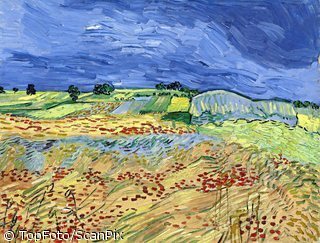 The truth behind Vincent Van Gogh's personality may finally have been revealed.
more »
The truth behind Vincent Van Gogh's personality may finally have been revealed.
more »