Ethnographical Museum in Prague_s Kinsky Gardens celebrates European Heritage Day.
Published:
5 October 1999 y., Tuesday
The temporarily closed Ethnographical Museum in Prague_s Kinsky Gardens held another event in support of its campaign to reopen as part of the European Heritage Day, during which more than 700 buildings over the Czech Republic not normally open to the public were made accessible. In many cases the damage done by the neglect of historic monuments under the Communist regime, though, is only too apparent. The Prague Ethnographical museum, for instance, has been closed since 1986 because of serious building defects to the French Imperial style villa in which the museum is situated, today commonly referred to as the Kinsky summer house. It was built between 1827 and 1829 by the Viennese architect Jindrich Koch as the family seat of the Kinsky family. In 1901 it was purchased by the municipal authority of Prague in order to house a new museum devoted to Czech and Slav traditional folklore at a time when the National Revival to support Czech culture within the Czech Lands, then part of the Hapsburg Empire, was growing in strength. During its hundred years of operation, the museum has built up a significant collection of around 200,000 objects including polychrome woodcarvings, textiles, lithographs, glass paintings, and bethlehems. These have a strong tradition in the Czech Lands. They are representations of various episodes from the life of Jesus Christ made from various materials according to local traditions and displayed in people houses at Christmas time. The employees of the museum have prepared a project for a modern style of ethnographic exposition to be situated in the original building, including linking exhibitions with current musical and other expressions of traditional culture. A petition signed by 5,378 people was last year presented to the Chamber of Deputies and the Senate. In July 1999 the Kinsky summer house was taken into the administration of the National Museum, on the proviso that funds would be made available from the state budget for essential repairs and for bringing the museum back into operation. The project to reopen the museum was also included in the programme of Prague - European City of Culture 2000.
Copying, publishing, announcing any information from the News.lt portal without written permission of News.lt editorial office is prohibited.
The most popular articles
 Essen in Germany, Istanbul in Turkey and Pécs in Hungary are the three European capitals of culture for 2010.
more »
Essen in Germany, Istanbul in Turkey and Pécs in Hungary are the three European capitals of culture for 2010.
more »
 The European Commission has approved under EU state aid rules a €576 million Spanish film support scheme until 31 December 2015.
more »
The European Commission has approved under EU state aid rules a €576 million Spanish film support scheme until 31 December 2015.
more »
 The Spanish Minister for Culture, Ángeles González-Sinde, has just presented the work programme that will be tackled at the next European Forum for Cultural Industries, to be held on 29 and 30 March in Barcelona.
more »
The Spanish Minister for Culture, Ángeles González-Sinde, has just presented the work programme that will be tackled at the next European Forum for Cultural Industries, to be held on 29 and 30 March in Barcelona.
more »
 The European Commission recently launched a competition for young graphic designers to create its Europe Day poster for the year 2010.
more »
The European Commission recently launched a competition for young graphic designers to create its Europe Day poster for the year 2010.
more »
 European musicians honoured for best-selling debut albums outside their home country.
more »
European musicians honoured for best-selling debut albums outside their home country.
more »
 The Cinquantenaire Museum in Brussels is exhibiting four restored Flemish tapestries from the Colegiata de Nuestra Señora de la Asunción de Pastrana (Sigüenza-Guadalajara diocese) from 13 January to 14 March.
more »
The Cinquantenaire Museum in Brussels is exhibiting four restored Flemish tapestries from the Colegiata de Nuestra Señora de la Asunción de Pastrana (Sigüenza-Guadalajara diocese) from 13 January to 14 March.
more »
 The Nuevo Ballet Español company is to stage its production called “Sangre Flamenca” at the Budapest Palace of the Arts (Müvésztek Palatója), which opens the cultural programme of the rotating presidency in the Hungarian capital (14 January, 19.30).
more »
The Nuevo Ballet Español company is to stage its production called “Sangre Flamenca” at the Budapest Palace of the Arts (Müvésztek Palatója), which opens the cultural programme of the rotating presidency in the Hungarian capital (14 January, 19.30).
more »
 Classical dance versus flamenco. Tamara Rojo and María Pagés offer two very different interpretations of movement, although their choreographies share a common air of beauty and sincerity.
more »
Classical dance versus flamenco. Tamara Rojo and María Pagés offer two very different interpretations of movement, although their choreographies share a common air of beauty and sincerity.
more »
 The exhibition, ‘Domenikos Theotokopoulos, 1900 El Greco’ returns to Europe after a two-month stay at the Palacio de Bellas Artes in Mexico, where it received more than 250 000 visitors.
more »
The exhibition, ‘Domenikos Theotokopoulos, 1900 El Greco’ returns to Europe after a two-month stay at the Palacio de Bellas Artes in Mexico, where it received more than 250 000 visitors.
more »
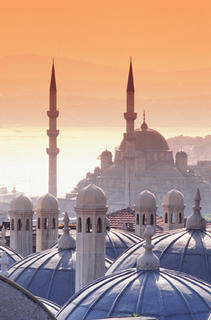 Essen, Pécs and Istanbul celebrate debut as European capitals of culture.
more »
Essen, Pécs and Istanbul celebrate debut as European capitals of culture.
more »