From Smart Cards to Biometrics.
Published:
19 March 1999 y., Friday
More than ever before industry and commerce are dependent on electronic access control systems and electronic payment systems. The growth of the internet and the widely predicted boom in e-commerce will increase this dependency further as we move into the next millennium. This has prompted science and industry to explore the possibilities for improving methods of user identification. PIN and password systems will gradually be replaced by more robust systems; initially by such methods as smart cards and ultimately by the use of biometrics whereby the human body is used as its own identity card. Chip cards, the highest-volume electronics end product in the world today, can perform various duties such as pocket change, paper money, debit and credit cards, acting as a means of identification, access, or payment. By combining the Java programming language and smart cards manufacturers hope to open up a new world of applications for the mobile telephone user. Java will enable applications to be added to a handset_s smart card while on the move or via an ATM. At CeBIT Schlumberger is showing a new Java smart card which combines multi-application flexibility with built-in cryptographic services. It allows transactions - including the remote loading of applications - to be authenticated using digital signatures. Claimed to be the first commercially available card of this type in the world, the platform provides the means for developers to implement a host of new portable applications including unique ID tokens for securing virtual intranet transactions, custom network access security, pay TV and authenticated monetary or information transfer. Like many other technologies biometrics began life as a military application. The user is identified on the basis of his or her unique physical characteristics (eyes, facial characteristics, gestures, voice, fingerprints). The human body functions as a forgery-proof identity card and security is no longer dependent on the ability of the person to memorise his or her PIN or password. Last year Compaq, IBM, Identicator Technology, Microsoft, Miros and Novell announced the formation of the BioAPI consortium dedicated to developing standards to improve the identification and authentication of PC users. The BioAPI Consortium is committed to making biometrics technologies - initially fingerprint, voice and face recognition - available to the mainstream commercial marketplace. The Consortium plans to provide APIs that can be incorporated into operating systems and application software which will provide customers access to a wide variety of biometric hardware and software products, as well as allow them to readily utilise products from different vendors. Compaq was one of the first to market with a computer access system with its Fingerprint Identification Technology (FIT) launched last year. A hardware/software combination, FIT uses biometric technology to tighten network security and simplify logon by eliminating the need to enter end-user passwords. A small camera in the FIT reader captures an image of the fingerprint and uses complex algorithms to convert the image into a unique "map" of the fingerprint_s minutiae.This fingerprint template is then encrypted and stored in the network user credential database.
Copying, publishing, announcing any information from the News.lt portal without written permission of News.lt editorial office is prohibited.
The most popular articles
 Twenty years after it fell, Volker Pawlowski still has fond memories of the Berlin Wall. That's because he continues to make make money from it, by selling chunks to tourists
more »
Twenty years after it fell, Volker Pawlowski still has fond memories of the Berlin Wall. That's because he continues to make make money from it, by selling chunks to tourists
more »
 Thanks to a daring combination of Croat Martina Majerle's disco vocals and classical strings of Slovenia's Quatrissimo, the band is hoping to hit a new note with judges.
more »
Thanks to a daring combination of Croat Martina Majerle's disco vocals and classical strings of Slovenia's Quatrissimo, the band is hoping to hit a new note with judges.
more »
 Most of his "patients" are over 1,000 years old and cannot speak.
Sixty-year-old Chinese Du Weisheng can only communicate with them by reading their symptoms.
more »
Most of his "patients" are over 1,000 years old and cannot speak.
Sixty-year-old Chinese Du Weisheng can only communicate with them by reading their symptoms.
more »
 The bizarre festival in Tokyo is the response of the electronics sector of the city trying to drum up some business as the economic down turn keeps shoppers away.
more »
The bizarre festival in Tokyo is the response of the electronics sector of the city trying to drum up some business as the economic down turn keeps shoppers away.
more »
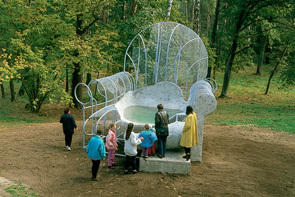 On 29 April 2009, at 4 p.m., the opening of a new sculpture Conjuror created by one of the most prominent contemporary artists Magdalena Abakanowicz will take place in Europos Parkas.
more »
On 29 April 2009, at 4 p.m., the opening of a new sculpture Conjuror created by one of the most prominent contemporary artists Magdalena Abakanowicz will take place in Europos Parkas.
more »
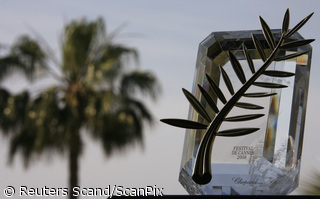 Twenty films will compete for the coveted Palme d'Or at this year's Cannes film festival.
more »
Twenty films will compete for the coveted Palme d'Or at this year's Cannes film festival.
more »
 A Polish music duo plays their classical tunes on a fragile instrument. A set of fine wine glasses make up the harp on which Anna and Arkadiusz Szafraniec from the city of Gdansk run their fingertips.
more »
A Polish music duo plays their classical tunes on a fragile instrument. A set of fine wine glasses make up the harp on which Anna and Arkadiusz Szafraniec from the city of Gdansk run their fingertips.
more »
 In Europe people have grown used to exhibitions like this where the human body is preserved and laid open in all its complexity. Many are fascinated but now human rights group have become enraged.
more »
In Europe people have grown used to exhibitions like this where the human body is preserved and laid open in all its complexity. Many are fascinated but now human rights group have become enraged.
more »
 Indian police in Mumbai are probing accusations that the father of "Slumdog Millionaire" star Rubina Ali tried to sell her.
more »
Indian police in Mumbai are probing accusations that the father of "Slumdog Millionaire" star Rubina Ali tried to sell her.
more »
 Thousands of people competed in an online competition to join the YouTube Symphony orchestra, but only 96 will get to perform at New York's Carnegie Hall.
more »
Thousands of people competed in an online competition to join the YouTube Symphony orchestra, but only 96 will get to perform at New York's Carnegie Hall.
more »