In a Kazakh institute,living germs designed for warfare are a ‘terrorist’s treasure’
Published:
13 January 2001 y., Saturday
Down a street from where children play, just yards away from homes and vegetable gardens, the Plague Research Institute in Kazakhstan’s commercial capital is a terrorist’s dream. Under the guise of civilian research, the institute collected and housed thousands of deadly germs during the Soviet era to be used against the United States in a war. Until recently, the facility was completely unguarded.
“THE PLAGUE INSTITUTE is a terrorist’s treasure,” said Andy Weber, a representative of the Pentagon’s threat reduction program, a U.S. body charged with preventing and responding to threats against the United States. It’s not difficult to see why terrorists might target the Plague Research Institute for their wares.Recently, Weber strolled into a dimly lit room in one of the facility’s buildings. He opened the door of one of nine rumbling Soviet refrigerators revealing a horror inside: test-tubes containing samples of anthrax, tularemia, and plague, some dating back to the 1940s, all alive.Anthrax is 90 percent lethal.
In an exclusive interview with NBC News, Kazakhstan President Nursultan Nazarbayev said that much of the Soviet Union’s past offensive biological and even nuclear research in his country is still a closely held secret.
Nazarbayev said he would like to see more transparency from Russia’s President Vladimir Putin on the question of existing biological weapons.
Šaltinis:
NBC NEWS
Copying, publishing, announcing any information from the News.lt portal without written permission of News.lt editorial office is prohibited.
The most popular articles
 With the new influenza season underway, MEPs have criticised the EU's "disproportionate" response to the outbreak of the H1N1 ("swine flu") virus in 2009-2010.
more »
With the new influenza season underway, MEPs have criticised the EU's "disproportionate" response to the outbreak of the H1N1 ("swine flu") virus in 2009-2010.
more »
 Over half the EU adult population is now overweight or obese according to the “Health at a Glance: Europe 2010” report published by the European Commission and the OECD today.
more »
Over half the EU adult population is now overweight or obese according to the “Health at a Glance: Europe 2010” report published by the European Commission and the OECD today.
more »
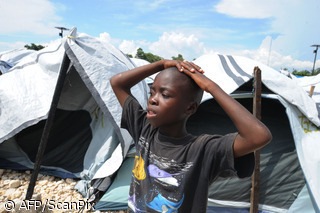 Over 130 people die in central Haiti due to a suspected outbreak of cholera.
more »
Over 130 people die in central Haiti due to a suspected outbreak of cholera.
more »
 The Influenza A (H1N1) pandemic returned to the Parliament last week but fortunately not in the literal sense.
more »
The Influenza A (H1N1) pandemic returned to the Parliament last week but fortunately not in the literal sense.
more »
 The Commission announced today its intention to restructure the process of progressive adoption of the list of permitted health claims on food products (also known as “Article 13 claims”).
more »
The Commission announced today its intention to restructure the process of progressive adoption of the list of permitted health claims on food products (also known as “Article 13 claims”).
more »
 Patients will be better informed on how to use medicines, and enabled to report their adverse effects directly to national authorities, thanks to updates of EU laws agreed with the Council and endorsed by Parliament on Wednesday.
more »
Patients will be better informed on how to use medicines, and enabled to report their adverse effects directly to national authorities, thanks to updates of EU laws agreed with the Council and endorsed by Parliament on Wednesday.
more »
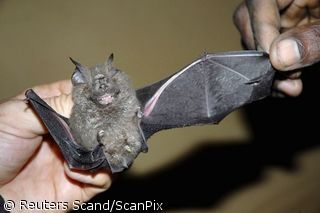 Doctors in Peru are facing outbreaks of two killer diseases, rabies and the plague, being spread by bats and rats.
more »
Doctors in Peru are facing outbreaks of two killer diseases, rabies and the plague, being spread by bats and rats.
more »
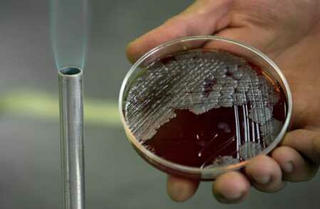 Scientists warn a new drug-resistant superbug could spread worldwide, fuelled in part by medical tourism.
more »
Scientists warn a new drug-resistant superbug could spread worldwide, fuelled in part by medical tourism.
more »
 Chinese officials say they are investigating reports that tainted milk powder has caused premature sexual development in baby girls.
more »
Chinese officials say they are investigating reports that tainted milk powder has caused premature sexual development in baby girls.
more »
 A woman in India says she has to sell her 6-month-old baby in order to pay her husband's medical expenses.
more »
A woman in India says she has to sell her 6-month-old baby in order to pay her husband's medical expenses.
more »