SMALL TECH COULD BE KEY COMPONENT OF A BETTER ANTI-TERRORISM STRATEGY
Published:
13 September 2001 y., Thursday
Small tech could help prevent future terrorist attacks like those in New York and Washington, D.C., on Tuesday that destroyed the World Trade Center and part of the Pentagon, said a leading authority on MEMS and microsystems.
David Williams, former director of the microsystems program at Sandia National Laboratories, outlined three key areas where small tech can be part of a solution before, during or after a terrorist attack: Microsystems and nanotechnology can help gather intelligence, make potential targets more secure and increase the value of forensic evidence after an attack.
Pacific Northwest National Laboratory, a U.S. Department of Energy lab, created a scanning technology for the Federal Aviation Administration to screen airline passengers for plastic weapons and explosives that today’s X-ray and metal detectors don’t register.
The scanner sends out millimeter waves that penetrate materials such as clothing but not flesh or other solid objects. Instead, the waves bounce back to a transceiver that converts the signal to digital form that a computer interprets as a three-dimensional holographic image. The transceiver utilizes microfabrication technologies.
PNNL said the scanner has been tested in the Seattle-Tacoma International Airport and could be used to improve security in government buildings, mass transit operations, prisons and numerous other institutions.
Small tech can also help fortify a building, subway or other public gathering place by detecting explosives and chemical or biological weapons.
Šaltinis:
smalltimes.com
Copying, publishing, announcing any information from the News.lt portal without written permission of News.lt editorial office is prohibited.
The most popular articles
 With the new influenza season underway, MEPs have criticised the EU's "disproportionate" response to the outbreak of the H1N1 ("swine flu") virus in 2009-2010.
more »
With the new influenza season underway, MEPs have criticised the EU's "disproportionate" response to the outbreak of the H1N1 ("swine flu") virus in 2009-2010.
more »
 Over half the EU adult population is now overweight or obese according to the “Health at a Glance: Europe 2010” report published by the European Commission and the OECD today.
more »
Over half the EU adult population is now overweight or obese according to the “Health at a Glance: Europe 2010” report published by the European Commission and the OECD today.
more »
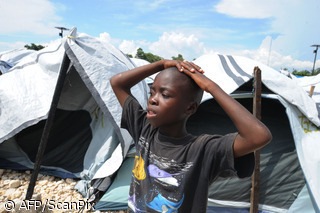 Over 130 people die in central Haiti due to a suspected outbreak of cholera.
more »
Over 130 people die in central Haiti due to a suspected outbreak of cholera.
more »
 The Influenza A (H1N1) pandemic returned to the Parliament last week but fortunately not in the literal sense.
more »
The Influenza A (H1N1) pandemic returned to the Parliament last week but fortunately not in the literal sense.
more »
 The Commission announced today its intention to restructure the process of progressive adoption of the list of permitted health claims on food products (also known as “Article 13 claims”).
more »
The Commission announced today its intention to restructure the process of progressive adoption of the list of permitted health claims on food products (also known as “Article 13 claims”).
more »
 Patients will be better informed on how to use medicines, and enabled to report their adverse effects directly to national authorities, thanks to updates of EU laws agreed with the Council and endorsed by Parliament on Wednesday.
more »
Patients will be better informed on how to use medicines, and enabled to report their adverse effects directly to national authorities, thanks to updates of EU laws agreed with the Council and endorsed by Parliament on Wednesday.
more »
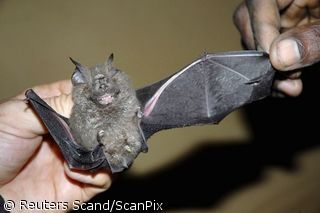 Doctors in Peru are facing outbreaks of two killer diseases, rabies and the plague, being spread by bats and rats.
more »
Doctors in Peru are facing outbreaks of two killer diseases, rabies and the plague, being spread by bats and rats.
more »
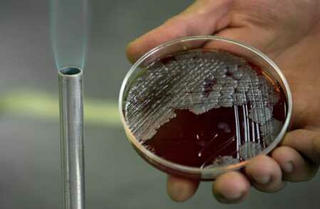 Scientists warn a new drug-resistant superbug could spread worldwide, fuelled in part by medical tourism.
more »
Scientists warn a new drug-resistant superbug could spread worldwide, fuelled in part by medical tourism.
more »
 Chinese officials say they are investigating reports that tainted milk powder has caused premature sexual development in baby girls.
more »
Chinese officials say they are investigating reports that tainted milk powder has caused premature sexual development in baby girls.
more »
 A woman in India says she has to sell her 6-month-old baby in order to pay her husband's medical expenses.
more »
A woman in India says she has to sell her 6-month-old baby in order to pay her husband's medical expenses.
more »