SMALL TECH COULD BE KEY COMPONENT OF A BETTER ANTI-TERRORISM STRATEGY
Published:
13 September 2001 y., Thursday
Small tech could help prevent future terrorist attacks like those in New York and Washington, D.C., on Tuesday that destroyed the World Trade Center and part of the Pentagon, said a leading authority on MEMS and microsystems.
David Williams, former director of the microsystems program at Sandia National Laboratories, outlined three key areas where small tech can be part of a solution before, during or after a terrorist attack: Microsystems and nanotechnology can help gather intelligence, make potential targets more secure and increase the value of forensic evidence after an attack.
Pacific Northwest National Laboratory, a U.S. Department of Energy lab, created a scanning technology for the Federal Aviation Administration to screen airline passengers for plastic weapons and explosives that today’s X-ray and metal detectors don’t register.
The scanner sends out millimeter waves that penetrate materials such as clothing but not flesh or other solid objects. Instead, the waves bounce back to a transceiver that converts the signal to digital form that a computer interprets as a three-dimensional holographic image. The transceiver utilizes microfabrication technologies.
PNNL said the scanner has been tested in the Seattle-Tacoma International Airport and could be used to improve security in government buildings, mass transit operations, prisons and numerous other institutions.
Small tech can also help fortify a building, subway or other public gathering place by detecting explosives and chemical or biological weapons.
Šaltinis:
smalltimes.com
Copying, publishing, announcing any information from the News.lt portal without written permission of News.lt editorial office is prohibited.
The most popular articles
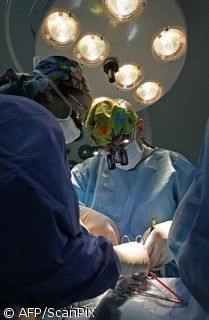 The world's first full face transplant appears in public, and thanks his doctors.
more »
The world's first full face transplant appears in public, and thanks his doctors.
more »
 China's fattest man hospitalized
China's fattest man, weighing 230 kg or 507 pounds, is hospitalised after being diagnosed with heart problems and kidney failure.
more »
China's fattest man hospitalized
China's fattest man, weighing 230 kg or 507 pounds, is hospitalised after being diagnosed with heart problems and kidney failure.
more »
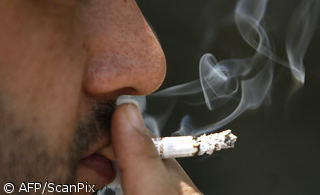 A Chinese anti-smoking activist is on a one-man mission to eradicate smoking - one smoker at a time.
more »
A Chinese anti-smoking activist is on a one-man mission to eradicate smoking - one smoker at a time.
more »
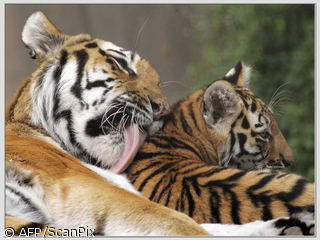 A five-month old Siberian tiger with cataracts in both eyes becomes China's youngest animal to undergo surgery.
more »
A five-month old Siberian tiger with cataracts in both eyes becomes China's youngest animal to undergo surgery.
more »
 The Commission has taken further steps against Germany for incorrectly applying EU rules on well established medicinal use when authorising medicinal products pursuant to Directive 2001/83/EC.
more »
The Commission has taken further steps against Germany for incorrectly applying EU rules on well established medicinal use when authorising medicinal products pursuant to Directive 2001/83/EC.
more »
 Theold Bank today approved a US$$117.70 million IDA credit to India, designed to improve quality of and access to health services in the state of Tamil Nadu.
more »
Theold Bank today approved a US$$117.70 million IDA credit to India, designed to improve quality of and access to health services in the state of Tamil Nadu.
more »
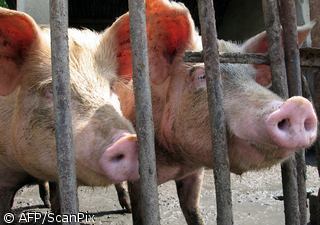 Livestock at a farm outside of Seoul show symptoms of the highly contagious disease.
more »
Livestock at a farm outside of Seoul show symptoms of the highly contagious disease.
more »
A written declaration calling for EU-wide breast cancer screening for women, initiated by MEP Liz Lynne (ALDE, UK) had been signed by sufficient MEPs to qualify as having been endorsed by Parliament, announced the President, thanking those who had signed.
more »
 The European Commission has earmarked €21 million for two new research projects on cancer, as part of an international research effort coordinated since 2007 by the International Cancer Genome Consortium (ICGC).
more »
The European Commission has earmarked €21 million for two new research projects on cancer, as part of an international research effort coordinated since 2007 by the International Cancer Genome Consortium (ICGC).
more »
 To mark World Health Day, WHO is launching a global campaign to raise awareness of the impact of increasing urbanization on the health and lifestyles of people around the globe.
more »
To mark World Health Day, WHO is launching a global campaign to raise awareness of the impact of increasing urbanization on the health and lifestyles of people around the globe.
more »