SMALL TECH COULD BE KEY COMPONENT OF A BETTER ANTI-TERRORISM STRATEGY
Published:
13 September 2001 y., Thursday
Small tech could help prevent future terrorist attacks like those in New York and Washington, D.C., on Tuesday that destroyed the World Trade Center and part of the Pentagon, said a leading authority on MEMS and microsystems.
David Williams, former director of the microsystems program at Sandia National Laboratories, outlined three key areas where small tech can be part of a solution before, during or after a terrorist attack: Microsystems and nanotechnology can help gather intelligence, make potential targets more secure and increase the value of forensic evidence after an attack.
Pacific Northwest National Laboratory, a U.S. Department of Energy lab, created a scanning technology for the Federal Aviation Administration to screen airline passengers for plastic weapons and explosives that today’s X-ray and metal detectors don’t register.
The scanner sends out millimeter waves that penetrate materials such as clothing but not flesh or other solid objects. Instead, the waves bounce back to a transceiver that converts the signal to digital form that a computer interprets as a three-dimensional holographic image. The transceiver utilizes microfabrication technologies.
PNNL said the scanner has been tested in the Seattle-Tacoma International Airport and could be used to improve security in government buildings, mass transit operations, prisons and numerous other institutions.
Small tech can also help fortify a building, subway or other public gathering place by detecting explosives and chemical or biological weapons.
Šaltinis:
smalltimes.com
Copying, publishing, announcing any information from the News.lt portal without written permission of News.lt editorial office is prohibited.
The most popular articles
 Since the update of 24 July, Azerbaijan and the Republic of Moldova have reported their first laboratory-confirmed cases of pandemic (H1N1) 2009 virus infection.
more »
Since the update of 24 July, Azerbaijan and the Republic of Moldova have reported their first laboratory-confirmed cases of pandemic (H1N1) 2009 virus infection.
more »
 The holiday season has arrived. Your suitcases are packed, your neighbours are watering the plants and feeding the cat and your tickets are ready.
more »
The holiday season has arrived. Your suitcases are packed, your neighbours are watering the plants and feeding the cat and your tickets are ready.
more »
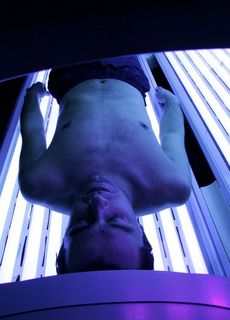 Topping up your tan on a sunbed is being compared to the cancer risks associated with smoking.
more »
Topping up your tan on a sunbed is being compared to the cancer risks associated with smoking.
more »
 Twenty countries are teaming up to study Alzheimer’s and other forms of dementia, in the first test of a new approach to research in Europe.
more »
Twenty countries are teaming up to study Alzheimer’s and other forms of dementia, in the first test of a new approach to research in Europe.
more »
 The European Commission adopted concrete proposals to tackle Alzheimer’s disease, dementias and other neurodegenerative conditions.
more »
The European Commission adopted concrete proposals to tackle Alzheimer’s disease, dementias and other neurodegenerative conditions.
more »
The increasing number of cases in many countries, with sustained community transmission, made confirming them through laboratory testing extremely difficult and resource intensive.
more »
 The EU’s food safety alert system picks up dangerous food products before they land on your plate.
more »
The EU’s food safety alert system picks up dangerous food products before they land on your plate.
more »
 WHO publishes its first guidelines on indoor air quality, addressing dampness and mould.
more »
WHO publishes its first guidelines on indoor air quality, addressing dampness and mould.
more »
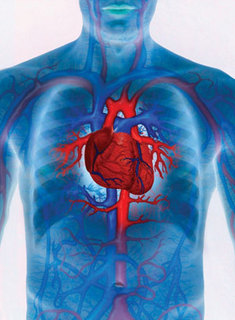 Hannah Clark is a reluctant star - she's facing the media because she's a medical miracle.
more »
Hannah Clark is a reluctant star - she's facing the media because she's a medical miracle.
more »
 EU countries urged to pass tougher anti-smoking laws.
more »
EU countries urged to pass tougher anti-smoking laws.
more »