Astronomers from the University of Colorado at Boulder and the University of California at Berkeley have discovered a key building block for new stars in the rapidly expanding remains of an ancient stellar explosion.
Published:
11 June 2001 y., Monday
Presented at the 197th meeting of the American Astronomical Society meeting June 3 to June 7 in Pasadena, Calif., the study provides insights into the early stages of a process by which violent stellar explosions help produce new stars.
"This finding is important because it gives us an example of how a supernova explosion can create new clouds of star-forming material," said Brian Rachford, a postdoctoral researcher at CU-Boulder's Center for Astrophysics and Space Astronomy.
Other participants in the study include Barry Welsh, a senior research scientist at UC-Berkeley's Space Sciences Laboratory and Jason Tumlinson, a doctoral student in CU-Boulder's astrophysical and planetary sciences department and a CASA research assistant.
The Monoceros Loop Supernova Remnant under study resulted from the cataclysmic explosion of a star nearly 100,000 years ago some 5,000 light-years from Earth, said Rachford. The supernova has formed a shell of gas 350 light-years across that is still expanding at a rate of 100,000 miles per hour.
One light-year -- the distance light travels through the universe in a year -- is equal to roughly 6 trillion miles.
The astronomers detected the presence of molecular hydrogen gas in the rapidly moving shell using a spectrograph onboard NASA's Far Ultraviolet Spectrographic Explorer, or FUSE, satellite. The spectrograph breaks up the ultraviolet light in a manner similar to the way a prism breaks up sunlight into a spectrum of individual colors.
Šaltinis:
sciencedaily.com
Copying, publishing, announcing any information from the News.lt portal without written permission of News.lt editorial office is prohibited.
The most popular articles
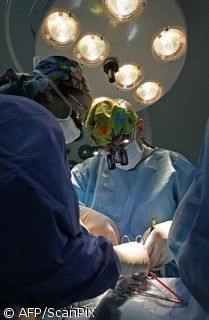 The world's first full face transplant appears in public, and thanks his doctors.
more »
The world's first full face transplant appears in public, and thanks his doctors.
more »
 China's fattest man hospitalized
China's fattest man, weighing 230 kg or 507 pounds, is hospitalised after being diagnosed with heart problems and kidney failure.
more »
China's fattest man hospitalized
China's fattest man, weighing 230 kg or 507 pounds, is hospitalised after being diagnosed with heart problems and kidney failure.
more »
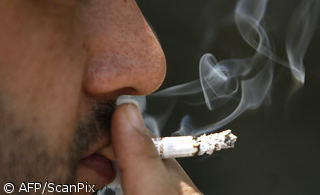 A Chinese anti-smoking activist is on a one-man mission to eradicate smoking - one smoker at a time.
more »
A Chinese anti-smoking activist is on a one-man mission to eradicate smoking - one smoker at a time.
more »
 A five-month old Siberian tiger with cataracts in both eyes becomes China's youngest animal to undergo surgery.
more »
A five-month old Siberian tiger with cataracts in both eyes becomes China's youngest animal to undergo surgery.
more »
 The Commission has taken further steps against Germany for incorrectly applying EU rules on well established medicinal use when authorising medicinal products pursuant to Directive 2001/83/EC.
more »
The Commission has taken further steps against Germany for incorrectly applying EU rules on well established medicinal use when authorising medicinal products pursuant to Directive 2001/83/EC.
more »
 Theold Bank today approved a US$$117.70 million IDA credit to India, designed to improve quality of and access to health services in the state of Tamil Nadu.
more »
Theold Bank today approved a US$$117.70 million IDA credit to India, designed to improve quality of and access to health services in the state of Tamil Nadu.
more »
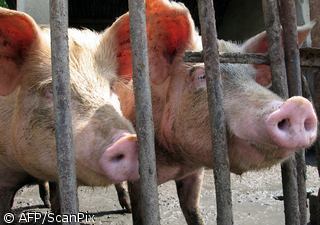 Livestock at a farm outside of Seoul show symptoms of the highly contagious disease.
more »
Livestock at a farm outside of Seoul show symptoms of the highly contagious disease.
more »
A written declaration calling for EU-wide breast cancer screening for women, initiated by MEP Liz Lynne (ALDE, UK) had been signed by sufficient MEPs to qualify as having been endorsed by Parliament, announced the President, thanking those who had signed.
more »
 The European Commission has earmarked €21 million for two new research projects on cancer, as part of an international research effort coordinated since 2007 by the International Cancer Genome Consortium (ICGC).
more »
The European Commission has earmarked €21 million for two new research projects on cancer, as part of an international research effort coordinated since 2007 by the International Cancer Genome Consortium (ICGC).
more »
 To mark World Health Day, WHO is launching a global campaign to raise awareness of the impact of increasing urbanization on the health and lifestyles of people around the globe.
more »
To mark World Health Day, WHO is launching a global campaign to raise awareness of the impact of increasing urbanization on the health and lifestyles of people around the globe.
more »