Astronomers from the University of Colorado at Boulder and the University of California at Berkeley have discovered a key building block for new stars in the rapidly expanding remains of an ancient stellar explosion.
Published:
11 June 2001 y., Monday
Presented at the 197th meeting of the American Astronomical Society meeting June 3 to June 7 in Pasadena, Calif., the study provides insights into the early stages of a process by which violent stellar explosions help produce new stars.
"This finding is important because it gives us an example of how a supernova explosion can create new clouds of star-forming material," said Brian Rachford, a postdoctoral researcher at CU-Boulder's Center for Astrophysics and Space Astronomy.
Other participants in the study include Barry Welsh, a senior research scientist at UC-Berkeley's Space Sciences Laboratory and Jason Tumlinson, a doctoral student in CU-Boulder's astrophysical and planetary sciences department and a CASA research assistant.
The Monoceros Loop Supernova Remnant under study resulted from the cataclysmic explosion of a star nearly 100,000 years ago some 5,000 light-years from Earth, said Rachford. The supernova has formed a shell of gas 350 light-years across that is still expanding at a rate of 100,000 miles per hour.
One light-year -- the distance light travels through the universe in a year -- is equal to roughly 6 trillion miles.
The astronomers detected the presence of molecular hydrogen gas in the rapidly moving shell using a spectrograph onboard NASA's Far Ultraviolet Spectrographic Explorer, or FUSE, satellite. The spectrograph breaks up the ultraviolet light in a manner similar to the way a prism breaks up sunlight into a spectrum of individual colors.
Šaltinis:
sciencedaily.com
Copying, publishing, announcing any information from the News.lt portal without written permission of News.lt editorial office is prohibited.
The most popular articles
 Since the update of 24 July, Azerbaijan and the Republic of Moldova have reported their first laboratory-confirmed cases of pandemic (H1N1) 2009 virus infection.
more »
Since the update of 24 July, Azerbaijan and the Republic of Moldova have reported their first laboratory-confirmed cases of pandemic (H1N1) 2009 virus infection.
more »
 The holiday season has arrived. Your suitcases are packed, your neighbours are watering the plants and feeding the cat and your tickets are ready.
more »
The holiday season has arrived. Your suitcases are packed, your neighbours are watering the plants and feeding the cat and your tickets are ready.
more »
 Topping up your tan on a sunbed is being compared to the cancer risks associated with smoking.
more »
Topping up your tan on a sunbed is being compared to the cancer risks associated with smoking.
more »
 Twenty countries are teaming up to study Alzheimer’s and other forms of dementia, in the first test of a new approach to research in Europe.
more »
Twenty countries are teaming up to study Alzheimer’s and other forms of dementia, in the first test of a new approach to research in Europe.
more »
 The European Commission adopted concrete proposals to tackle Alzheimer’s disease, dementias and other neurodegenerative conditions.
more »
The European Commission adopted concrete proposals to tackle Alzheimer’s disease, dementias and other neurodegenerative conditions.
more »
The increasing number of cases in many countries, with sustained community transmission, made confirming them through laboratory testing extremely difficult and resource intensive.
more »
 The EU’s food safety alert system picks up dangerous food products before they land on your plate.
more »
The EU’s food safety alert system picks up dangerous food products before they land on your plate.
more »
 WHO publishes its first guidelines on indoor air quality, addressing dampness and mould.
more »
WHO publishes its first guidelines on indoor air quality, addressing dampness and mould.
more »
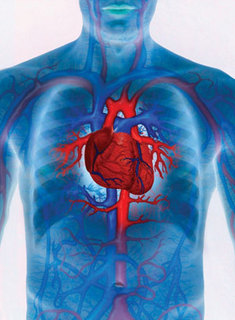 Hannah Clark is a reluctant star - she's facing the media because she's a medical miracle.
more »
Hannah Clark is a reluctant star - she's facing the media because she's a medical miracle.
more »
 EU countries urged to pass tougher anti-smoking laws.
more »
EU countries urged to pass tougher anti-smoking laws.
more »