The concept that each person on the planet is just six handshakes removed from every other person has frightening implications
Published:
2 June 2003 y., Monday
The concept that each person on the planet is just six handshakes removed from every other person has frightening implications when it comes to a highly communicable disease like SARS.
Yet the "small world" effect, also known as the "six degrees of separation" phenomenon, may also help explain how severe acute respiratory syndrome has spread so rapidly around the globe, some researchers believe. The disease has infected 8,221 people and killed 735 worldwide, according to the World Health.
Physicists, psychologists and mathematicians who study network effects, the scientific field that the six-degrees-of-separation notion has engendered, are busy creating mathematical models that attempt to explain the quick spread of SARS.
Mathematicians have long used equations to examine the spread of epidemics, and to help public health officials control them. A recent paper in Science applied these methods to SARS.
In the Science article, the researchers assume that most people -- excluding those who come in contact with so-called superspreaders, have about the same chance of developing SARS. Superspreaders, researchers believe, have the ability to infect more people than most patients.
Network science, on the other hand, assumes that each person's social habits can increase or lessen his or her chances of getting infected. For example, one might be much more likely to come into contact with someone with SARS by traveling on a plane to Taiwan, a country that has recently seen a high rate of SARS infections.
Šaltinis:
wired.com
Copying, publishing, announcing any information from the News.lt portal without written permission of News.lt editorial office is prohibited.
The most popular articles
 With the new influenza season underway, MEPs have criticised the EU's "disproportionate" response to the outbreak of the H1N1 ("swine flu") virus in 2009-2010.
more »
With the new influenza season underway, MEPs have criticised the EU's "disproportionate" response to the outbreak of the H1N1 ("swine flu") virus in 2009-2010.
more »
 Over half the EU adult population is now overweight or obese according to the “Health at a Glance: Europe 2010” report published by the European Commission and the OECD today.
more »
Over half the EU adult population is now overweight or obese according to the “Health at a Glance: Europe 2010” report published by the European Commission and the OECD today.
more »
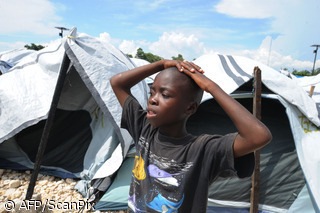 Over 130 people die in central Haiti due to a suspected outbreak of cholera.
more »
Over 130 people die in central Haiti due to a suspected outbreak of cholera.
more »
 The Influenza A (H1N1) pandemic returned to the Parliament last week but fortunately not in the literal sense.
more »
The Influenza A (H1N1) pandemic returned to the Parliament last week but fortunately not in the literal sense.
more »
 The Commission announced today its intention to restructure the process of progressive adoption of the list of permitted health claims on food products (also known as “Article 13 claims”).
more »
The Commission announced today its intention to restructure the process of progressive adoption of the list of permitted health claims on food products (also known as “Article 13 claims”).
more »
 Patients will be better informed on how to use medicines, and enabled to report their adverse effects directly to national authorities, thanks to updates of EU laws agreed with the Council and endorsed by Parliament on Wednesday.
more »
Patients will be better informed on how to use medicines, and enabled to report their adverse effects directly to national authorities, thanks to updates of EU laws agreed with the Council and endorsed by Parliament on Wednesday.
more »
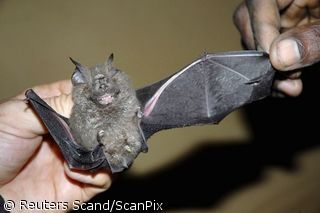 Doctors in Peru are facing outbreaks of two killer diseases, rabies and the plague, being spread by bats and rats.
more »
Doctors in Peru are facing outbreaks of two killer diseases, rabies and the plague, being spread by bats and rats.
more »
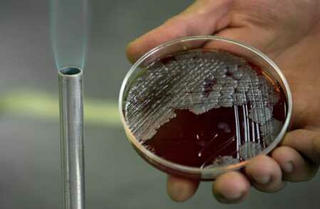 Scientists warn a new drug-resistant superbug could spread worldwide, fuelled in part by medical tourism.
more »
Scientists warn a new drug-resistant superbug could spread worldwide, fuelled in part by medical tourism.
more »
 Chinese officials say they are investigating reports that tainted milk powder has caused premature sexual development in baby girls.
more »
Chinese officials say they are investigating reports that tainted milk powder has caused premature sexual development in baby girls.
more »
 A woman in India says she has to sell her 6-month-old baby in order to pay her husband's medical expenses.
more »
A woman in India says she has to sell her 6-month-old baby in order to pay her husband's medical expenses.
more »