The concept that each person on the planet is just six handshakes removed from every other person has frightening implications
Published:
2 June 2003 y., Monday
The concept that each person on the planet is just six handshakes removed from every other person has frightening implications when it comes to a highly communicable disease like SARS.
Yet the "small world" effect, also known as the "six degrees of separation" phenomenon, may also help explain how severe acute respiratory syndrome has spread so rapidly around the globe, some researchers believe. The disease has infected 8,221 people and killed 735 worldwide, according to the World Health.
Physicists, psychologists and mathematicians who study network effects, the scientific field that the six-degrees-of-separation notion has engendered, are busy creating mathematical models that attempt to explain the quick spread of SARS.
Mathematicians have long used equations to examine the spread of epidemics, and to help public health officials control them. A recent paper in Science applied these methods to SARS.
In the Science article, the researchers assume that most people -- excluding those who come in contact with so-called superspreaders, have about the same chance of developing SARS. Superspreaders, researchers believe, have the ability to infect more people than most patients.
Network science, on the other hand, assumes that each person's social habits can increase or lessen his or her chances of getting infected. For example, one might be much more likely to come into contact with someone with SARS by traveling on a plane to Taiwan, a country that has recently seen a high rate of SARS infections.
Šaltinis:
wired.com
Copying, publishing, announcing any information from the News.lt portal without written permission of News.lt editorial office is prohibited.
The most popular articles
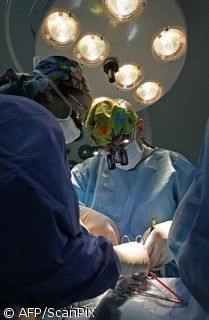 The world's first full face transplant appears in public, and thanks his doctors.
more »
The world's first full face transplant appears in public, and thanks his doctors.
more »
 China's fattest man hospitalized
China's fattest man, weighing 230 kg or 507 pounds, is hospitalised after being diagnosed with heart problems and kidney failure.
more »
China's fattest man hospitalized
China's fattest man, weighing 230 kg or 507 pounds, is hospitalised after being diagnosed with heart problems and kidney failure.
more »
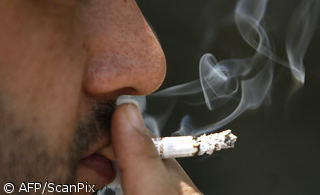 A Chinese anti-smoking activist is on a one-man mission to eradicate smoking - one smoker at a time.
more »
A Chinese anti-smoking activist is on a one-man mission to eradicate smoking - one smoker at a time.
more »
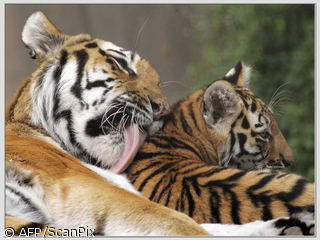 A five-month old Siberian tiger with cataracts in both eyes becomes China's youngest animal to undergo surgery.
more »
A five-month old Siberian tiger with cataracts in both eyes becomes China's youngest animal to undergo surgery.
more »
 The Commission has taken further steps against Germany for incorrectly applying EU rules on well established medicinal use when authorising medicinal products pursuant to Directive 2001/83/EC.
more »
The Commission has taken further steps against Germany for incorrectly applying EU rules on well established medicinal use when authorising medicinal products pursuant to Directive 2001/83/EC.
more »
 Theold Bank today approved a US$$117.70 million IDA credit to India, designed to improve quality of and access to health services in the state of Tamil Nadu.
more »
Theold Bank today approved a US$$117.70 million IDA credit to India, designed to improve quality of and access to health services in the state of Tamil Nadu.
more »
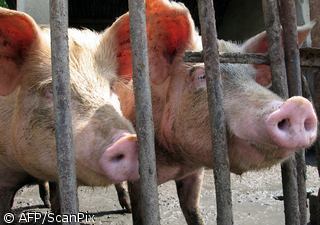 Livestock at a farm outside of Seoul show symptoms of the highly contagious disease.
more »
Livestock at a farm outside of Seoul show symptoms of the highly contagious disease.
more »
A written declaration calling for EU-wide breast cancer screening for women, initiated by MEP Liz Lynne (ALDE, UK) had been signed by sufficient MEPs to qualify as having been endorsed by Parliament, announced the President, thanking those who had signed.
more »
 The European Commission has earmarked €21 million for two new research projects on cancer, as part of an international research effort coordinated since 2007 by the International Cancer Genome Consortium (ICGC).
more »
The European Commission has earmarked €21 million for two new research projects on cancer, as part of an international research effort coordinated since 2007 by the International Cancer Genome Consortium (ICGC).
more »
 To mark World Health Day, WHO is launching a global campaign to raise awareness of the impact of increasing urbanization on the health and lifestyles of people around the globe.
more »
To mark World Health Day, WHO is launching a global campaign to raise awareness of the impact of increasing urbanization on the health and lifestyles of people around the globe.
more »