A private company striving to map the human genetic code reported today that it has completed a major step in the project - sequencing the genome.
Published:
7 April 2000 y., Friday
Celera Genomics of suburban Rockville, Md., said it has finished the sequencing phase of one person_s genetic code and will now begin to assemble the genetic fragments into their proper order.
The human genome is a biological map laying out the exact sequence of the estimated 3.5
billion pairs of chemicals that make up the DNA in each human cell. Those chemicals are
arranged in specific ways to create the estimated 80,000 to 100,000 human genes, which in
turn carry the instructions for all the body_s processes.
Understanding the massive series of genes that provide the code for life has been a major
project for both private and public organizations for several years, because it could serve as
the foundation for developing new medical cures and preventions.
Celera is a private company that is competing with government researchers to decode the
human genome. But to do so, it uses portions of the genome already sequenced by the nonprofit Human Genome Project, which posts on the Internet each bit of DNA it
completes decoding. The Human Genome Project has posted 2.3 billion subunits of DNA that it has decoded on the Internet for use by any scientist.
In contrast to how Celera sequences DNA, the Human Genome Project fits the genetic
puzzle pieces together as they are discovered, accumulating larger - and what it calls more
accurate - pieces. The Human Genome Project also expects to complete a ``working draft'' of the genome
later this year, and to publish a full genetic map on the Internet by 2003.
Copying, publishing, announcing any information from the News.lt portal without written permission of News.lt editorial office is prohibited.
The most popular articles
 With the new influenza season underway, MEPs have criticised the EU's "disproportionate" response to the outbreak of the H1N1 ("swine flu") virus in 2009-2010.
more »
With the new influenza season underway, MEPs have criticised the EU's "disproportionate" response to the outbreak of the H1N1 ("swine flu") virus in 2009-2010.
more »
 Over half the EU adult population is now overweight or obese according to the “Health at a Glance: Europe 2010” report published by the European Commission and the OECD today.
more »
Over half the EU adult population is now overweight or obese according to the “Health at a Glance: Europe 2010” report published by the European Commission and the OECD today.
more »
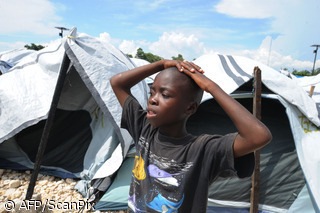 Over 130 people die in central Haiti due to a suspected outbreak of cholera.
more »
Over 130 people die in central Haiti due to a suspected outbreak of cholera.
more »
 The Influenza A (H1N1) pandemic returned to the Parliament last week but fortunately not in the literal sense.
more »
The Influenza A (H1N1) pandemic returned to the Parliament last week but fortunately not in the literal sense.
more »
 The Commission announced today its intention to restructure the process of progressive adoption of the list of permitted health claims on food products (also known as “Article 13 claims”).
more »
The Commission announced today its intention to restructure the process of progressive adoption of the list of permitted health claims on food products (also known as “Article 13 claims”).
more »
 Patients will be better informed on how to use medicines, and enabled to report their adverse effects directly to national authorities, thanks to updates of EU laws agreed with the Council and endorsed by Parliament on Wednesday.
more »
Patients will be better informed on how to use medicines, and enabled to report their adverse effects directly to national authorities, thanks to updates of EU laws agreed with the Council and endorsed by Parliament on Wednesday.
more »
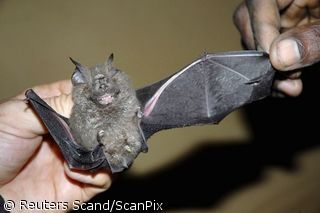 Doctors in Peru are facing outbreaks of two killer diseases, rabies and the plague, being spread by bats and rats.
more »
Doctors in Peru are facing outbreaks of two killer diseases, rabies and the plague, being spread by bats and rats.
more »
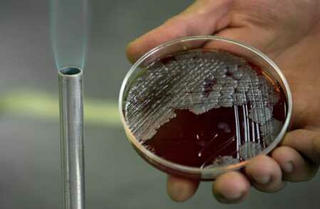 Scientists warn a new drug-resistant superbug could spread worldwide, fuelled in part by medical tourism.
more »
Scientists warn a new drug-resistant superbug could spread worldwide, fuelled in part by medical tourism.
more »
 Chinese officials say they are investigating reports that tainted milk powder has caused premature sexual development in baby girls.
more »
Chinese officials say they are investigating reports that tainted milk powder has caused premature sexual development in baby girls.
more »
 A woman in India says she has to sell her 6-month-old baby in order to pay her husband's medical expenses.
more »
A woman in India says she has to sell her 6-month-old baby in order to pay her husband's medical expenses.
more »