A private company striving to map the human genetic code reported today that it has completed a major step in the project - sequencing the genome.
Published:
7 April 2000 y., Friday
Celera Genomics of suburban Rockville, Md., said it has finished the sequencing phase of one person_s genetic code and will now begin to assemble the genetic fragments into their proper order.
The human genome is a biological map laying out the exact sequence of the estimated 3.5
billion pairs of chemicals that make up the DNA in each human cell. Those chemicals are
arranged in specific ways to create the estimated 80,000 to 100,000 human genes, which in
turn carry the instructions for all the body_s processes.
Understanding the massive series of genes that provide the code for life has been a major
project for both private and public organizations for several years, because it could serve as
the foundation for developing new medical cures and preventions.
Celera is a private company that is competing with government researchers to decode the
human genome. But to do so, it uses portions of the genome already sequenced by the nonprofit Human Genome Project, which posts on the Internet each bit of DNA it
completes decoding. The Human Genome Project has posted 2.3 billion subunits of DNA that it has decoded on the Internet for use by any scientist.
In contrast to how Celera sequences DNA, the Human Genome Project fits the genetic
puzzle pieces together as they are discovered, accumulating larger - and what it calls more
accurate - pieces. The Human Genome Project also expects to complete a ``working draft'' of the genome
later this year, and to publish a full genetic map on the Internet by 2003.
Copying, publishing, announcing any information from the News.lt portal without written permission of News.lt editorial office is prohibited.
The most popular articles
 Since the update of 24 July, Azerbaijan and the Republic of Moldova have reported their first laboratory-confirmed cases of pandemic (H1N1) 2009 virus infection.
more »
Since the update of 24 July, Azerbaijan and the Republic of Moldova have reported their first laboratory-confirmed cases of pandemic (H1N1) 2009 virus infection.
more »
 The holiday season has arrived. Your suitcases are packed, your neighbours are watering the plants and feeding the cat and your tickets are ready.
more »
The holiday season has arrived. Your suitcases are packed, your neighbours are watering the plants and feeding the cat and your tickets are ready.
more »
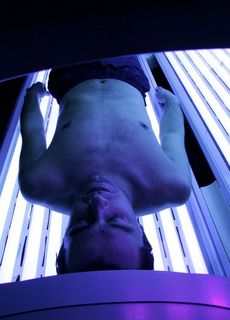 Topping up your tan on a sunbed is being compared to the cancer risks associated with smoking.
more »
Topping up your tan on a sunbed is being compared to the cancer risks associated with smoking.
more »
 Twenty countries are teaming up to study Alzheimer’s and other forms of dementia, in the first test of a new approach to research in Europe.
more »
Twenty countries are teaming up to study Alzheimer’s and other forms of dementia, in the first test of a new approach to research in Europe.
more »
 The European Commission adopted concrete proposals to tackle Alzheimer’s disease, dementias and other neurodegenerative conditions.
more »
The European Commission adopted concrete proposals to tackle Alzheimer’s disease, dementias and other neurodegenerative conditions.
more »
The increasing number of cases in many countries, with sustained community transmission, made confirming them through laboratory testing extremely difficult and resource intensive.
more »
 The EU’s food safety alert system picks up dangerous food products before they land on your plate.
more »
The EU’s food safety alert system picks up dangerous food products before they land on your plate.
more »
 WHO publishes its first guidelines on indoor air quality, addressing dampness and mould.
more »
WHO publishes its first guidelines on indoor air quality, addressing dampness and mould.
more »
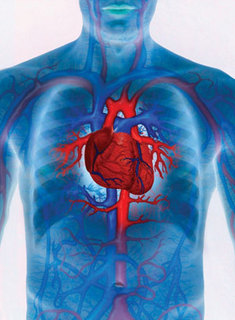 Hannah Clark is a reluctant star - she's facing the media because she's a medical miracle.
more »
Hannah Clark is a reluctant star - she's facing the media because she's a medical miracle.
more »
 EU countries urged to pass tougher anti-smoking laws.
more »
EU countries urged to pass tougher anti-smoking laws.
more »