The worldwide AIDS epidemic has been traced back to a single ancestor virus - the HIV Eve - that emerged perhaps around 1930.
Published:
2 February 2000 y., Wednesday
Earlier research had suggested that the epidemic began in the first half of the 20th century, but the latest analysis, done at the Los Alamos National Lab in New Mexico, appears to be the most definitive so far.
Bette Korber, who keeps a database of HIV genetic information at the lab, calculated HIV_s family tree by looking at the rate the virus mutates over time. She assumed these genetic changes happen at a constant rate, and using a supercomputer she clocked the mutations back through time to a common ancestor. Korber estimates that the current epidemic goes back to one or a small group of infected humans around 1930, though this ancestor virus could have emerged as early as 1910 or as late as 1950. From this single source, she suggests, came the virus that now infects roughly 40 million people all over the world. Her findings were released at a scientific conference this week in San Francisco. Experts believe that HIV_s ancestor is a virus that ordinarily infects chimpanzees. Somehow it spread to people - perhaps through a bite or hunting mishap - in west equatorial Africa.
Just when this happened, though, is still a mystery, Korber said. The leap from chimp to man could have been around 1930. Or it may have occurred much earlier and the virus stayed within a small group of humans.
Korber based her work on the genetic codes of 160 different copies of the AIDS virus. She analyzed them on a Los Alamos supercomputer, called Nirvana, that can perform 1 trillion computations per second. The earliest existing sample of HIV was found in a blood specimen obtained in Leopoldville - now Kinshasa - in 1959.
Copying, publishing, announcing any information from the News.lt portal without written permission of News.lt editorial office is prohibited.
The most popular articles
 With the new influenza season underway, MEPs have criticised the EU's "disproportionate" response to the outbreak of the H1N1 ("swine flu") virus in 2009-2010.
more »
With the new influenza season underway, MEPs have criticised the EU's "disproportionate" response to the outbreak of the H1N1 ("swine flu") virus in 2009-2010.
more »
 Over half the EU adult population is now overweight or obese according to the “Health at a Glance: Europe 2010” report published by the European Commission and the OECD today.
more »
Over half the EU adult population is now overweight or obese according to the “Health at a Glance: Europe 2010” report published by the European Commission and the OECD today.
more »
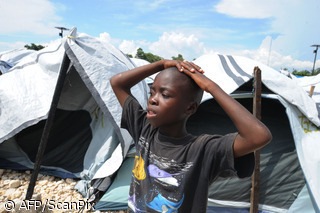 Over 130 people die in central Haiti due to a suspected outbreak of cholera.
more »
Over 130 people die in central Haiti due to a suspected outbreak of cholera.
more »
 The Influenza A (H1N1) pandemic returned to the Parliament last week but fortunately not in the literal sense.
more »
The Influenza A (H1N1) pandemic returned to the Parliament last week but fortunately not in the literal sense.
more »
 The Commission announced today its intention to restructure the process of progressive adoption of the list of permitted health claims on food products (also known as “Article 13 claims”).
more »
The Commission announced today its intention to restructure the process of progressive adoption of the list of permitted health claims on food products (also known as “Article 13 claims”).
more »
 Patients will be better informed on how to use medicines, and enabled to report their adverse effects directly to national authorities, thanks to updates of EU laws agreed with the Council and endorsed by Parliament on Wednesday.
more »
Patients will be better informed on how to use medicines, and enabled to report their adverse effects directly to national authorities, thanks to updates of EU laws agreed with the Council and endorsed by Parliament on Wednesday.
more »
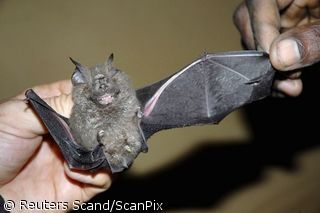 Doctors in Peru are facing outbreaks of two killer diseases, rabies and the plague, being spread by bats and rats.
more »
Doctors in Peru are facing outbreaks of two killer diseases, rabies and the plague, being spread by bats and rats.
more »
 Scientists warn a new drug-resistant superbug could spread worldwide, fuelled in part by medical tourism.
more »
Scientists warn a new drug-resistant superbug could spread worldwide, fuelled in part by medical tourism.
more »
 Chinese officials say they are investigating reports that tainted milk powder has caused premature sexual development in baby girls.
more »
Chinese officials say they are investigating reports that tainted milk powder has caused premature sexual development in baby girls.
more »
 A woman in India says she has to sell her 6-month-old baby in order to pay her husband's medical expenses.
more »
A woman in India says she has to sell her 6-month-old baby in order to pay her husband's medical expenses.
more »