A rise in both the number of uninsured and out-of-pocket medical expenses has spurred several companies to form discount clubs that offer savings on prescription drugs, doctor visits and other medical services.
Published:
28 August 2000 y., Monday
The buying clubs, set up by companies ranging from Internet startups to Readers Digest, advertise savings of between 10 percent and 70 percent off their medical bills at participating providers.
More doctors and dentists are accepting the discount cards as a way to attract patients, who pay on the spot. These doctors are willing to give discounts in exchange for prompt payment, which can be a problem with managed care coverage.
The clubs, which usually require an annual membership fee similar to a Sam's Club or Costco, are aimed at the 44 million uninsured Americans and consumers whose health insurance lacks prescription drug and dental coverage, and other benefits. The fees vary from $10 to $50 a year per person.
While consumer advocates say the discounts are better than nothing, they caution that this is not insurance coverage, does nothing to protect against the cost of catastrophic illness, and does little to reduce the national problem of rising health costs and growing number of uninsured.
Šaltinis:
AP Online
Copying, publishing, announcing any information from the News.lt portal without written permission of News.lt editorial office is prohibited.
The most popular articles
 The only physician in her village of Tsoniarisi, Mzevinar Bolkvadze sees patients all day in a newly built and equipped ambulatory.
more »
The only physician in her village of Tsoniarisi, Mzevinar Bolkvadze sees patients all day in a newly built and equipped ambulatory.
more »
 As of 7 September 2009, 48 of the 53 Member States in the WHO European Region had reported over 49 000 laboratory-confirmed cases of pandemic (H1N1) 2009 virus infection.
more »
As of 7 September 2009, 48 of the 53 Member States in the WHO European Region had reported over 49 000 laboratory-confirmed cases of pandemic (H1N1) 2009 virus infection.
more »
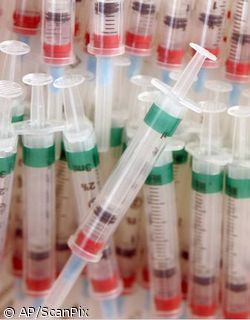 China's food and drug administration say clinical trials of a vaccine against the H1N1 flu strain have been successful.
more »
China's food and drug administration say clinical trials of a vaccine against the H1N1 flu strain have been successful.
more »
As of 31 August 2009, 48 of the 53 Member States in the WHO European Region had reported laboratory-confirmed cases of pandemic (H1N1) 2009 virus infection.
more »
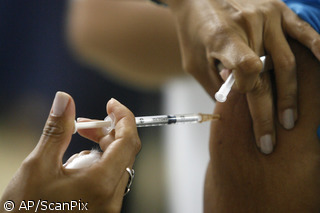 The European Union Health Security Committee and the Early Warning and Response authorities adopted a policy statement proposed by the European Commission which outlines a shared European approach towards identifying target and priority groups for A H1N1 vaccination.
more »
The European Union Health Security Committee and the Early Warning and Response authorities adopted a policy statement proposed by the European Commission which outlines a shared European approach towards identifying target and priority groups for A H1N1 vaccination.
more »
 As of 20 August 2009, 47 of the 53 Member States in the WHO European Region had reported over 42 000 laboratory-confirmed cases of pandemic (H1N1) 2009 virus infection.
more »
As of 20 August 2009, 47 of the 53 Member States in the WHO European Region had reported over 42 000 laboratory-confirmed cases of pandemic (H1N1) 2009 virus infection.
more »
 About 1000 participants, mostly from North America, debated solutions to the obesity epidemic in the United States (US) at the Weight of the Nation conference, organized in Washington, USA, by the US Centers for Disease Control.
more »
About 1000 participants, mostly from North America, debated solutions to the obesity epidemic in the United States (US) at the Weight of the Nation conference, organized in Washington, USA, by the US Centers for Disease Control.
more »
 The European Union Health Security Committee and the Early Warning and Response authorities (HSC/EWRS) unanimously adopted for the first time two policy statements proposed by the European Commission on public health measures for pandemic influenza A (H1N1) 2009.
more »
The European Union Health Security Committee and the Early Warning and Response authorities (HSC/EWRS) unanimously adopted for the first time two policy statements proposed by the European Commission on public health measures for pandemic influenza A (H1N1) 2009.
more »
As of 10 August 2009, 46 of the 53 countries in the WHO European Region had reported over 33 000 laboratory-confirmed cases of pandemic (H1N1) 2009 virus infection, including 55 fatalities in 7 countries.
more »
 The U.S. company Moog Medical Devices which acquired the company the Lithuanian Viltechmeda at the beginning of the year 2009, intends to invest EUR 2M in Lithuania in the nearest future, to establish a modern services centre.
more »
The U.S. company Moog Medical Devices which acquired the company the Lithuanian Viltechmeda at the beginning of the year 2009, intends to invest EUR 2M in Lithuania in the nearest future, to establish a modern services centre.
more »