Questions from military and public about how well it works
Published:
30 September 2001 y., Sunday
The nation’s only vaccine approved against anthrax has never been a best-seller. The only civilians who ever needed it were ranchers, hide handlers, veterinarians and the few scientists who worked with the deadly soil bacterium.
Sept. 11 changed all that. Doctors’ offices and travel clinics around the country have been swamped with requests for the vaccine amid concern that the tragedies in New York and Washington might foreshadow a bioterrorist attack. More than 1,000 people in the past two weeks have tried to get shots directly from the vaccine’s maker, BioPort of Lansing, Mich. Callers there are being shunted to a recorded message that reflects what doctors everywhere are saying: “All the stockpile that currently exists is owned by the Department of Defense. At this time there is no opportunity for any commercial sales.”
Yet BioPort’s vaccine was until two weeks ago perhaps the most shunned and controversial shot ever produced. For years it has been at the center of a political, medical and legal struggle, with more than 400 members of the military opting to quit or be court-martialed rather than roll up their sleeves.
In May, two Air Force officers filed a federal class action suit, contending that the vaccine should be classified as “investigational” for inhaled anthrax and should be offered only to volunteers who sign informed-consent documents clearly stating they are subjects in an experiment.
Šaltinis:
THE WASHINGTON POST
Copying, publishing, announcing any information from the News.lt portal without written permission of News.lt editorial office is prohibited.
The most popular articles
 With the new influenza season underway, MEPs have criticised the EU's "disproportionate" response to the outbreak of the H1N1 ("swine flu") virus in 2009-2010.
more »
With the new influenza season underway, MEPs have criticised the EU's "disproportionate" response to the outbreak of the H1N1 ("swine flu") virus in 2009-2010.
more »
 Over half the EU adult population is now overweight or obese according to the “Health at a Glance: Europe 2010” report published by the European Commission and the OECD today.
more »
Over half the EU adult population is now overweight or obese according to the “Health at a Glance: Europe 2010” report published by the European Commission and the OECD today.
more »
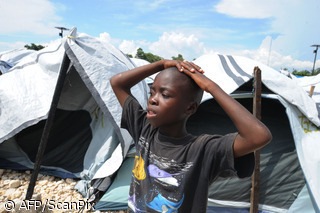 Over 130 people die in central Haiti due to a suspected outbreak of cholera.
more »
Over 130 people die in central Haiti due to a suspected outbreak of cholera.
more »
 The Influenza A (H1N1) pandemic returned to the Parliament last week but fortunately not in the literal sense.
more »
The Influenza A (H1N1) pandemic returned to the Parliament last week but fortunately not in the literal sense.
more »
 The Commission announced today its intention to restructure the process of progressive adoption of the list of permitted health claims on food products (also known as “Article 13 claims”).
more »
The Commission announced today its intention to restructure the process of progressive adoption of the list of permitted health claims on food products (also known as “Article 13 claims”).
more »
 Patients will be better informed on how to use medicines, and enabled to report their adverse effects directly to national authorities, thanks to updates of EU laws agreed with the Council and endorsed by Parliament on Wednesday.
more »
Patients will be better informed on how to use medicines, and enabled to report their adverse effects directly to national authorities, thanks to updates of EU laws agreed with the Council and endorsed by Parliament on Wednesday.
more »
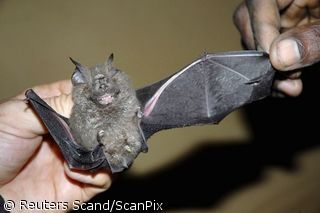 Doctors in Peru are facing outbreaks of two killer diseases, rabies and the plague, being spread by bats and rats.
more »
Doctors in Peru are facing outbreaks of two killer diseases, rabies and the plague, being spread by bats and rats.
more »
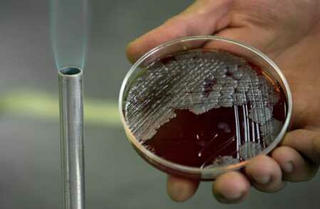 Scientists warn a new drug-resistant superbug could spread worldwide, fuelled in part by medical tourism.
more »
Scientists warn a new drug-resistant superbug could spread worldwide, fuelled in part by medical tourism.
more »
 Chinese officials say they are investigating reports that tainted milk powder has caused premature sexual development in baby girls.
more »
Chinese officials say they are investigating reports that tainted milk powder has caused premature sexual development in baby girls.
more »
 A woman in India says she has to sell her 6-month-old baby in order to pay her husband's medical expenses.
more »
A woman in India says she has to sell her 6-month-old baby in order to pay her husband's medical expenses.
more »