Injecting drug use, fuelled by illicit drug trafficking, is increasing the number of HIV/AIDS cases in southern Uzbekistan
Published:
10 March 2004 y., Wednesday
Injecting drug use, fuelled by illicit drug trafficking, is increasing the number of HIV/AIDS cases in southern Uzbekistan, particularly in areas bordering Tajikistan, health officials say.
Aknazar Pardaev, the head of the Epidemiological Department of the AIDS Centre in the southern Uzbek city of Karshi, capital of Kashkadarya province, told IRIN that HIV/AIDS was on the rise in the area with injecting drug usage being the main mode of transmission.
According to the official statistics, 46 confirmed cases have been registered among the residents of Kashkadarya province as of February 2004. Four cases were registered in 2001, five in 2002, while in 2003 that figure rocketed to 37. The highest rate of HIV infections was in Karshi city, namely 34 cases. There have been two HIV/AIDS related deaths since 1990.
However, Pardaev said that the real number could be higher given that they were expecting test results from Tashkent on 60 unconfirmed cases. "We have preliminary tests here and then send them to Tashkent. There is a lack of [necessary] chemicals, which are imported. This makes it impossible for doctors to address issues immediately," he explained.
Meanwhile, the issue has become even worse in neighbouring Surkhandarya province. "We have started registering the growth of the infection since 2000. Before that we had only three cases," Raisa Abuziyarova, the head of the epidemiological department at the provincial AIDS Centre, told IRIN in Surkhandarya.
Šaltinis:
uzbekistan.com
Copying, publishing, announcing any information from the News.lt portal without written permission of News.lt editorial office is prohibited.
The most popular articles
 With the new influenza season underway, MEPs have criticised the EU's "disproportionate" response to the outbreak of the H1N1 ("swine flu") virus in 2009-2010.
more »
With the new influenza season underway, MEPs have criticised the EU's "disproportionate" response to the outbreak of the H1N1 ("swine flu") virus in 2009-2010.
more »
 Over half the EU adult population is now overweight or obese according to the “Health at a Glance: Europe 2010” report published by the European Commission and the OECD today.
more »
Over half the EU adult population is now overweight or obese according to the “Health at a Glance: Europe 2010” report published by the European Commission and the OECD today.
more »
 Over 130 people die in central Haiti due to a suspected outbreak of cholera.
more »
Over 130 people die in central Haiti due to a suspected outbreak of cholera.
more »
 The Influenza A (H1N1) pandemic returned to the Parliament last week but fortunately not in the literal sense.
more »
The Influenza A (H1N1) pandemic returned to the Parliament last week but fortunately not in the literal sense.
more »
 The Commission announced today its intention to restructure the process of progressive adoption of the list of permitted health claims on food products (also known as “Article 13 claims”).
more »
The Commission announced today its intention to restructure the process of progressive adoption of the list of permitted health claims on food products (also known as “Article 13 claims”).
more »
 Patients will be better informed on how to use medicines, and enabled to report their adverse effects directly to national authorities, thanks to updates of EU laws agreed with the Council and endorsed by Parliament on Wednesday.
more »
Patients will be better informed on how to use medicines, and enabled to report their adverse effects directly to national authorities, thanks to updates of EU laws agreed with the Council and endorsed by Parliament on Wednesday.
more »
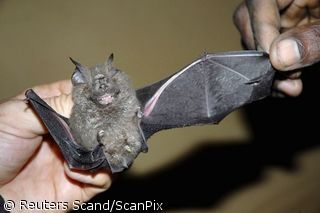 Doctors in Peru are facing outbreaks of two killer diseases, rabies and the plague, being spread by bats and rats.
more »
Doctors in Peru are facing outbreaks of two killer diseases, rabies and the plague, being spread by bats and rats.
more »
 Scientists warn a new drug-resistant superbug could spread worldwide, fuelled in part by medical tourism.
more »
Scientists warn a new drug-resistant superbug could spread worldwide, fuelled in part by medical tourism.
more »
 Chinese officials say they are investigating reports that tainted milk powder has caused premature sexual development in baby girls.
more »
Chinese officials say they are investigating reports that tainted milk powder has caused premature sexual development in baby girls.
more »
 A woman in India says she has to sell her 6-month-old baby in order to pay her husband's medical expenses.
more »
A woman in India says she has to sell her 6-month-old baby in order to pay her husband's medical expenses.
more »