The continent is swept by a case of mad-cow dread
Published:
27 November 2000 y., Monday
At first, Arnaud Eboli’s parents blamed his crying spells and screaming arguments on a tough bout of adolescence. Their 17-year-old had always been a normal boy, athletic and smart, fond of hanging out with his friends, practicing martial-arts moves and feasting on fast-food burgers in the suburbs of Paris. But by September 1998 the outbursts had gotten so bad the Ebolis took him to a psychiatrist, hoping therapy would help. It didn’t.
THE CRYING JAGS GOT WORSE. Arnaud grew clumsy and forgetful. “I’m going crazy!” he would howl at his mother, Dominique. “I have mad-cow disease!”
Arnaud’s doctors never guessed the diagnosis could be true—not even after they hospitalized him a year ago for a battery of medical tests. It was his mother who suggested checking for signs of Creutzfeldt-Jakob disease, the human version of mad cow. The doctors ordered a tonsil biopsy, one of the standard tests these days for CJD. The results confirmed his mother’s worst fears: Arnaud was suffering from the mysterious, incurable brain illness that has frightened Europe and baffled medical researchers for the past 15 years.
Meanwhile, the toll keeps rising in France, where nearly 200 animal cases had been confirmed by last weekend (all of them dairy cattle), and doctors at a Paris hospital were examining a woman they worried might be the country’s fourth human victim. As neighboring countries frantically slapped bans on French beef, demand for the meat plunged at supermarkets and butcher shops across the continent, and farmers braced themselves for profitless times ahead.
Šaltinis:
NEWSWEEK INTERNATIONAL
Copying, publishing, announcing any information from the News.lt portal without written permission of News.lt editorial office is prohibited.
The most popular articles
 With the new influenza season underway, MEPs have criticised the EU's "disproportionate" response to the outbreak of the H1N1 ("swine flu") virus in 2009-2010.
more »
With the new influenza season underway, MEPs have criticised the EU's "disproportionate" response to the outbreak of the H1N1 ("swine flu") virus in 2009-2010.
more »
 Over half the EU adult population is now overweight or obese according to the “Health at a Glance: Europe 2010” report published by the European Commission and the OECD today.
more »
Over half the EU adult population is now overweight or obese according to the “Health at a Glance: Europe 2010” report published by the European Commission and the OECD today.
more »
 Over 130 people die in central Haiti due to a suspected outbreak of cholera.
more »
Over 130 people die in central Haiti due to a suspected outbreak of cholera.
more »
 The Influenza A (H1N1) pandemic returned to the Parliament last week but fortunately not in the literal sense.
more »
The Influenza A (H1N1) pandemic returned to the Parliament last week but fortunately not in the literal sense.
more »
 The Commission announced today its intention to restructure the process of progressive adoption of the list of permitted health claims on food products (also known as “Article 13 claims”).
more »
The Commission announced today its intention to restructure the process of progressive adoption of the list of permitted health claims on food products (also known as “Article 13 claims”).
more »
 Patients will be better informed on how to use medicines, and enabled to report their adverse effects directly to national authorities, thanks to updates of EU laws agreed with the Council and endorsed by Parliament on Wednesday.
more »
Patients will be better informed on how to use medicines, and enabled to report their adverse effects directly to national authorities, thanks to updates of EU laws agreed with the Council and endorsed by Parliament on Wednesday.
more »
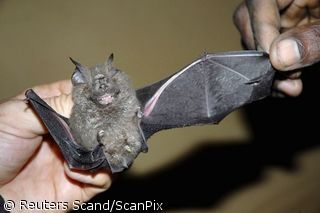 Doctors in Peru are facing outbreaks of two killer diseases, rabies and the plague, being spread by bats and rats.
more »
Doctors in Peru are facing outbreaks of two killer diseases, rabies and the plague, being spread by bats and rats.
more »
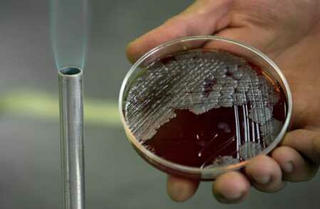 Scientists warn a new drug-resistant superbug could spread worldwide, fuelled in part by medical tourism.
more »
Scientists warn a new drug-resistant superbug could spread worldwide, fuelled in part by medical tourism.
more »
 Chinese officials say they are investigating reports that tainted milk powder has caused premature sexual development in baby girls.
more »
Chinese officials say they are investigating reports that tainted milk powder has caused premature sexual development in baby girls.
more »
 A woman in India says she has to sell her 6-month-old baby in order to pay her husband's medical expenses.
more »
A woman in India says she has to sell her 6-month-old baby in order to pay her husband's medical expenses.
more »