'Failed star' delights astronomers
Published:
9 January 2002 y., Wednesday
Astronomers have caught a remarkable image of a brown dwarf circling a nearby star. A brown dwarf is too big to be a planet but too small to be a star and although a great many have been detected before, this is the first time one has been directly imaged so close to its companion.
It was done using the relatively new technique of adaptive optics, which allows astronomers to get a much clearer view through the Earth's turbulent and distorting atmosphere.
The discovery raises questions about how brown dwarfs and planets are formed. Because brown dwarfs are intermediate objects between planets and stars, they are often described as "failed stars"; they are more massive than Jupiter, the largest planet in our Solar System, but fall short of the minimum mass needed to sustain nuclear fusion. This is estimated to be 8% of the Sun's mass.
The brown dwarf is orbiting a star called 15 Sagittae (Sge), which is about one to three billion years old, making it slightly younger than our Sun. It is located approximately 58 light-years from Earth.
It is separated from its parent star by less than the distance that separates the planet Uranus from the Sun. This makes it the smallest-separation brown-dwarf companion yet seen directly. The research team behind the discovery estimate the mass of the brown dwarf to be 55 to 78 times the mass of planet Jupiter.
Šaltinis:
BBC News
Copying, publishing, announcing any information from the News.lt portal without written permission of News.lt editorial office is prohibited.
The most popular articles
 Since the update of 24 July, Azerbaijan and the Republic of Moldova have reported their first laboratory-confirmed cases of pandemic (H1N1) 2009 virus infection.
more »
Since the update of 24 July, Azerbaijan and the Republic of Moldova have reported their first laboratory-confirmed cases of pandemic (H1N1) 2009 virus infection.
more »
 The holiday season has arrived. Your suitcases are packed, your neighbours are watering the plants and feeding the cat and your tickets are ready.
more »
The holiday season has arrived. Your suitcases are packed, your neighbours are watering the plants and feeding the cat and your tickets are ready.
more »
 Topping up your tan on a sunbed is being compared to the cancer risks associated with smoking.
more »
Topping up your tan on a sunbed is being compared to the cancer risks associated with smoking.
more »
 Twenty countries are teaming up to study Alzheimer’s and other forms of dementia, in the first test of a new approach to research in Europe.
more »
Twenty countries are teaming up to study Alzheimer’s and other forms of dementia, in the first test of a new approach to research in Europe.
more »
 The European Commission adopted concrete proposals to tackle Alzheimer’s disease, dementias and other neurodegenerative conditions.
more »
The European Commission adopted concrete proposals to tackle Alzheimer’s disease, dementias and other neurodegenerative conditions.
more »
The increasing number of cases in many countries, with sustained community transmission, made confirming them through laboratory testing extremely difficult and resource intensive.
more »
 The EU’s food safety alert system picks up dangerous food products before they land on your plate.
more »
The EU’s food safety alert system picks up dangerous food products before they land on your plate.
more »
 WHO publishes its first guidelines on indoor air quality, addressing dampness and mould.
more »
WHO publishes its first guidelines on indoor air quality, addressing dampness and mould.
more »
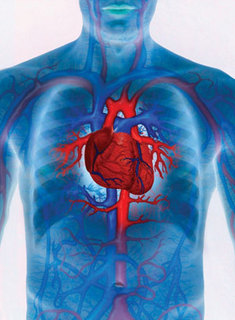 Hannah Clark is a reluctant star - she's facing the media because she's a medical miracle.
more »
Hannah Clark is a reluctant star - she's facing the media because she's a medical miracle.
more »
 EU countries urged to pass tougher anti-smoking laws.
more »
EU countries urged to pass tougher anti-smoking laws.
more »