Imagine a day scientists discover that foods you like are more nutritious than those you don't.
Published:
6 March 2005 y., Sunday
That day occurred more than 25 years ago. A series of experiments run by researchers in Sweden and Thailand showed that people absorb more iron from meals that appeal to them than from meals they find less appetizing.
Promoters of good nutrition throughout much of the world appear to have taken note. Britain's number-one guideline, ahead of admonitions to eat more fiber and less fat, is simply: ''Enjoy your food." Norway, in its own set of guidelines, reminds its citizens that ''food and joy equal health," while Vietnam counsels people to have food ''that is delicious . . . and served with affection."
In stark contrast, the latest edition of the US Dietary Guidelines, released last month, make no allusion that nutrition and taking pleasure in eating have anything to do with each other. Some believe it may be that very disconnection that is contributing to Americans' less-than-optimal diets, not to mention obesity.
Part of the problem occurs on a gut level -- literally. In the late 1970s, Swedish and Thai researchers collaborated on a study that centered on a Thai meal of rice and vegetables spiked with chili paste, fish sauce, and coconut cream. They fed the meal to a group of Thai women and a group of Swedish women.
The Thai women absorbed almost 50 percent more of the dish's iron than the Swedes, who ''liked the meal" up to a point, reported the researchers, ''but considered it very spicy."
Šaltinis:
boston.com
Copying, publishing, announcing any information from the News.lt portal without written permission of News.lt editorial office is prohibited.
The most popular articles
 Amid fears of a second wave of the potentially deadly virus, the European Commission on 29 September gave a fast track go-ahead to two new vaccines to fight the influenza H1N1 pandemic.
more »
Amid fears of a second wave of the potentially deadly virus, the European Commission on 29 September gave a fast track go-ahead to two new vaccines to fight the influenza H1N1 pandemic.
more »
 Wide variations in death rates prompt EU to step up joint efforts to prevent, treat, research and share information on cancer.
more »
Wide variations in death rates prompt EU to step up joint efforts to prevent, treat, research and share information on cancer.
more »
 There are currently over 7 million people in Europe suffering from Alzheimer’s and related disorders and this will double in 20 years.
more »
There are currently over 7 million people in Europe suffering from Alzheimer’s and related disorders and this will double in 20 years.
more »
 The greatest disease burden in Europe comes from noncommunicable diseases (NCD).
more »
The greatest disease burden in Europe comes from noncommunicable diseases (NCD).
more »
 Every year, the number of cases of influenza rises during the winter seasons in the northern and southern hemispheres.
more »
Every year, the number of cases of influenza rises during the winter seasons in the northern and southern hemispheres.
more »
 Volume to be controlled on MP3 players, iPods and other personal music players, to prevent hearing loss.
more »
Volume to be controlled on MP3 players, iPods and other personal music players, to prevent hearing loss.
more »
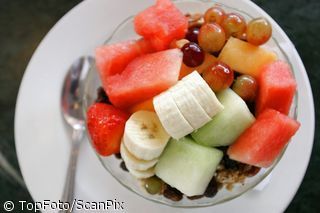 Today Mariann Fischer Boel, Commissioner for Agriculture and Rural Development, launched a new Healthy Eating Campaign for European school children.
more »
Today Mariann Fischer Boel, Commissioner for Agriculture and Rural Development, launched a new Healthy Eating Campaign for European school children.
more »
 On Monday 21 September the Swedish Presidency began a two-day expert conference on alcohol and health.
more »
On Monday 21 September the Swedish Presidency began a two-day expert conference on alcohol and health.
more »
 60-year-old Kay Thornton's been blind for nine years. A rare skin condition called Stevens-Johnson syndrome robbed her of her sight. Now she's able to see again after surgeons in the United States implanted one of her own teeth to anchor a man-made lens inside her eye.
more »
60-year-old Kay Thornton's been blind for nine years. A rare skin condition called Stevens-Johnson syndrome robbed her of her sight. Now she's able to see again after surgeons in the United States implanted one of her own teeth to anchor a man-made lens inside her eye.
more »
 A strategy for stemming the spread of the H1N1 flu virus.
more »
A strategy for stemming the spread of the H1N1 flu virus.
more »