Germany is not necessarily known as the sunniest spot in Europe. But nowhere else do so many people climb on their roofs to install solar panels.
Published:
9 July 2001 y., Monday
Since the introduction of the Renewable Energies Laws (EEG) in April last year, Germany has been experiencing a remarkable boom in solar energy.
"When my cab driver gives me a lecture about solar technologies, I know I am back home," raved Rian van Staden, executive director of the International Solar Energy Society (ISES) about Freiburg, the sunniest city in Germany and host to the InterSolar conference July 6-8.
The little university town in southwest Germany, about 40 miles away from the French and Swiss borders, is Germany's "Solar Valley."
A gigantic solar panel at the train station greets visitors to Freiburg. The city also boasts the new Zero Emissions Hotel Victoria, which is the first European hotel to run completely on alternative energy sources. Even Freiburg's premier league soccer stadium is solar powered.
More than 450 environmentally oriented companies and institutions take advantage of the favorable weather, research, networking opportunities and progressive political climate in Freiburg, which makes even Berkeley -- its soul mate in the San Francisco Bay Area -- look comparatively conservative.
The German solar industry has exploded in the last two years. DFS (Deutscher Fachverband Solarenergie), the German Association for Solar Energies, recently reported a 50 percent rise in solar panel orders during 2000. German solar companies sold 75,000 solar systems in 2000 in addition to 360,000 solar systems installed previously, and photovoltaic installations increased fourfold from 1999.
Solar power means big business in Germany: Solar companies generated revenues of $435 million in 2000. According to DFS, Germany -- with its 54 percent market share -- is by far the European leader in produced solar collectors. The trade show floors at InterSolar also demonstrate the increasing maturity of the industry. While a few years ago so-called "Цkos" (German shorthand for ecologically minded types) or "Mьslies" (Musli eaters) in Birkenstock sandals and "suspiciously long" hair flocked to the conferences.
Šaltinis:
wired.com
Copying, publishing, announcing any information from the News.lt portal without written permission of News.lt editorial office is prohibited.
The most popular articles
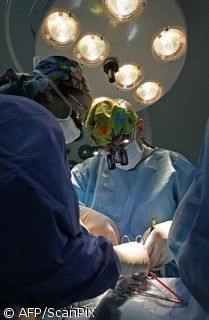 The world's first full face transplant appears in public, and thanks his doctors.
more »
The world's first full face transplant appears in public, and thanks his doctors.
more »
 China's fattest man hospitalized
China's fattest man, weighing 230 kg or 507 pounds, is hospitalised after being diagnosed with heart problems and kidney failure.
more »
China's fattest man hospitalized
China's fattest man, weighing 230 kg or 507 pounds, is hospitalised after being diagnosed with heart problems and kidney failure.
more »
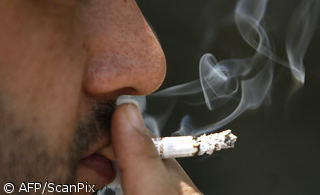 A Chinese anti-smoking activist is on a one-man mission to eradicate smoking - one smoker at a time.
more »
A Chinese anti-smoking activist is on a one-man mission to eradicate smoking - one smoker at a time.
more »
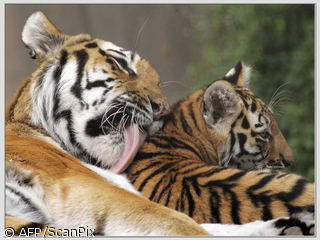 A five-month old Siberian tiger with cataracts in both eyes becomes China's youngest animal to undergo surgery.
more »
A five-month old Siberian tiger with cataracts in both eyes becomes China's youngest animal to undergo surgery.
more »
 The Commission has taken further steps against Germany for incorrectly applying EU rules on well established medicinal use when authorising medicinal products pursuant to Directive 2001/83/EC.
more »
The Commission has taken further steps against Germany for incorrectly applying EU rules on well established medicinal use when authorising medicinal products pursuant to Directive 2001/83/EC.
more »
 Theold Bank today approved a US$$117.70 million IDA credit to India, designed to improve quality of and access to health services in the state of Tamil Nadu.
more »
Theold Bank today approved a US$$117.70 million IDA credit to India, designed to improve quality of and access to health services in the state of Tamil Nadu.
more »
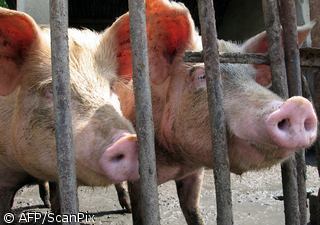 Livestock at a farm outside of Seoul show symptoms of the highly contagious disease.
more »
Livestock at a farm outside of Seoul show symptoms of the highly contagious disease.
more »
A written declaration calling for EU-wide breast cancer screening for women, initiated by MEP Liz Lynne (ALDE, UK) had been signed by sufficient MEPs to qualify as having been endorsed by Parliament, announced the President, thanking those who had signed.
more »
 The European Commission has earmarked €21 million for two new research projects on cancer, as part of an international research effort coordinated since 2007 by the International Cancer Genome Consortium (ICGC).
more »
The European Commission has earmarked €21 million for two new research projects on cancer, as part of an international research effort coordinated since 2007 by the International Cancer Genome Consortium (ICGC).
more »
 To mark World Health Day, WHO is launching a global campaign to raise awareness of the impact of increasing urbanization on the health and lifestyles of people around the globe.
more »
To mark World Health Day, WHO is launching a global campaign to raise awareness of the impact of increasing urbanization on the health and lifestyles of people around the globe.
more »