Russia is on the brink of an AIDS catastrophe, experts say, that could lead to infection rates rarely seen outside sub-Saharan Africa
Published:
8 August 2002 y., Thursday
Russia is on the brink of an AIDS catastrophe, experts say, that could lead to infection rates rarely seen outside sub-Saharan Africa. And the government is doing next to nothing to avert the disaster.
The nation of 146 million people has the fastest growing epidemic of HIV infection in the world, the United Nations AIDS program reported last month, with a particularly dramatic rise among heterosexuals practicing unsafe sex.
If the infection continues to grow at its current rate, more than 5 million Russians could have HIV by 2007, said Vadim Pokrovsky, Russia's top AIDS researcher and director of the Moscow-based Center for AIDS Prevention and Treatment.
But the government devotes a mere $5 million to HIV treatment annually - a sum that Pokrovsky and other health experts say is laughably small - compared with more than $5 billion spent by the United States. He says $65 million is needed immediately for programs to prevent and treat HIV.
But it is not only the government that is guilty of inaction. On the subject of AIDS, the whole country is in denial.
The official statistics are startling enough: According to government figures, HIV infections leaped from about 87,000 cases in 2000 to more than 201,000 cases now. Since 1997, the infection rate has increased by more than 500 percent. The real numbers may be much higher. UNAIDS estimates there are 700,000 HIV cases. Pokrovsky believes it is closer to 1.4 million.
Šaltinis:
sfgate.com
Copying, publishing, announcing any information from the News.lt portal without written permission of News.lt editorial office is prohibited.
The most popular articles
 With the new influenza season underway, MEPs have criticised the EU's "disproportionate" response to the outbreak of the H1N1 ("swine flu") virus in 2009-2010.
more »
With the new influenza season underway, MEPs have criticised the EU's "disproportionate" response to the outbreak of the H1N1 ("swine flu") virus in 2009-2010.
more »
 Over half the EU adult population is now overweight or obese according to the “Health at a Glance: Europe 2010” report published by the European Commission and the OECD today.
more »
Over half the EU adult population is now overweight or obese according to the “Health at a Glance: Europe 2010” report published by the European Commission and the OECD today.
more »
 Over 130 people die in central Haiti due to a suspected outbreak of cholera.
more »
Over 130 people die in central Haiti due to a suspected outbreak of cholera.
more »
 The Influenza A (H1N1) pandemic returned to the Parliament last week but fortunately not in the literal sense.
more »
The Influenza A (H1N1) pandemic returned to the Parliament last week but fortunately not in the literal sense.
more »
 The Commission announced today its intention to restructure the process of progressive adoption of the list of permitted health claims on food products (also known as “Article 13 claims”).
more »
The Commission announced today its intention to restructure the process of progressive adoption of the list of permitted health claims on food products (also known as “Article 13 claims”).
more »
 Patients will be better informed on how to use medicines, and enabled to report their adverse effects directly to national authorities, thanks to updates of EU laws agreed with the Council and endorsed by Parliament on Wednesday.
more »
Patients will be better informed on how to use medicines, and enabled to report their adverse effects directly to national authorities, thanks to updates of EU laws agreed with the Council and endorsed by Parliament on Wednesday.
more »
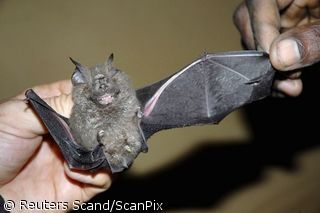 Doctors in Peru are facing outbreaks of two killer diseases, rabies and the plague, being spread by bats and rats.
more »
Doctors in Peru are facing outbreaks of two killer diseases, rabies and the plague, being spread by bats and rats.
more »
 Scientists warn a new drug-resistant superbug could spread worldwide, fuelled in part by medical tourism.
more »
Scientists warn a new drug-resistant superbug could spread worldwide, fuelled in part by medical tourism.
more »
 Chinese officials say they are investigating reports that tainted milk powder has caused premature sexual development in baby girls.
more »
Chinese officials say they are investigating reports that tainted milk powder has caused premature sexual development in baby girls.
more »
 A woman in India says she has to sell her 6-month-old baby in order to pay her husband's medical expenses.
more »
A woman in India says she has to sell her 6-month-old baby in order to pay her husband's medical expenses.
more »