Wheat plants grown in soil from near the Chernobyl nuclear power plant have six times the rate of mutations as those grown in clean soil, according to a study in this week's issue of Nature.
Published:
5 October 2000 y., Thursday
This suggests that chronic exposure to radiation may cause more mutations than scientists thought, according to Olga Kovalchuk of Switzerland's Friedrich Meischer Institute, a co-author of the study. An accident at the Chernobyl nuclear power plant contaminated acres of land with nuclear fallout in 1986.
She said the difference lies in long-term low levels of radiation versus short-term bursts of high levels.
"In the past, scientists have estimated the effects of long-term exposure to radiation by (looking at) short term but higher intensity experiments," said David M. Hillis, director of biology at the University of Texas, Austin.
Soils in Chernobyl, on the other hand, have been contaminated by low levels of radiation for almost 15 years. "Theoretically," Kovalchuk wrote, "this low level exposure should not cause such a large increase in the mutation rate."
But now it seems that chronic exposure to low levels produces much higher levels of mutations than would be expected, she said. Kovalchuk and her colleagues said the study also raises questions about the genetic hazards of chronic radiation. The mutations they uncovered were found in the offspring of exposed plants.
Kovalchuk says the next step for the project, a joint effort of both Swiss and Ukrainian scientists, is tosort out the influence of other environmental factors, like pollution and local environmental changes, on both wheat and barley grown in clean contaminated soils.
Šaltinis:
Discovery.com News
Copying, publishing, announcing any information from the News.lt portal without written permission of News.lt editorial office is prohibited.
The most popular articles
 With the new influenza season underway, MEPs have criticised the EU's "disproportionate" response to the outbreak of the H1N1 ("swine flu") virus in 2009-2010.
more »
With the new influenza season underway, MEPs have criticised the EU's "disproportionate" response to the outbreak of the H1N1 ("swine flu") virus in 2009-2010.
more »
 Over half the EU adult population is now overweight or obese according to the “Health at a Glance: Europe 2010” report published by the European Commission and the OECD today.
more »
Over half the EU adult population is now overweight or obese according to the “Health at a Glance: Europe 2010” report published by the European Commission and the OECD today.
more »
 Over 130 people die in central Haiti due to a suspected outbreak of cholera.
more »
Over 130 people die in central Haiti due to a suspected outbreak of cholera.
more »
 The Influenza A (H1N1) pandemic returned to the Parliament last week but fortunately not in the literal sense.
more »
The Influenza A (H1N1) pandemic returned to the Parliament last week but fortunately not in the literal sense.
more »
 The Commission announced today its intention to restructure the process of progressive adoption of the list of permitted health claims on food products (also known as “Article 13 claims”).
more »
The Commission announced today its intention to restructure the process of progressive adoption of the list of permitted health claims on food products (also known as “Article 13 claims”).
more »
 Patients will be better informed on how to use medicines, and enabled to report their adverse effects directly to national authorities, thanks to updates of EU laws agreed with the Council and endorsed by Parliament on Wednesday.
more »
Patients will be better informed on how to use medicines, and enabled to report their adverse effects directly to national authorities, thanks to updates of EU laws agreed with the Council and endorsed by Parliament on Wednesday.
more »
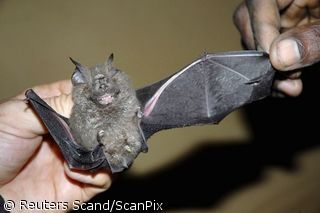 Doctors in Peru are facing outbreaks of two killer diseases, rabies and the plague, being spread by bats and rats.
more »
Doctors in Peru are facing outbreaks of two killer diseases, rabies and the plague, being spread by bats and rats.
more »
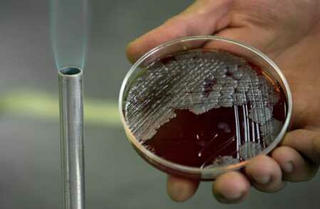 Scientists warn a new drug-resistant superbug could spread worldwide, fuelled in part by medical tourism.
more »
Scientists warn a new drug-resistant superbug could spread worldwide, fuelled in part by medical tourism.
more »
 Chinese officials say they are investigating reports that tainted milk powder has caused premature sexual development in baby girls.
more »
Chinese officials say they are investigating reports that tainted milk powder has caused premature sexual development in baby girls.
more »
 A woman in India says she has to sell her 6-month-old baby in order to pay her husband's medical expenses.
more »
A woman in India says she has to sell her 6-month-old baby in order to pay her husband's medical expenses.
more »