"Orgasm" hormone involved in interpersonal relations: study.
Published:
21 July 1999 y., Wednesday
The hormone best known for its role in orgasms and labor may influence our ability to bond with others, according to researchers at the University of California, San Francisco. In a preliminary study, the hormone oxytocin was shown to be associated with the ability to maintain healthy interpersonal relationships and healthy psychological boundaries with other people. The study appears in the July issue of Psychiatry. "This is one of the first looks into the biological basis for human attachment and bonding," said Rebecca Turner, adjunct assistant professor of psychiatry and lead author of the study. "Our study indicates that oxytocin may be mediating emotional experiences in close relationships."The study builds upon previous knowledge of the important role oxytocin plays in the reproductive life of mammals. The hormone facilitates nest building and pup retrieval in rats, acceptance of offspring in sheep and the formation of adult pair-bonds in prairie voles. In humans, oxytocin stimulates milk ejection during lactation, uterine contraction during birth and is released during sexual orgasm in both men and women.In the new study, 26 non-lactating women between the ages of 23 and 35 were asked to recall a past relationship event that was associated with positive emotions, such as love or infatuation, and then a negative emotion, such as loss or abandonment.
Copying, publishing, announcing any information from the News.lt portal without written permission of News.lt editorial office is prohibited.
The most popular articles
 With the new influenza season underway, MEPs have criticised the EU's "disproportionate" response to the outbreak of the H1N1 ("swine flu") virus in 2009-2010.
more »
With the new influenza season underway, MEPs have criticised the EU's "disproportionate" response to the outbreak of the H1N1 ("swine flu") virus in 2009-2010.
more »
 Over half the EU adult population is now overweight or obese according to the “Health at a Glance: Europe 2010” report published by the European Commission and the OECD today.
more »
Over half the EU adult population is now overweight or obese according to the “Health at a Glance: Europe 2010” report published by the European Commission and the OECD today.
more »
 Over 130 people die in central Haiti due to a suspected outbreak of cholera.
more »
Over 130 people die in central Haiti due to a suspected outbreak of cholera.
more »
 The Influenza A (H1N1) pandemic returned to the Parliament last week but fortunately not in the literal sense.
more »
The Influenza A (H1N1) pandemic returned to the Parliament last week but fortunately not in the literal sense.
more »
 The Commission announced today its intention to restructure the process of progressive adoption of the list of permitted health claims on food products (also known as “Article 13 claims”).
more »
The Commission announced today its intention to restructure the process of progressive adoption of the list of permitted health claims on food products (also known as “Article 13 claims”).
more »
 Patients will be better informed on how to use medicines, and enabled to report their adverse effects directly to national authorities, thanks to updates of EU laws agreed with the Council and endorsed by Parliament on Wednesday.
more »
Patients will be better informed on how to use medicines, and enabled to report their adverse effects directly to national authorities, thanks to updates of EU laws agreed with the Council and endorsed by Parliament on Wednesday.
more »
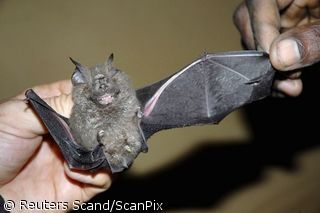 Doctors in Peru are facing outbreaks of two killer diseases, rabies and the plague, being spread by bats and rats.
more »
Doctors in Peru are facing outbreaks of two killer diseases, rabies and the plague, being spread by bats and rats.
more »
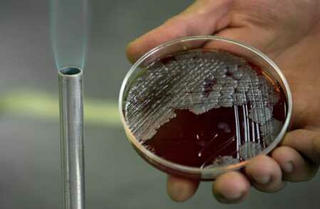 Scientists warn a new drug-resistant superbug could spread worldwide, fuelled in part by medical tourism.
more »
Scientists warn a new drug-resistant superbug could spread worldwide, fuelled in part by medical tourism.
more »
 Chinese officials say they are investigating reports that tainted milk powder has caused premature sexual development in baby girls.
more »
Chinese officials say they are investigating reports that tainted milk powder has caused premature sexual development in baby girls.
more »
 A woman in India says she has to sell her 6-month-old baby in order to pay her husband's medical expenses.
more »
A woman in India says she has to sell her 6-month-old baby in order to pay her husband's medical expenses.
more »