The Mars Polar Lander faced the greatest challenge of its 11-month journey today as it maneuvered for touchdown on the frigid, rolling plains near the Red Planet_s south pole.
Published:
3 December 1999 y., Friday
The $165 million NASA probe was designed to slice through Mars thin atmosphere at precisely the right angle, separate from its heat shield, deploy a parachute and fire a dozen thrusters before setting down - all without radio contact with Earth.
The Mars Polar Lander faced the greatest challenge of its 11-month journey today as it maneuvered for touchdown on the frigid, rolling plains near the Red Planet_ south pole.
Instead, thousands of lines of computer code mapped out every final move, with the probe slowing from 15,400 mph to 5 mph just before touchdown this afternoon.
Scientists hope to learn about Mars_ climate by studying layers of dust and possibly ice during the 90-day mission. Instruments will measure vapor in the atmosphere, while a claw on the spacecraft will collect samples to be cooked and analyzed for water.
Twelve minutes before landing, the probe was to turn away from Earth to position itself for entry, silencing itself until after landing. Engineers performed a minor course adjustment this morning to fine-tune the final landing coordinates.
The first signals - and confirmation of a success - were not expected until 38 minutes after touchdown, provided an antenna is pointed properly. If not, engineers will have several opportunities over the weekend as the lander adjusts its antenna 157 million miles away.
NASA is hoping for a status report, weather readings and black-and-white images by tonight. Clearer pictures and sound clips from a microphone could be returned by the weekend. NASA hopes to relay data through the Mars Global Surveyor, which has been orbiting Mars since 1997.
Meanwhile, two tiny microprobes that rode along with the lander were to slam into the planet at 400 mph as the main spacecraft descends, their fall unbroken by parachutes or thrusters.
The first signals from the Deep Space 2 probes were not expected until late this afternoon at the earliest.
If today's landings succeed, the Polar Lander and the microprobes will join Mars Pathfinder and the two Viking spacecraft as the only spacecraft to explore the surface of the Red Planet.
A loss would be particularly devastating. Only 10 weeks ago, the lander_ sibling spacecraft, the $125 million Mars Climate Orbiter, burned up in the planet_ atmosphere because of a failure to convert navigation data from feet and inches into metrics units.
Copying, publishing, announcing any information from the News.lt portal without written permission of News.lt editorial office is prohibited.
The most popular articles
 Since the update of 24 July, Azerbaijan and the Republic of Moldova have reported their first laboratory-confirmed cases of pandemic (H1N1) 2009 virus infection.
more »
Since the update of 24 July, Azerbaijan and the Republic of Moldova have reported their first laboratory-confirmed cases of pandemic (H1N1) 2009 virus infection.
more »
 The holiday season has arrived. Your suitcases are packed, your neighbours are watering the plants and feeding the cat and your tickets are ready.
more »
The holiday season has arrived. Your suitcases are packed, your neighbours are watering the plants and feeding the cat and your tickets are ready.
more »
 Topping up your tan on a sunbed is being compared to the cancer risks associated with smoking.
more »
Topping up your tan on a sunbed is being compared to the cancer risks associated with smoking.
more »
 Twenty countries are teaming up to study Alzheimer’s and other forms of dementia, in the first test of a new approach to research in Europe.
more »
Twenty countries are teaming up to study Alzheimer’s and other forms of dementia, in the first test of a new approach to research in Europe.
more »
 The European Commission adopted concrete proposals to tackle Alzheimer’s disease, dementias and other neurodegenerative conditions.
more »
The European Commission adopted concrete proposals to tackle Alzheimer’s disease, dementias and other neurodegenerative conditions.
more »
The increasing number of cases in many countries, with sustained community transmission, made confirming them through laboratory testing extremely difficult and resource intensive.
more »
 The EU’s food safety alert system picks up dangerous food products before they land on your plate.
more »
The EU’s food safety alert system picks up dangerous food products before they land on your plate.
more »
 WHO publishes its first guidelines on indoor air quality, addressing dampness and mould.
more »
WHO publishes its first guidelines on indoor air quality, addressing dampness and mould.
more »
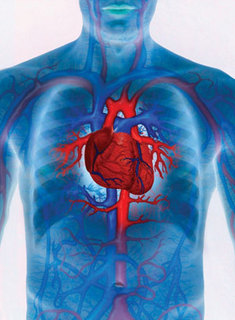 Hannah Clark is a reluctant star - she's facing the media because she's a medical miracle.
more »
Hannah Clark is a reluctant star - she's facing the media because she's a medical miracle.
more »
 EU countries urged to pass tougher anti-smoking laws.
more »
EU countries urged to pass tougher anti-smoking laws.
more »