Biologists and computer scientists have joined forces to create new algorithms that allow supercomputers to model molecular activity on an unprecedented scale.
Published:
21 August 2001 y., Tuesday
The technique could enable medical researchers to better predict the impact of drugs on cells "in silico", i.e. before any experiments on cells or animals.
The researchers, led by a team at the University of California, San Diego, used a recent mathematical discovery to accelerate hugely the speed at which supercomputers can process the data needed to simulate electrostatic atomic interactions.
This means that the number of atoms that can be modelled simultaneously has increased from around 10,000 to 1.2 million, allowing researchers to simulate biological activity at the level of molecules, not atoms.
Electrostatic models show how charges on individual atoms interact to produce electric fields throughout a molecule. This can determine the motion and stability of molecules and help biologists, for example, understand protein behaviour and the effectiveness of drugs.
Šaltinis:
newscientist.com
Copying, publishing, announcing any information from the News.lt portal without written permission of News.lt editorial office is prohibited.
The most popular articles
 Some 56 000 people in the EU are currently waiting for a transplant operation. Every day 12 of them die waiting for an organ to be donated.
more »
Some 56 000 people in the EU are currently waiting for a transplant operation. Every day 12 of them die waiting for an organ to be donated.
more »
 Every day, across the vast country, Chinese school children put down their pens and perform a series of government-devised exercises intended to strengthen their eyes.
more »
Every day, across the vast country, Chinese school children put down their pens and perform a series of government-devised exercises intended to strengthen their eyes.
more »
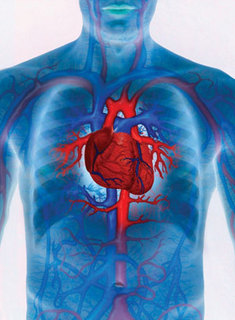 D. Simmons said the experience of living for so long with a machine pumping her blood was "scary."
more »
D. Simmons said the experience of living for so long with a machine pumping her blood was "scary."
more »
 A recent report found that children in Europe are not getting enough fruit and vegetables, so the European Commission is proposing to set aside money to ensure they get weekly fruit.
more »
A recent report found that children in Europe are not getting enough fruit and vegetables, so the European Commission is proposing to set aside money to ensure they get weekly fruit.
more »
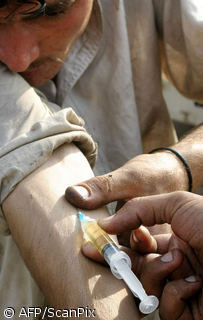 Every year 7,000-8,000 people in the EU die because of drug use and a drugs overdose remains one of the main causes of death among young people.
more »
Every year 7,000-8,000 people in the EU die because of drug use and a drugs overdose remains one of the main causes of death among young people.
more »
 Bad health through a bad diet is a growing problem across Europe.
more »
Bad health through a bad diet is a growing problem across Europe.
more »
 In accordance with the EC Treaty rules on state aid, the European Commission has approved aid worth €90 million to be granted by France to the R&D programme “ADNA” covering the development of personalised medicine for infectious diseases, cancer and genetic diseases.
more »
In accordance with the EC Treaty rules on state aid, the European Commission has approved aid worth €90 million to be granted by France to the R&D programme “ADNA” covering the development of personalised medicine for infectious diseases, cancer and genetic diseases.
more »
 October is international breast cancer awareness month. In Europe alone there are an estimated 430,000 new cases a year and in the EU breast cancer will affect one in 10 women before the age of 80.
more »
October is international breast cancer awareness month. In Europe alone there are an estimated 430,000 new cases a year and in the EU breast cancer will affect one in 10 women before the age of 80.
more »
 Today in the afternoon, President Valdas Adamkus had a lens replacement surgery in his right eye at Santariškių Clinical Hospital.
more »
Today in the afternoon, President Valdas Adamkus had a lens replacement surgery in his right eye at Santariškių Clinical Hospital.
more »
The last four suspected bird flu patients two of them confirmed to have contracted the deadly H5N1 strain were discharged from a hospital in eastern Turkey, signalling an end to the recent outbreak, a doctor said on Saturday.
more »