New Intel, AMA system to check up on Internet doctors.
Published:
18 October 1999 y., Monday
Intel Corp. is touting its new online verification system for doctors as a way to welcome the next wave of Internet health care applications. The system, developed with the American Medical Association, can help verify that Web users who dispense medical advice are indeed doctors. That check is crucial as doctors turn to the Internet to share lab results and diagnose patients. Intel unveiled the project Tuesday at a daylong conference on Internet health care. The system is expected to be in place early next year. Engineers designed the system to verify doctors_ credentials and prevent pranksters from impersonating a physician. The system will also be able to verify patients_ identities to protect sensitive medical records."Today, there_s no effective way for online services to know Dr. Jones is in fact Dr.Jones," said Charles E. Saunders, medical director for Healtheon, a Web health company that signed up for the new services. Alan Greene, a pediatrician who runs the Web site (drgreene.com), said he has heard of a few pranks. A visitor to an online chat room once gave a cancer patient advice on alternative treatment options, only to say afterward that the exchange was a joke.The system verifies only an individual_s identity, not the site_s content. Richard Corlin, speaker of the House of Delegates of the American Medical Association, acknowledged that a separate system must be developed to sort out good and bad medical information.The number of online medical impostors is believed to be small, but the potential for fraud increases as more patients turn to Web sites, chat rooms and e-mail. And risks grow with newer services that can access private records.The Intel system will require doctors using a participating Web site to register for a digital certificate, akin to an online health card. Intel computers will check the registration information against the AMA_s database of 900,000 doctors. Patients ultimately will have to register as well to get private records.The level of verification required will depend on the sensitivity of the online material.
Copying, publishing, announcing any information from the News.lt portal without written permission of News.lt editorial office is prohibited.
The most popular articles
 With the new influenza season underway, MEPs have criticised the EU's "disproportionate" response to the outbreak of the H1N1 ("swine flu") virus in 2009-2010.
more »
With the new influenza season underway, MEPs have criticised the EU's "disproportionate" response to the outbreak of the H1N1 ("swine flu") virus in 2009-2010.
more »
 Over half the EU adult population is now overweight or obese according to the “Health at a Glance: Europe 2010” report published by the European Commission and the OECD today.
more »
Over half the EU adult population is now overweight or obese according to the “Health at a Glance: Europe 2010” report published by the European Commission and the OECD today.
more »
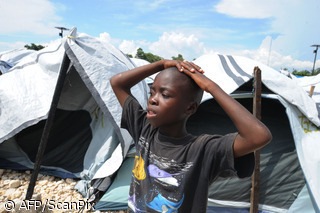 Over 130 people die in central Haiti due to a suspected outbreak of cholera.
more »
Over 130 people die in central Haiti due to a suspected outbreak of cholera.
more »
 The Influenza A (H1N1) pandemic returned to the Parliament last week but fortunately not in the literal sense.
more »
The Influenza A (H1N1) pandemic returned to the Parliament last week but fortunately not in the literal sense.
more »
 The Commission announced today its intention to restructure the process of progressive adoption of the list of permitted health claims on food products (also known as “Article 13 claims”).
more »
The Commission announced today its intention to restructure the process of progressive adoption of the list of permitted health claims on food products (also known as “Article 13 claims”).
more »
 Patients will be better informed on how to use medicines, and enabled to report their adverse effects directly to national authorities, thanks to updates of EU laws agreed with the Council and endorsed by Parliament on Wednesday.
more »
Patients will be better informed on how to use medicines, and enabled to report their adverse effects directly to national authorities, thanks to updates of EU laws agreed with the Council and endorsed by Parliament on Wednesday.
more »
 Doctors in Peru are facing outbreaks of two killer diseases, rabies and the plague, being spread by bats and rats.
more »
Doctors in Peru are facing outbreaks of two killer diseases, rabies and the plague, being spread by bats and rats.
more »
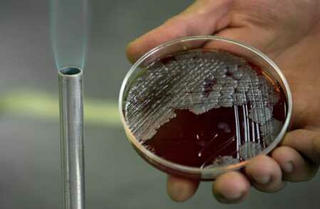 Scientists warn a new drug-resistant superbug could spread worldwide, fuelled in part by medical tourism.
more »
Scientists warn a new drug-resistant superbug could spread worldwide, fuelled in part by medical tourism.
more »
 Chinese officials say they are investigating reports that tainted milk powder has caused premature sexual development in baby girls.
more »
Chinese officials say they are investigating reports that tainted milk powder has caused premature sexual development in baby girls.
more »
 A woman in India says she has to sell her 6-month-old baby in order to pay her husband's medical expenses.
more »
A woman in India says she has to sell her 6-month-old baby in order to pay her husband's medical expenses.
more »